

WeVote

Bill

Bill

HR 8462

National Quantum Initiative Reauthorization Act

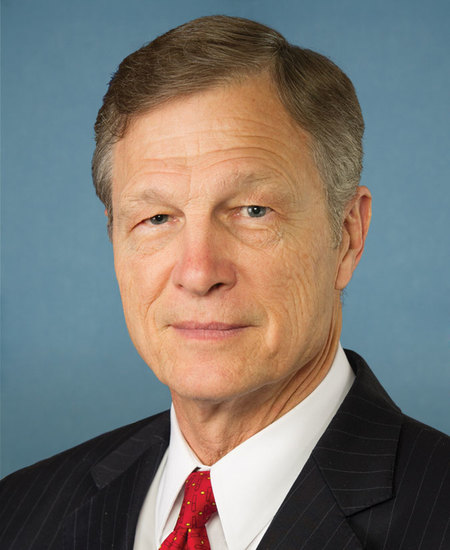
119th Congress Introduced by Brian Babin and 3 co-sponsors

The bill strengthens and expands the National Quantum Initiative to accelerate quantum research, standardization, and deployment through new centers, testbeds, workforce programs,

Committee Consideration and Mark-up Session Held
0
WeVote Research Nonpartisan
Bill Summary · HR 8462

Summary of HR 8462 — National Quantum Initiative Reauthorization Act (119th Congress)

Note: This summary captures the bill’s main purpose, key provisions, affected parties, and indicative timelines. It reflects the text as introduced on April 23, 2026.

1) Purpose and Intent

  • Reauthorize and expand the National Quantum Initiative Act to accelerate research, development, demonstration, standardization, and deployment of quantum information science, engineering, and technology (QISET).
  • Emphasize workforce development, international cooperation, supply chain resilience, standards, and coordination across multiple federal agencies.
  • Create new programs and centers (quantum acceleration centers, testbeds, a reskilling hub) and broaden NSF and NIST activities to encompass quantum applications and education.

2) Key Provisions and Changes

Definitions and Scope

  • Adds and redefines terms to align with a broader view of quantum tech:
    • Quantum Applications, Quantum Computing, Quantum Information Science, Engineering, and Technology (QISET)
    • National Laboratory, Federal Laboratory, Foreign Country of Concern, Foreign Entity of Concern
    • STEM (including computer science)
  • Expands the program to cover diverse sectors and allied international collaboration.

Programmatic and Strategic Improvements

  • National Quantum Initiative Program (Section 4)
    • Broadens R&D language to include near-, mid-, and long-term demonstrations in diverse sectors.
    • Adds infrastructure and workforce pathways; strengthens links to domestic and allied capabilities.
    • Introduces emphasis on cooperative investment with allies to strengthen domestic supply chains.
  • National Quantum Coordination Office (Section 5)
    • Adds term limits for leadership roles and expands coordination responsibilities to promote nationwide adoption, workforce stability, and supply chain resilience.
  • Subcommittee and Advisory Bodies (Sections 6–7)
    • Expands Federal agency participation (e.g., Health and Human Services, State, Homeland Security, Education, NASA) in quantum-related governance.
    • Updates Advisory Committee qualifications to include a broader mix of industry, academia, nonprofits, and federal labs. Adds reporting and strategic oversight on international programs and standards.
  • International Quantum Cooperation Strategy (Section 9)
    • Requires OSTP to develop an International Quantum Cooperation Strategy within one year of enactment.
    • Focus areas: international partnerships, standards, ethical considerations, talent attraction, and safeguarding research from malign influence.
    • Provides a framework for diplomatic engagement and aligned standards development.

National Quantum Initiatives Infrastructure

  • Sunset Extension (Section 10)
    • Extends the authorization horizon, with the sunset date set to December 30, 2032.
  • NIST, NIST-Centered Activities (Sections 11–12)
    • Strengthens NIST participation in post-quantum cryptography deployment, standards development, and international alignment.
    • Establishes a possible grant program to assist entities at high risk of quantum attacks in adopting post-quantum standards.
    • Creates at least one to three National Institute of Standards and Technology Quantum Acceleration Centers to accelerate standardization, manufacturing, and deployment; terms include merit-based selection and five-year funding periods (renewable).
    • Establishes National Quantum Testbeds (up to five) to enable practical quantum applications development with near- and mid-term use cases; emphasizes industry access and demonstrations.
    • Adds a Research Security section ensuring consistency with broader R&D security statutes.

Education, Workforce, and Research Capacity

  • NSF Quantum Education and Information Workforce (Section 13)
    • Reorients NSF QISE activities to QISET and expands educational scope, including K–12 and workforce pathways.
    • Introduces expanded trainee programs, fellowships, and scholarships; prioritizes diverse participation and industry partnerships.
    • Encourages partnerships with private sector and other federal agencies to broaden experiential learning and job opportunities.
  • Multidisciplinary Centers for Quantum Research and Education (Section 14)
    • Increases number of centers from 5 to 10, with new emphasis on nationwide collaboration, broader topics (quantum sensing, manufacturing scale-up, networking), and international collaboration.
    • Centers operate for five-year cycles with five-year renewals; attention to duplication, coordination with existing NSF/NIST activities, and outreach to underrepresented groups.

Quantum Reskilling and Workforce (Section 15)

  • Creates a Quantum Reskilling, Education, and Workforce Coordination Hub (QREW Hub) led by an NSF-NSF collaboration, to coordinate cross-cutting workforce development.
  • Hub requirements include multiple higher-ed institutions (including community colleges), industry participation, curriculum development, internships, and regional/national employment pathways.
  • Establishes a framework for ongoing data collection on the quantum workforce and education capacity.

Post-Quantum Cryptography

  • Directs NIST to promote standards for post-quantum cryptography and to support deployment, including a potential grants program to assist high-risk entities.

3) Who Would Be Affected

  • Federal Agencies: Expanded roles and coordination across Science/Tech agencies (OSTP, NSF, NIST, DOE, DHS, Education, State, Health and Human Services, NASA, etc.).
  • Universities, Nonprofits, and National Labs: Eligibility for centers, testbeds, and workforce programs; expanded opportunities for collaborations and funding.
  • Industry: Increased engagement via advisory boards, centers, testbeds, and workforce partnerships; potential for public-private partnerships in quantum supply chain development.
  • Private Sector Startups and SMEs: Access to testbeds, accelerators, and funding for capacity-building and R&D.
  • International Partners: Strategy and funding for international cooperation in quantum R&D and standards.
  • Protecting Infrastructure: Emphasis on securing post-quantum cryptography deployment to protect critical infrastructure.

4) Timelines and Procedures

  • International Strategy: Due within 1 year of enactment; requires Senate House committee briefings.
  • Sunset: Updated to December 30, 2032.
  • Quantum Acceleration Centers and Testbeds: Must be established within specified timeframes following enactment; centers have five-year funding cycles with potential renewals.
  • QREW Hub: Award established; five-year to start, with potential renewal.
  • Testbeds and centers subject to merit review and competitive processes; coordination with existing programs to avoid duplication.

Overall, HR 8462 elevates the national quantum program through expanded federal coordination, a larger set of centers and testbeds, a stronger education/workforce pipeline, international collaboration, and a more comprehensive framework for standards, security, and industry involvement.

Compiled from official sources — confirm details with the bill’s official record.

Sign in to ask a question.