

WeVote

Bill

Bill

AB 2320

Multifamily Housing Program: Homekey: adaptive reuse.

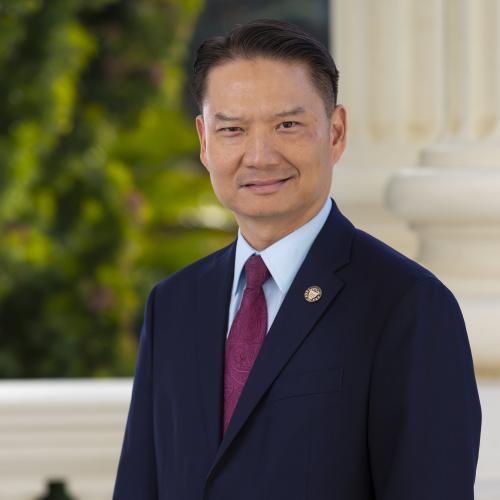
2025-2026 Regular Session Introduced by Tri Ta

Adaptive reuse projects become an eligible Homekey funding category starting 2027, exempt from per-unit cost caps, with strict timing for construction, capex, and occupancy.

In Senate. Held at Desk.
0
WeVote Research Nonpartisan
Bill Summary · AB 2320

Summary of AB 2320 (2025-2026) — Multifamily Housing Program: Homekey; adaptive reuse

Overview

  • Jurisdiction: California
  • Bill number: AB 2320
  • Introduced: February 19, 2026 (Assembly Member Ta; co-sponsor Tri Ta)
  • Purpose: Amend Health and Safety Code to authorize adaptive reuse projects within the Homekey portion of the Multifamily Housing Program and set specific timing requirements for awards and project completion.

Main Purpose and Intent

  • To expand Homekey funding eligibility to include adaptive reuse projects (defined as retrofitting and repurposing existing buildings to create new residential rental units) starting with funds awarded on or after January 1, 2027.
  • To treat adaptive reuse as its own eligible project category within the Multifamily Housing Program and shield such projects from per-unit cost caps.
  • To establish explicit construction, capital expenditure, and occupancy timelines for Homekey awards issued after July 1, 2026, tightening project delivery schedules.

Key Provisions and Changes

  1. Expanded Eligible Uses (Adaptive Reuse)

    • Beginning with awards after January 1, 2027, adaptive reuse projects may receive Homekey funds.
    • Adaptive reuse is defined as retrofitting and repurposing existing buildings to create new residential rental units; it explicitly excludes rehabilitation that affects existing residential units.
    • Adaptive reuse projects will be treated as a distinct eligible project category and are not subject to per-unit cost caps.
  2. Treatment within the Multifamily Housing Program

    • Funds appropriated for housing for homeless individuals or those at risk (as defined in the section) shall be disbursed under the Multifamily Housing Program guidelines, including for adaptive reuse.
    • Adaptive reuse is one of the uses authorized under the program, alongside acquisition/rehabilitation, master leasing, conversion of nonresidential to residential, new construction, affordability covenants, and relocation/operating subsidies.
  3. Geographic and Program Considerations

    • Allocation should consider geographic need, applicant’s ability to fund operating reserves, creation of new permanent housing, and potential for other state/federal/local funding to support operating reserves.
  4. Targeted Funding for Homeless Youth

    • Not less than 8% of the funds described must be used for projects serving homeless youth or youth at risk of homelessness (per federal definitions).
  5. Administrative and Reporting Provisions

    • The department may adopt guidelines for administering the funds; guidelines are not subject to certain general government code rulemaking requirements.
    • Up to 5% of ARPA Coronavirus State Fiscal Recovery Fund moneys and up to 5% of General Fund moneys may be used for administration costs, subject to federal law.
    • The department must include in its annual report to the Legislature detailed metrics on expenditures, locations, units produced, people housed, operating subsidies, decision-making metrics, lessons learned, and proposed program changes.
  6. Timeline and Compliance Requirements

    • For awards made before July 1, 2026: funds must be expended within 8 months of the award, with possible extensions available through guidelines and director discretion.
    • For awards made on or after July 1, 2026:
      • Construction completion: within 24 months for new construction, gap financing, and adaptive reuse projects; within 14 months for other projects.
      • Capital expenditure and occupancy completion: within 24 months for new construction, gap financing, and adaptive reuse projects; within 15 months for other projects.
    • Applications and awards can be accepted on a continuous basis until funds are exhausted, subject to law and guidelines.
    • The adaptive reuse category is exempt from per-unit cost caps, aligning with the broader program’s flexible approach to funding diverse housing types.
  7. Definitions

    • “Adaptive reuse” is specifically defined and distinguished from other rehab activities that affect existing residential units.
    • “Individuals and families who are homeless or at risk” follows the federal regulatory definitions (Part 578.3 of Title 24 CFR).

Who Is Affected

  • Eligible applicants: Cities, counties, city/county combinations, regional agencies ( councils of governments, metropolitan planning organizations, regional transportation planning agencies), and other state/local public entities designated to administer Homekey funds.
  • Beneficiaries: Homeless individuals and families or those at risk of homelessness, including youth, who would be housed via adaptive reuse projects and other Homekey-funded activities.
  • Projects: Adaptive reuse projects will now compete under a distinct category within Homekey, potentially altering funding priorities and project design considerations.

Procedural and Timeline Highlights

  • Implementation: Commences with Homekey funding awards issued on or after July 1, 2026 (and adaptive reuse eligibility effective for awards beginning January 1, 2027).
  • Guidelines: Department of Housing and Community Development (HCD) may adopt guidelines for expenditure and administration; these guidelines are not bound by certain standard Government Code rulemaking requirements.
  • Reporting: Annual legislative report must cover expenditures, locations, units, occupancy, operating subsidies, decision metrics, lessons learned, and recommended changes.

Notes on Status

  • Status history indicates passage in committee with amendments and referral to Appropriations for the consent calendar, reflecting a likely move toward floor action and potential enactment in the 2025-2026 session.

If you’d like, I can produce a side-by-side comparison with current law or a plain-language FAQ for community stakeholders.

Compiled from official sources — confirm details with the bill’s official record.

Sign in to ask a question.