

WeVote

Bill

Bill

HB 4413

Mental health: other; hospital evaluations for assisted outpatient treatment; expand. Amends secs. 206a & 429 of 1974 PA 258 (MCL 330.1206a & 330.1429).

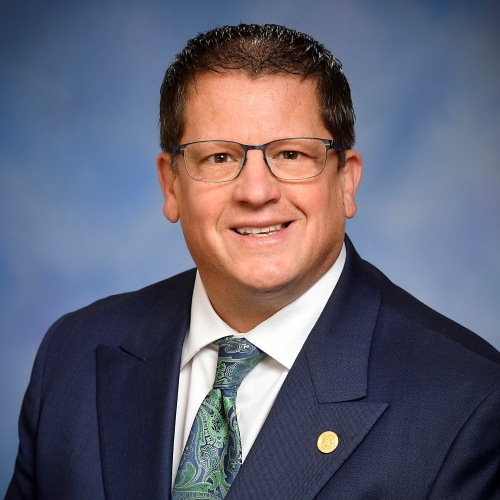
2025-2026 Regular Session Introduced by Brian BeGole and 6 co-sponsors

Establishes statewide, funded mediation to resolve mental health service disputes with binding agreements.

REFERRED TO COMMITTEE ON HEALTH POLICY
0
WeVote Research Nonpartisan
Bill Summary · HB 4413

HB 4413 — Summary (Mental Health Code amendments)

Status: Passed Legislature; signed by Governor 6/20/2025 — effective 9/1/2025
Introduced: 3/11/2025 (Rep. Mark Tisdel) — Amends 1974 PA 258 (MCL 330.1206a & 330.1429)

Purpose

To (1) expand and formalize mediation procedures for disputes between mental health recipients (and certain petitioners/representatives) and community mental health services programs or their contracted providers regarding planning/provision of services, and (2) clarify and tighten timelines and procedures for hospital/preadmission screening examinations in the involuntary/assisted treatment context.

Key provisions

Mediation (amends MCL 330.1206a)

  • Recipients, their individual representatives, or individuals authorized to file a petition under section 434 are offered the opportunity to request mediation to resolve disputes with community mental health services programs or contracted providers about services/supports.
  • Exclusion: the mediation offer “does not apply to a recipient who is hospitalized.”
  • Notification: programs/providers must notify recipients (or reps/petitioners) of the right to mediation when services/supports begin and at least annually; notification is also required when local dispute resolution, local appeals, or a state Medicaid fair hearing is requested.
  • State role: the Department must fund and directly contract with one or more mediation organizations experienced in statewide intake and delivery through local community dispute resolution centers.
  • Mediator standards: mediators must be trained, knowledgeable about behavioral health laws/regulations, and have no involvement with the dispute or service delivery to the recipient.
  • Participation: the community mental health program or contracted provider must participate if mediation is requested.
  • Timing:
    • A mediation request must be recorded by the mediation organization, and mediation must begin no later than 10 business days after recording.
    • Mediation must be completed within 30 days of recording, extendable in writing up to an additional 30 days (maximum 60 days).
    • Mediator must deliver a signed agreement or unresolved report to all parties within 10 business days after the end of mediation.
  • Outcome:
    • Resolved disputes produce a written, signed, legally binding agreement enforceable in courts of competent jurisdiction.
    • Unresolved disputes result in a written statement that mediation did not resolve the dispute.
  • Reporting: contracted mediation organizations must submit aggregate data and outcome summaries to the Department every 6 months (or as requested) to evaluate effectiveness.
  • Mediation does not bar use of other dispute resolution options; mediation organizations must check for ongoing alternative processes and may notify administrators; parties may voluntarily suspend other processes unless prohibited.

Hospital/preadmission screening timelines (amends MCL 330.1429)

  • Designated hospitals receiving individuals presented for examination (under several Mental Health Code sections) may detain for up to 24 hours for examination by a physician or licensed psychologist unless a clinical certificate is already presented.
  • If the examiner does not certify that the person requires treatment, the hospital must immediately release the person; if a clinical certificate is executed, hospitalization under section 423 may proceed.
  • When a preadmission screening unit examines an individual, the exam must begin as soon as possible after arrival and be completed within 2 hours, unless:
    • there are documented medical reasons for delay, or
    • the peace officer or security transport officer and the preadmission screening unit agree to another arrangement.

Who is affected

  • Mental health recipients served by community mental health services programs, their individual representatives, and petitioners under section 434.
  • Community mental health services programs and their contracted service providers.
  • Mediation organizations and mediators contracted by the Department.
  • Designated hospitals, preadmission screening units, peace officers and security transport officers involved in transport/examination.
  • Courts (for enforcement of mediated agreements).

Practical effects / implementation notes

  • Establishes a statewide, funded mediation pathway with clear timelines and enforceable mediated agreements, intended to expedite resolution of service disputes outside of administrative hearings.
  • Clarifies and shortens preadmission screening timelines (2-hour completion standard) to accelerate clinical decisions for individuals presented for evaluation.
  • Effective date: September 1, 2025.

Compiled from official sources — confirm details with the bill’s official record.

Sign in to ask a question.