

WeVote

Bill

Bill

HB 5823

Mental health: facilities; video monitoring and recording in certain care settings; allow. Amends sec. 724 of 1974 PA 258 (MCL 330.1724).

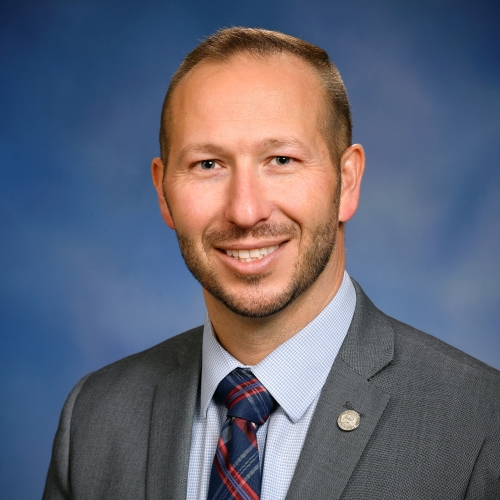
2025-2026 Regular Session Introduced by Matt Bierlein and 3 co-sponsors

HB 5823 limits biometric data collection in mental health care to consented cases and requires strict privacy controls, plus authorized video surveillance in common areas with safe

bill electronically reproduced 04/21/2026
0
WeVote Research Nonpartisan
Bill Summary · HB 5823

Summary of HB 5823 (Michigan, 2025-2026)

Purpose and Intent

  • HB 5823 proposes to amend section 724 of the Mental Health Code (1974 PA 258, MCL 330.1724) to modify rules governing fingerprinting, photographing, audiorecordings, and video surveillance in certain mental health care settings.
  • The bill aims to regulate when and how the state may collect and use biometric data and to authorize video surveillance in psychiatric hospital settings under specified conditions.

Key Provisions and Changes

Biometric data and photographs (Section 724(1)–(8))

  • A recipient of mental health services generally may not be fingerprinted, photographed, audiorecorded, or viewed through a 1-way glass, except as allowed by the statute.
  • The collection of fingerprints, photographs, or audiorecordings, and the use of 1-way glass, may occur only when prior written consent is obtained from:
    • The recipient (if 18+ and capable of consent),
    • The recipient’s guardian (if empowered to give consent),
    • The parent with legal and physical custody if the recipient is under 18.
  • Records of fingerprints, photographs, or audiorecordings created to provide services or determine the recipient’s name must be kept as part of the recipient’s record (Sections 3–4).
  • When fingerprints/photographs/audiorecordings are collected to determine a recipient’s name, copies may be shared with others for assistance and must be returned, with the originals, once the need is satisfied (Section 4).
  • If not essential to the objectives in subsection (2) or upon discharge, such fingerprints/photographs/audiorecordings must be given to the recipient or destroyed (Section 5).
  • Photographs may be taken for purely personal or social purposes as the recipient’s property, but not if the recipient objects (Section 6).
  • Photographs or audiorecordings may be taken and 1-way glass used for educational or training purposes only with express written consent from the same permissible individuals listed above (Section 7).
  • Subsection (8) clarifies the section does not apply to certain recipients referred under Chapter 10.

Video surveillance (Section 724(9)–(10))

  • Video surveillance in licensed psychiatric hospital facilities is permitted in common areas for safety, security, quality improvement, or to ensure a recipient’s health or well-being.
  • Surveillance footage may only cover common areas (e.g., hallways, nursing stations, social areas) and may not be used for treatment or therapeutic purposes.
  • Before implementation, facilities must adopt written policies addressing:
    • Locations to be recorded and stored,
    • Notice to recipients and visitors about surveillance,
    • Security controls detailing who may authorize, view, duplicate, or distribute footage, and safeguards against unauthorized access,
    • Documentation for each instance of access, viewing, duplication, or distribution,
    • Procedures to retrieve distributed footage when it is no longer needed,
    • Rules for archiving footage (up to 30 days, extendable if investigations require longer retention by relevant bodies, including recipient rights offices, licensing divisions, law enforcement, CMS, and/or HHS/Medicare).
  • Archived footage may be retained longer only in connection with ongoing investigations.
  • Recorded video surveillance images must not be kept as part of a recipient’s clinical record.
  • Notified recipients or guardians must be informed that surveillance is being conducted in common areas.
  • Importantly, subsection (10) requires the Department to ensure that video surveillance does not affect a recipient’s eligibility for Medicaid or a facility’s Medicaid reimbursement.

Who Is Affected

  • Recipients of mental health services and their families/guardians, particularly:
    • Individuals 18+ who are capable of consent,
    • Guardians and parents with custody of minors,
    • Recipients in psychiatric hospital licensed facilities.
  • Licensed psychiatric hospitals and units, and their administration, especially in areas designated for surveillance.
  • Departmental offices including recipient rights, licensing divisions, and federal Medicaid/Medicare oversight bodies (CMS/HHS) for potential longer retention in investigations.
  • Facility staff with access to surveillance footage.

Procedural and Timeline Aspects

  • The bill was introduced on April 21, 2026, and referred to the Health Policy Committee.
  • The text outlines a prospective policy framework; it does not specify new funding or immediate implementation deadlines beyond the standard legislative process (next steps would include committee deliberations, potential amendments, and floor votes).
  • Implementation would require the development of written facility policies prior to deployment of video surveillance and ongoing compliance with privacy provisions.

Notable Considerations

  • The bill seeks to balance safety and quality improvement with privacy protections by restricting biometric data collection and mandating consent.
  • It creates explicit procedural requirements for handling, sharing, retention, and destruction of biometric data and outlines safeguards for video surveillance access and use.
  • Medicaid eligibility and reimbursement protections are preserved in relation to surveillance activities.

Compiled from official sources — confirm details with the bill’s official record.

Sign in to ask a question.