

WeVote

Bill

Bill

HF 4431

Low-interest student loan program created, rulemaking authorized, and money appropriated.

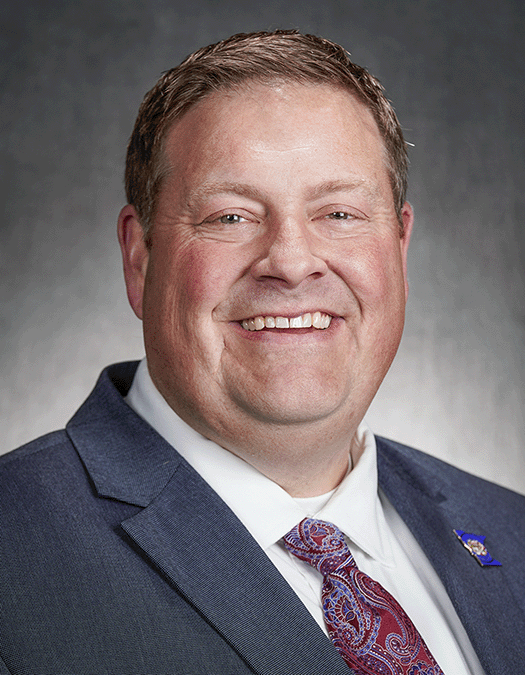
2025-2026 Regular Session Introduced by Keith Allen and 2 co-sponsors

Minnesota would create a state-run, low-interest student loan program with rulemaking authority and targeted funding to expand affordable financing for higher education.

Author added Rehrauer
0
WeVote Research Nonpartisan
Bill Summary · HF 4431

Summary of HF 4431 (2025-2026) – Minnesota

Purpose and Intent

HF 4431 creates a new low-interest student loan program in Minnesota, authorizes rulemaking to implement the program, and appropriates funds to support it. The bill aims to expand affordable financing options for students to help cover higher education costs and improve access to postsecondary opportunities.

Key Provisions

  • Low-Interest Student Loan Program Created

    • Establishment of a state-administered loan program offering loans at reduced interest rates compared to typical private or unsubsidized loans.
    • The program is intended to make borrowing more affordable for Minnesota students pursuing higher education, potentially including undergraduate and/or graduate programs as defined by the bill (specific target student populations would be detailed in the bill text).
  • Rulemaking Authority

    • Authorization for the relevant state agency to develop and implement rules necessary to operate the loan program.
    • Rules would cover eligibility criteria, loan terms, repayment options, application processes, borrower protections, and oversight.
    • The rulemaking process ensures the program can be practically administered and compliant with existing state laws.
  • Appropriations (Funding)

    • Specific dollar amounts are allocated to support the program’s administration, initial capital, or startup costs.
    • Funds may cover program staffing, IT systems, outreach, borrower services, and reserves to manage risk.
    • The appropriations signal the Legislature’s commitment to launching and sustaining the program for a defined period (often through the next fiscal years, with potential renewals or adjustments in subsequent years).

Who Is Affected

  • Borrowers

    • Minnesota students and potentially their families who need financing for postsecondary education.
    • Borrowers may benefit from lower interest rates, flexible repayment terms, and borrower protections if provided by the rules.
  • Postsecondary Institutions

    • Colleges and universities in Minnesota may participate indirectly through increased access to financing for students, potentially impacting enrollment dynamics.
  • State Agencies

    • The agency designated to administer the loan program (likely a higher education or student aid agency) will gain rulemaking and administrative responsibilities.
  • Taxpayers and State Finances

    • Appropriations and any program-funded reserves may impact state budgets and financial risk management; borrower repayment performance could influence ongoing funding and program viability.

Procedural and Timeline Aspects

  • Introduced and Referred

    • Introduced and assigned to the Higher Education Finance and Policy committee for consideration.
    • Initial action indicates consideration of program design, fiscal impact, and policy alignment with higher education goals.
  • Potential Next Steps

    • Committee hearings and work sessions to refine eligibility, loan terms, and funding structure.
    • Development of administrative rules following the rulemaking authorization.
    • Floor votes in the House, and potential companion action in the Senate, before any final passage and appropriation alignment.

Additional Notes

  • The bill’s sponsors include Representatives Keith Allen, Erica Schwartz, and Kari Rehrauer (as co-sponsors).
  • The action history shows the author addition for Rehrauer on 2026-03-23 and the introductory reading on 2026-03-18.
  • Specific details such as loan interest rate percentage, eligibility thresholds, loan limits, repayment options, forgiveness provisions, and the exact appropriation amounts are not provided in the summary and would be clarified in the bill text and fiscal note.

If you’d like, I can pull out and compare the bill’s proposed terms (e.g., loan caps, eligible programs, repayment assistance) with existing state student aid programs to highlight potential overlaps or gaps.

Compiled from official sources — confirm details with the bill’s official record.

Sign in to ask a question.