

WeVote

Bill

Bill

HF 1865

Loans that satisfy the federal qualified mortgage points and fees threshold excluded from the definition of conventional loan.

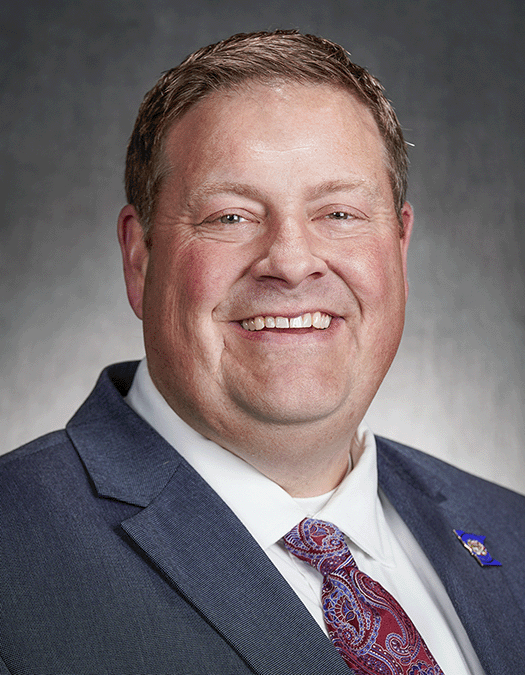
2025-2026 Regular Session Introduced by Keith Allen and 3 co-sponsors

Minnesota would exclude federal qualified mortgage points-and-fees threshold loans from the definition of conventional loans, aligning state classification with federal QM criteria

Second reading
0
WeVote Research Nonpartisan
Bill Summary · HF 1865

Summary of HF 1865 (2025-2026) — Minnesota

Purpose and intent

HF 1865 proposes a change to how certain mortgage loans are classified for regulatory purposes. Specifically, it seeks to exclude loans that meet the federal qualified mortgage points and fees threshold from the definition of “conventional loan” within Minnesota law. The intent is to align state definitions with federal criteria for qualified mortgages (QM), potentially affecting how these loans are treated for regulatory compliance, consumer protection, and related standards.

Key provisions

  • Exclusion from conventional loan definition: Any loan that satisfies the federal qualified mortgage points and fees threshold would be excluded from Minnesota’s definition of a conventional loan. This means such loans would not be treated as conventional mortgages under state law for the purposes governed by the statute in question.
  • Reference to QM standards: The bill ties the exclusion to the federal QM thresholds for points and fees, adopting or harmonizing with the existing federal criteria used to determine whether a loan qualifies as a QM.
  • Scope of application: The change is targeted to the state’s definition of conventional loans, influencing how lenders, borrowers, and regulators classify certain mortgage products under Minnesota statutes or regulatory provisions that rely on loan categorization.

Who/what is affected

  • Lenders: Mortgage lenders offering loans that meet the federal QM points-and-fees threshold would no longer have those loans classified as conventional under Minnesota law. This could affect regulatory filing, reporting, or underwriting standards that depend on loan categorization.
  • Borrowers: Consumers with loans meeting the QM thresholds could see changes in how their loans are regulated or disclosed under state rules, though the bill’s text as provided focuses on classification rather than specific consumer protections.
  • Regulators and state agencies: Mortgage regulators that apply Minnesota’s conventional loan definitions would adjust their oversight and applicable requirements for these QM-qualified loans.

Procedural and timeline aspects

  • Introduced and first reading: March 5, 2025; referred to the Commerce Finance and Policy committee.
  • Committee action: March 17, 2025 — committee report to adopt as amended, and second reading on the same date, indicating progress toward floor consideration.
  • Sponsors:
    • Primary/co-sponsors include Bernie Perryman, Keith Allen, Max Rymer, and Ethan Cha.

Potential impact and considerations

  • Regulatory alignment: By excluding QM threshold loans from the conventional loan category, Minnesota would align more closely with federal mortgage product distinctions, potentially reducing overlap or conflict between state and federal classifications.
  • Industry impact: Lenders may need to adjust internal classifications, disclosures, and data reporting to reflect the revised definition. Depending on accompanying state rules, this could influence eligibility criteria for certain programs or compliance requirements.
  • Consumer safeguards: The bill description does not specify new consumer protections, but changes in loan categorization can ripple into how loans are marketed, underwritten, or regulated at the state level.

This summary covers the bill’s stated purpose, main provisions, affected parties, and notable procedural milestones based on the available information. If the full text becomes available, a more detailed analysis of definitions, related statutes, and implementation timelines can be provided.

Compiled from official sources — confirm details with the bill’s official record.

Sign in to ask a question.