

WeVote

Bill

Bill

HB 4114

Liquor: liquor control commission; certain liquor code violations not held against a licensee after a certain time; provide for. Amends 1998 PA 58 (MCL 436.1101 - 436.2303) by adding sec. 910.

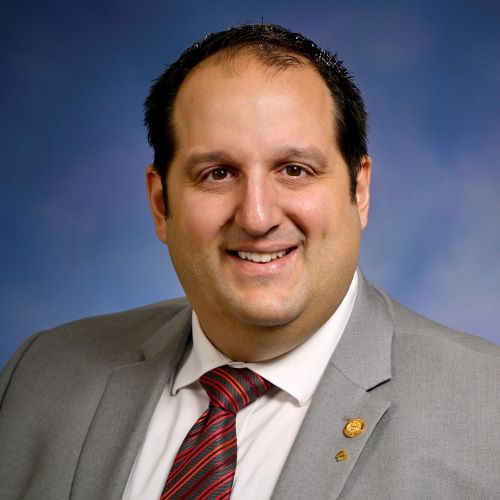
2025-2026 Regular Session Introduced by Joe Aragona and 12 co-sponsors

HB 4114 caps MLCC look-back for liquor violations at 3 years (except revocations), shielding licensees from old infractions while preserving serious past revocation cases.

REFERRED TO COMMITTEE ON REGULATORY AFFAIRS
0
WeVote Research Nonpartisan
Bill Summary · HB 4114

Summary — HB 4114 (Michigan) — Limiting consideration of older liquor-code violations in MLCC license decisions

Status: Passed by the House (June 4, 2025); referred to Senate Committee on Regulatory Affairs. Introduced Feb 25, 2025 by Rep. Tom Kuhn. Would add MCL 436.1910 to 1998 PA 58 (Michigan Liquor Control Code).

Main purpose

To limit how far back the Michigan Liquor Control Commission (MLCC) may look at prior liquor-control violations when making licensing decisions, so that older, non‑severe infractions will not be used to deny, suspend, or otherwise penalize a licensee.

Key provisions

  • Creates a new section (proposed MCL 436.1910) placing a time limit on consideration of prior violations by the MLCC in licensing actions.
  • Core rule (as reported in committee substitute H‑1): the MLCC shall not consider a violation if at least 2 years have elapsed since the act that resulted in the violation, unless the violation resulted in revocation of a license.
  • Legislative floor amendment / As‑passed‑House change: the look‑back period was amended to 3 years (texted as “at least 3 years have elapsed”), with the same revocation exception.
  • Earlier introduced language included the term “qualified violation” and expressly excluded crimes and state civil infractions from the time limit; later substitute language removes that narrower definition and simply references “violation.” Because language changed during committee/house consideration, the precise scope (which categories of violations are covered) differs across versions.

Who would be affected

  • Primary: current and prospective holders of Michigan liquor licenses (retailers, bars, restaurants, wholesalers, etc.) whose older non‑revocation violations might otherwise be considered in licensing decisions.
  • Secondary: the MLCC and the Department of Licensing and Regulatory Affairs (LARA), which would apply the time limit in adjudications and licensing reviews.
  • No direct fiscal impact on other state or local units of government is expected.

Policy rationale & potential effects

  • Supporters argue it prevents perpetual penalization for old, remediated conduct and reduces relitigation and administrative burden.
  • Critics (including MLCC testimony) raised concerns about limiting the commission’s ability to consider relevant past conduct in assessing fitness for licensure.
  • The bill exempts revocations, so the MLCC could still consider serious past conduct that resulted in revocation.

Fiscal impact

House Fiscal Agency: indeterminate but likely minimal fiscal effect on MLCC/LARA. Number of affected cases is expected to be small; little change in license volume or revenues anticipated.

Procedural / next steps

  • Reported out of Regulatory Reform committee (substitute H‑1 adopted 5‑22‑25).
  • Passed House (amended to 3‑year look back) June 4, 2025; transmitted and referred to Senate Committee on Regulatory Affairs for consideration.

Support / Opposition

  • Support: Michigan Independent Retailers, Michigan Licensed Beverage Association, Michigan Retailers Association, several retailers and chambers.
  • Opposition: Representative of the Michigan Liquor Control Commission testified in opposition.

Notes: Because the bill’s language changed between introduction, committee substitute, and the House floor (notably the time period and the treatment/exclusion of crimes and civil infractions), the exact legal effect will depend on the final enacted text if amended further in the Senate.

Compiled from official sources — confirm details with the bill’s official record.

Sign in to ask a question.