

WeVote

Bill

Bill

A 2593

Limits robocalls to state residents and requires telephone service providers to offer free call mitigation technology to telephone customers

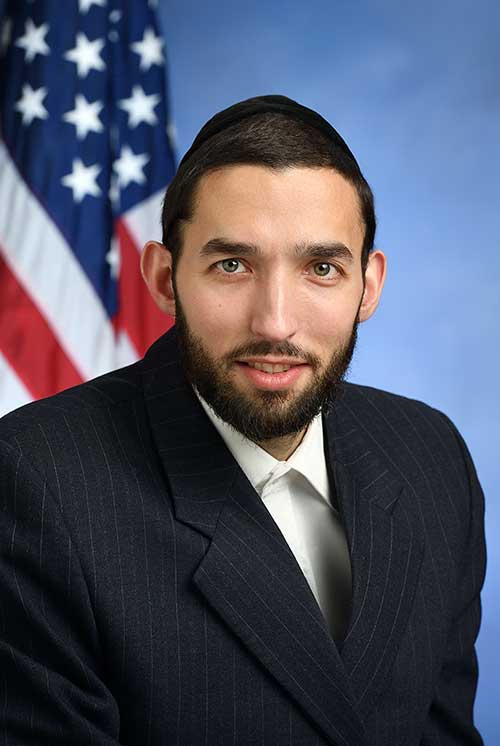
2025 Regular Session Introduced by Simcha Eichenstein

Limits robocalls to state residents and requires providers to offer free call-mitigation technology, helping customers block unwanted calls at no extra cost.

REFERRED TO CORPORATIONS, AUTHORITIES AND COMMISSIONS
0
WeVote Research Nonpartisan
Bill Summary · A 2593

Summary of Bill A 2593

Bill A 2593 seeks to curb robocalls by limiting calls to state residents and by ensuring consumers have access to free call mitigation technology through their telephone service providers. The bill was introduced on January 21, 2025 and has been referred to the Committee on Corporations, Authorities and Commissions. The primary sponsor is Simcha Eichenstein. Related companion and prior-session bills are listed below.

Purpose and intent

  • Reduce unwanted robocalls directed at residents of the state.
  • Ensure customers have free access to call mitigation technologies provided by telephone service providers, potentially improving the ability to block or mitigate unwanted automated calls.

Key provisions (as described by the bill’s title)

  • Robocall limitation to state residents: The measure would place limits on robocalls directed to residents within the state, aiming to reduce unsolicited automated calls received by residents.
  • Free mitigation technology: Telephone service providers would be required to offer call mitigation technology to customers at no cost, making tools available to help detect, block, or otherwise reduce robocalls.

Who would be affected

  • State residents who are customers of telephone service providers operating within the state.
  • Telephone service providers operating in the state, who would be obligated to offer the specified free mitigation technology.
  • Regulators and state authorities responsible for implementing or enforcing the provisions (not specified in detail in the summary).

Procedural status and timeline

  • Introduced: January 21, 2025.
  • Status: Referred to the Committee on Corporations, Authorities and Commissions (referenced twice on the same date in the provided record).
  • Next steps (typical legislative process): If approved by the committee, the bill would move to the full chamber for consideration, and then potentially to the other house (as applicable) for a vote. Specific implementation timelines, effective dates, and enforcement mechanisms are not detailed in the provided information.

Sponsors and related bills

  • Primary sponsor: Simcha Eichenstein.
  • Related bills (prior-session and companion): S 859 (companion), S 8674, S 3297, S 68, S 1536 (prior-session). Related bills may cover similar robocall and caller-ID mitigation themes in companion or predecessor forms.

Potential impact and considerations

  • Consumer protection: Could reduce nuisance robocalls and improve caller trust.
  • Provider responsibilities: May require policy changes, deployment of free mitigation technology, and possible compliance costs.
  • Regulatory questions: Definitions of “robocall,” scope of “state residents,” enforcement mechanisms, penalties for noncompliance, and criteria for “free” mitigation tech would need to be clarified during committee review.

Compiled from official sources — confirm details with the bill’s official record.

Sign in to ask a question.