HB 5921 (2025-2026) Michigan — Summary
Overview
- Purpose: Amends 1975 Public Act 46 to expand powers and duties of the Office of the Legislative Corrections Ombudsman (OLCO), clarifying investigative procedures, reporting requirements, protections for complainants, and the interaction between the OLCO, the legislature, and the Department of Corrections (DOC). The bill ties to HB 5920 as a companion measure.
- Enactment: The amendments take effect only if HB 5920 (House Bill No. 5920) is enacted into law.
Key Provisions and Changes
1) Section 7 — Investigation Decisions and Notices
- When the OLCO receives a complaint from a legislator or a prisoner and decides to investigate, the OLCO must:
- Notify the complainant, affected prisoners, and the DOC.
- If the OLCO declines to investigate, it must provide written notification to the complainant and inform affected prisoners of the reasons.
Impact: Clarifies transparency and communication around the decision to investigate or not.
2) Section 11 — Pre-Publication Consultation and Timelines
- Before publishing a conclusion or recommendation that criticizes a person or the DOC, the OLCO must consult with the referenced party.
- If publishing an adverse opinion, the OLCO must include a reasonably timely defense/mitigation statement from the party, provided within a time window determined by the council.
- The OLCO may request a notification deadline from the department (up to 30 business days after consultation) for a response; the department may grant a 14-business-day extension.
- If the department fails to respond within the time limit, the OLCO must report the department’s failure to the council.
- The department must notify the OLCO within 30 business days after acting on any recommendation.
- The OLCO must notify the complainant of actions taken by both the OLCO and the department within 45 business days of action.
Impact: Establishes formal timelines and an opportunity for defense before public admonition; enhances accountability and transparency in the OLCO’s process.
3) Section 12 — Annual and Monthly Reporting
- The OLCO must submit an annual report to the Council and Legislature and publish it on the OLCO website. Contents include:
- Totals of complaints (received, investigated, denied, unresolved, undecided).
- Complaints by correctional facility.
- Complaints by subject matter (e.g., racial discrimination, medical treatment).
- Significant issues investigated.
- Each recommendation to the DOC and the DOC’s response.
- Monthly reports must also be published on the OLCO website, with the monthly data mirroring the annual report’s elements.
Impact: Increases transparency and data availability about the OLCO’s activities and the DOC’s responses.
4) Section 13 — Protections for Complaints and Cooperation
- Prohibits retaliation against prisoners, prisoner advocates, or family members for filing complaints, contacting legislators, or cooperating with the OLCO.
- Prohibits hindering the OLCO’s lawful actions or willful noncompliance with lawful requests.
- Prohibits disciplinary action against DOC employees for communicating with the OLCO.
Impact: Strengthens protections for complainants and staff who engage with the OLCO.
5) Section 14 — Complementary Authority
- Affirms that OLCO authority is additive to other rights and remedies and does not override or diminish existing appeal rights.
- Clarifies that OLCO authority is not to be construed as part of an exclusionary process.
Impact: Reinforces OLCO’s role as an adjunct mechanism for oversight, without limiting other remedies.
Who is Affected
- Prisoners and prisoner advocacy groups, their families, and legislators who file complaints.
- The Office of the Legislative Corrections Ombudsman (OLCO) and its staff.
- The Michigan Department of Corrections (DOC).
- The Michigan Legislature (Council and relevant committees).
Timeline and Process Notes
- The bill emphasizes timely notification and response windows (e.g., up to 30 business days for department responses, up to 45 business days for complainant notifications after actions).
- Requires annual and monthly public reporting, increasing oversight visibility.
- Enactment contingent on the companion HB 5920 becoming law.
Sponsorship
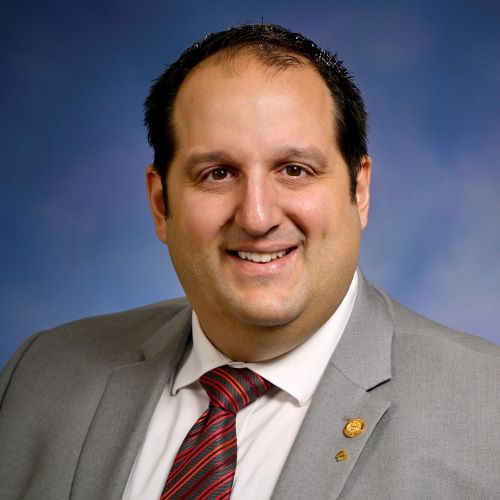
- Primary sponsor: Representative Karl Bohnak
- Notable co-sponsors include a broad bipartisan slate, indicating cross-cutting support.
Overall Assessment
HB 5921 strengthens OLCO’s procedural safeguards, reporting obligations, and protections for complainants, while clarifying interaction protocols with the DOC and the legislature. The bill aims to improve transparency, accountability, and the robustness of the ombudsman’s oversight role in corrections matters.