

WeVote

Bill

Bill

SF 83

Large energy project funding-legislative approval.

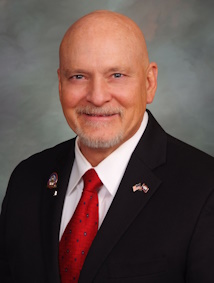
2025 Regular Session Introduced by John Bear and 10 co-sponsors

Requires legislative approval for state funds >= $400,000 on large energy projects, with annual JAC reporting and limits on agency funding without authorization.

S:Died in Committee Returned Bill Pursuant to SR 5-4
0
WeVote Research Nonpartisan
Bill Summary · SF 83

Summary — SF 83: Large energy project funding — legislative approval

Status: Introduced Jan 22, 2025; S:Died in Committee (Returned pursuant to SR 5-4) on Mar 3, 2025
Fiscal note: No significant fiscal or personnel impact (LSO)
Companion: HF 345
Sponsors: Steinmetz, Boner, Hutchings, Kolb, Pearson; co‑sponsors Bear, Heiner, Knapp, Rodriguez‑Williams, Strock, Styvar, Lofgren

Purpose / Intent

SF 83 would create a statutory process requiring legislative approval for state funding of sizeable energy projects in Wyoming. The bill aims to increase legislative oversight and reporting for state grants, loans or awards of state funds to energy projects that meet a monetary threshold.

Key provisions

  • Creates a new Chapter 9‑25 (W.S. 9‑25‑101 and 9‑25‑102) governing "Large Energy Project Funding."
  • Definitions:
    • "Large energy project" — any energy project for which the total amount of state funds sought or previously awarded equals or exceeds $400,000.
    • "State funds" — any funds appropriated or otherwise made available by the legislature for energy projects.
    • "Awarding entity" — any state or local governmental entity that awards, grants or lends funds for energy projects.
    • Broad definition of "energy project" (carbon capture/transport, hydrogen, coal refinery, biomass, battery storage, wind, solar, hydropower, critical minerals, etc.).
  • Annual reporting: Each awarding entity must report to the Joint Appropriations Committee (JAC) by November each year on awards of state funds for large energy projects, including:
    • Applicant/recipient names
    • Amounts recommended/awarded
    • Matching funds status
    • Amounts awarded and expended in the preceding fiscal year
    • Whether the project was authorized by the legislature
  • Legislative authorization requirement: Generally prohibits expenditure of state funds for large energy projects unless specifically authorized by the legislature.
    • Administrative exception: An awarding entity may provide additional state funds up to $200,000 for an authorized project and must notify the JAC within 30 days of such an award. Any award beyond that amount would require further legislative enactment (a bill).
  • Conforming amendments: Requires the Wyoming Business Council (W.S. 9‑12‑104) and the Wyoming Energy Authority (37‑5‑503) to comply with the new chapter prior to awarding funds for large energy projects.
  • Applicability and effective date: Applies to projects for which the legislature appropriates state funds on or after July 1, 2025; effective July 1, 2025.

Who would be affected

  • State and local governmental awarding entities (e.g., Wyoming Business Council, Energy Authority, universities, local governments) that grant or loan state funds for energy projects.
  • Project applicants and recipients seeking or receiving state funding equal to or exceeding $400,000 — including developers of carbon capture, hydrogen, storage, renewable generation, battery/critical minerals, and related projects.
  • The Joint Appropriations Committee, which would receive annual reports and exercise oversight.

Fiscal and procedural notes

  • LSO fiscal note: no significant fiscal or personnel impact anticipated.
  • Procedural history: Introduced and referred to Minerals/Natural Resources committees; placed in subcommittee; no committee report before cutoff; ultimately died in committee (returned pursuant to SR 5‑4) on March 3, 2025.

Effect if enacted

Would increase legislative control over the use of state funds for larger energy projects, require annual transparency reporting to JAC, and limit executive/agency discretion to commit funds above set thresholds without express legislative authorization.

Compiled from official sources — confirm details with the bill’s official record.

Sign in to ask a question.