

WeVote

Bill

Bill

HR 9124

Know Your Rights Act

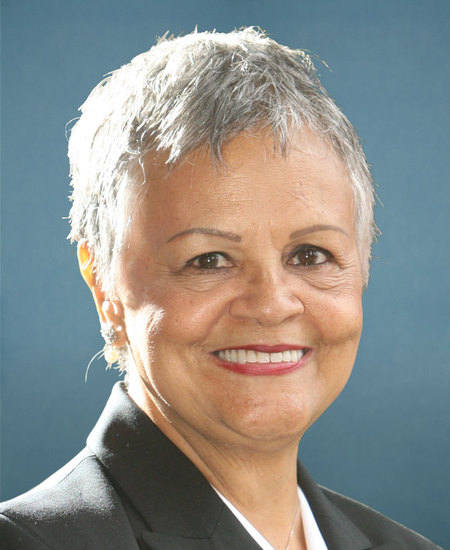
119th Congress Introduced by Bonnie Watson Coleman and 8 co-sponsors

Creates a new Office of Legal Access Programs to deliver mandatory multilingual legal orientation to detained noncitizens, boosting access to counsel and informed decisions.

Introduced in House
0
WeVote Research Nonpartisan
Bill Summary · HR 9124

Bill at a Glance

  • Bill: HR 9124, Know Your Rights Act
  • Session: 119th Congress, 2nd Session
  • Purpose: Improve treatment of detained noncitizens by establishing a formal Office of Legal Access Programs and implementing mandatory legal orientation and information-sharing to increase efficiency, access to counsel, and informed decision-making in immigration proceedings.
  • Sponsor/Support: Introduced by Rep. Foster with a broad group of co-sponsors including Reps. Ramirez, Johnson, Norton, Nadler, Omar, García (IL), and Coleman.

What the bill would do

1) Establish the Office of Legal Access Programs (OLAP)

  • The Attorney General would create and maintain OLAP within the Executive Office for Immigration Review.
  • OLAP’s mission: develop and administer legal orientation programs to educate noncitizens about U.S. immigration procedures and rights; expand access to legal information.
  • The Attorney General must submit a plan to Congress within 180 days of enactment, including a timeline to deploy legal orientation programs for all detained persons within one year.
  • Input from NGOs and stakeholders must be sought in developing the plan.

2) Legal Orientation Programs (LOP)

  • LOPs to assist noncitizens in custody or released from custody in:
    • Making informed, timely decisions regarding removal and eligibility for relief.
    • Increasing efficiency and reducing costs in immigration proceedings and Federal custody processes.
    • Improving access to counsel and other legal services.
  • Programs and written notices of rights must be available in English and the top five languages spoken by detained individuals at each location during the preceding fiscal year.
  • Programs should identify particularly vulnerable noncitizens (e.g., unaccompanied minors, individuals with serious mental disability) for consideration under relevant INA provisions.
  • Services may extend to noncitizens in various immigration and asylum proceedings (specified by sections of the INA).

3) Procedures and Implementation

  • The Secretary of Homeland Security, in consultation with the Attorney General, would establish procedures to ensure LOAPs are available for all noncitizens in custody or released within 5 days of arrival.
  • Procedures would inform noncitizens about:
    • Basic immigration hearing procedures
    • Rights related to those hearings
    • Information to deter frivolous legal claims
    • Contacts for legal resources and providers, and other appropriate information as determined by the Attorney General
  • The bill includes a rule of construction clarifying that nothing in this section creates a new substantive or procedural right enforceable against the U.S. or its agencies.

4) Funding

  • authorizes appropriations as necessary to carry out the section.

Who would be affected

  • Detained noncitizens and those released from custody in U.S. immigration proceedings.
  • Immigration court system and Homeland Security operations, through the establishment of OLAP and mandatory LOAP deployment.
  • Nonprofit organizations and legal service providers who participate in providing information and resources under LOAP.
  • Federal agencies (Justice and Homeland Security) responsible for implementing legal orientation, rights information, and related procedures.

Key timelines and procedural notes

  • Enactment: Plan for OLAP and LOAP deployment to Congress within 180 days of enactment.
  • Deployment timeline: Legal orientation programs for all detained persons to be deployed within 1 year of enactment.
  • Availability timeline: LOAPs to be available within 5 days of a noncitizen’s arrival into custody or release, under DHS/AG procedures.
  • Language access: Rights notices and program materials must be available in English and the five most common languages among detained populations at each location (based on the prior fiscal year data).

Potential impacts and considerations

  • Access to information: Could improve understanding of rights and procedures, potentially leading to more informed decisions and better access to legal representation.
  • Efficiency and costs: Aims to reduce time and costs in immigration proceedings by enabling better pre-hearing decisions and access to counsel.
  • Vulnerable populations: Explicit attention to unaccompanied minors and individuals with serious mental disabilities.
  • Legal rights framework: The rule-of-construction clause clarifies that the act does not create new enforceable rights against the United States beyond the intended program benefits.
  • Implementation challenges: Requires interagency coordination (DOJ and DHS), funding appropriations, and effective outreach to diverse linguistic populations.

Summary

HR 9124 proposes to centralize and standardize essential legal information and orientation for detained noncitizens through a new Office of Legal Access Programs and mandatory Legal Orientation Programs. By delivering rights information in multiple languages, prioritizing vulnerable individuals, and integrating outreach with the immigration proceedings workflow, the bill seeks to improve decision-making, access to counsel, and overall efficiency in the immigration system. Funding and interagency procedures would be established to implement these changes within a year of enactment.

Compiled from official sources — confirm details with the bill’s official record.

Sign in to ask a question.