

WeVote

Bill

Bill

HR 8836

Know Your American Customer Act

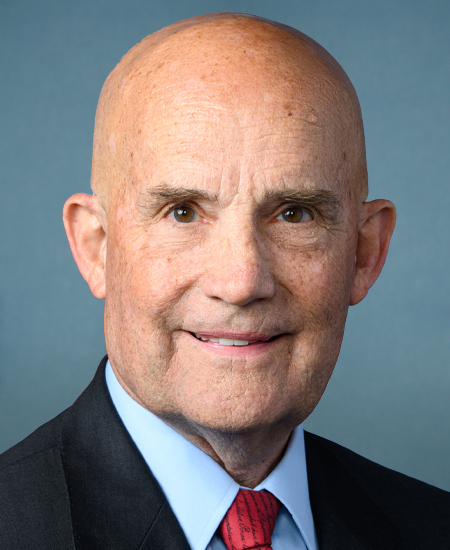
119th Congress Introduced by Keith Self

The bill requires certain financial institutions to verify citizenship or lawful presence of account holders, with specific documents, timelines, and penalties for noncompliance.

Introduced in House
0
WeVote Research Nonpartisan
Bill Summary · HR 8836

Know Your American Customer Act – Summary

  • Scope and purpose

    • Bill: H.R. 8836, introduced in the 119th Congress (May 14, 2026) by Rep. Keith Self.
    • Title: Know Your American Customer Act.
    • Purpose: Amend title 31 of the United States Code to require certain financial institutions to verify the citizenship and legal status of individuals, with new account opening and ongoing verification requirements, and to establish penalties for noncompliance.
  • Key provisions and changes

    • Creation of a new verification subsection (5318(r)) in the Bank Secrecy Act framework:
    • Definitions:
      • Covered individual: a person seeking to open an account at a covered institution; an individual who opened a qualifying account after enactment; or a person with substantial control over a legal entity seeking an account.
      • Covered institution: insured depository institutions and insured credit unions.
      • Lawful presence / period of authorized stay: defined with respect to U.S. citizenship, lawful admission, and active visa status as evidenced by documents (e.g., REAL ID-compliant IDs, passports, birth certificates, naturalization certificates, various DHS immigration documents, etc.).
      • Other terms clarified for compliance (e.g., distributions or transfers, authorized stay, etc.).
    • Eligibility to open and maintain an account:
    • General rule: a covered institution may not open or maintain an account for a covered individual not lawfully present in the U.S.
    • Verification requirements for new accounts (effective 90 days after enactment):
      • Requires presentation of specific documents to establish lawful presence or citizenship (listed documents include REAL ID-compliant IDs, U.S. passports, birth certificates, naturalization certificates, Cert. of Citizenship, green cards, valid foreign passports with I-94 or visa, SSN proof-of-earnings with state ID, DoD ID, or other DHS-accepted documents).
      • An exception allows continued use for joint holders added after enactment to be subject to verification.
    • For individuals with limited periods of authorized stay:
      • They must provide a certification detailing expiration date and basis for stay, modeled after nonresident alien certification under the Internal Revenue Code.
      • A grace/provisional access regime: 30 days full access, then 60 days restricted access (limited to deposits/credits; no withdrawals or transfers) if updated documentation is not provided; full access resumes if updated documentation is provided; account may be closed if documentation is not supplied by the end of the 60-day period.
      • Accounts opened by legal entities are exempt from these requirements.
    • Frozen/closed accounts and penalties:
    • Institutions must freeze or close accounts of individuals not lawfully present (subject to applicable laws on closure).
    • Civil penalties for violations, with safe harbors for good-faith compliance and accepting listed documents.
    • Enforcement and rulemaking:
    • Treasury, via the Financial Crimes Enforcement Network (FinCEN), would enforce the subsection, with coordination for insured credit unions through the NCUA.
    • Interim guidance within 30 days of enactment; final regulations within 90 days, detailing procedures for freezing/closing accounts, notices, handling incoming transfers to frozen/closed accounts, and transferring balances to another institution or foreign entity.
    • Limitations and state law:
    • The act would supersede conflicting state laws on residency verification.
    • Exclusions: nonresident aliens physically outside the U.S., foreign entities, foreign branches, or other foreign capital inflows are not subject to these verification requirements.
    • Criminal penalties (new subsection 5322(f)):
    • Strong penalties for noncitizens who open or maintain active accounts if not lawfully present, with exceptions for recent expirations or asylum proceedings not yet adjudicated.
    • Prohibits penalties solely for violations of 5318(r); maintains liability for other federal offenses.
  • Who would be affected

    • Covered individuals seeking or holding accounts at covered institutions (insured depository institutions and insured credit unions).
    • Joint account holders and authorized signers added after enactment.
    • Financial institutions (and their regulators) subject to new verification, freezing/closure, and penalty provisions.
    • Administrative entities: Treasury, FinCEN, NCUA, and relevant regulatory authorities for rulemaking and enforcement.
  • Procedural and timeline notes

    • 90 days after enactment for many verification provisions to take effect; interim guidance within 30 days; final regulations within 90 days of enactment.
    • Transitional provisions include a 30-day grace period and 60-day restricted period for temporary authorized stay cases, with opportunities to update documentation.

This summary captures the bill’s core aim: to require verification of citizenship or lawful presence for certain U.S. bank accounts, outline documentation and timing, establish account access rules during limited stays, and set enforcement and penalties for noncompliance.

Compiled from official sources — confirm details with the bill’s official record.

Sign in to ask a question.