

WeVote

Bill

Bill

HR 8524

Kenya Merritt Renewing our PACT Act of 2026

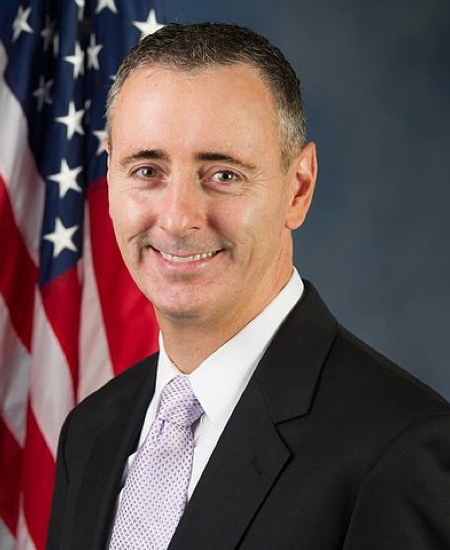
119th Congress Introduced by Brian Fitzpatrick and 2 co-sponsors

Establishes a presumption that certain burn pit/toxin exposure diseases are caused by federal civilian employment, easing workers’ comp claims for eligible employees.

Introduced in House
0
WeVote Research Nonpartisan
Bill Summary · HR 8524

Summary of HR 8524 (119th Congress)

Purpose

  • The Kenya Merritt Renewing our PACT Act of 2026 aims to improve access to workers’ compensation for civilian federal employees who were exposed to toxic burn pits and related hazards during foreign contingency operations.
  • The bill would establish a presumptive connection between certain diseases and employment in burn pit/toxic exposure contexts, simplifying claims for affected federal workers.

Key Provisions

  • New §8143c added to Title 5 (Civilian Federal Employees)

    • Creates a presumptive eligibility framework for employees with exposure to burn pits and toxic hazards in foreign contingency operations.
    • Applies to eligible employees from specified federal agencies and roles, including:
    • Department of Justice
    • Department of State
    • Department of Defense
    • Department of the Treasury
    • Department of Agriculture
    • Department of Commerce
    • Department of Homeland Security
    • Elements of the intelligence community
    • Federal law enforcement officers (as defined in the Law Enforcement Congressional Badge of Bravery Act)
    • An eligible employee is defined as someone who, on or after August 2, 1990, performed job duties for at least 30 total days in a country/territory while the United States conducted a contingency operation there.
    • Establishes a list of diseases deemed “proximately caused by employment” due to burn pit and related toxin exposure, to be used for disability or death claims.
    • The listing:
    • Starts with an initial list that aligns with diseases described in 38 U.S.C. 1120(b) (as of the act’s enactment).
    • Allows additions to the list only if the Secretary of Veterans Affairs adds the disease to 38 U.S.C. 1120(b) via regulations described in the same statutory provision.
    • Includes a process where, after regulations are finalized, the Secretary of Labor, via direct final rule, adds the same diseases to the Title 5 list within 90 days.
    • Requires the Secretary of Labor to maintain the list and keep it updated.
  • Presumption of Employment Connection (Disability or Death Claims)

    • For claims under this subchapter, a disease on the established list is presumed to have been incurred in or aggravated by employment in the burn pit/toxin exposure context, even if there is no direct evidence in the employment period.
    • This shifts the burden to rebut the presumption rather than proving the disease connection from scratch.
  • Administrative and Cross-Agency Coordination

    • Requires communication and alignment between the Secretary of Veterans Affairs, the Secretary of Labor, and relevant agencies for the initial list, updates, and processing of claims.
  • Effective Date and Application

    • The amendments apply to disability or death claims filed on or after the date of enactment.
  • Reporting Requirement

    • Within 1 year of enactment, the Secretary of Labor must submit a progress report on implementing the Act and its amendments to specified Senate and House committees, including:
    • Number of eligible employees (as defined by §8143c(a))
    • Progress on adding diseases to the list
    • Overall implementation status

Who Would Be Affected

  • Civilian federal employees who served in foreign contingency operations and were exposed to burn pits or related toxic hazards, as defined by the Act.
  • Eligible employees include personnel from multiple federal departments and agencies, as well as certain federal law enforcement officers and intelligence community members.
  • Dependents and survivors may potentially benefit indirectly through disability and death presumptions, consistent with workers’ compensation frameworks.

Potential Impacts

  • Access to Benefits: Makes it easier for affected federal workers to obtain workers’ compensation by establishing a disease presumption tied to burn pit exposure.
  • Administrative Efficiency: Streamlines claims by reducing the need to demonstrate a direct causal link between specific exposure events and health outcomes.
  • Data and Oversight: Creates a mechanism for tracking implementation progress and eligibility, with a formal reporting requirement to Congress.
  • Health and Compensation Coverage: Aligns federal workers’ compensation provisions with evolving understandings of burn pit-related health risks and similar toxic exposures.

Notes

  • The bill is introduced by Rep. Pou, with bipartisan co-sponsors Rep. Fitzpatrick and Rep. Maloy, and referred to the House Committee on Education and the Workforce (as of the latest action history).
  • The bill’s title emphasizes updating and renewing protections initially established by the broader PACT Act framework, specifically tailored to federal civilian employees exposed in burn pit contexts.

Compiled from official sources — confirm details with the bill’s official record.

Sign in to ask a question.