

WeVote

Bill

Bill

HR 6617

Keeping All Students Safe Act

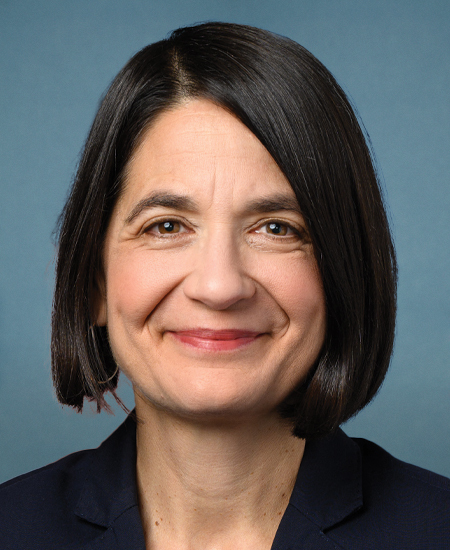
119th Congress Introduced by Becca Balint and 41 co-sponsors

Prohibits seclusion and dangerous restraints in federal-funded schools, requires trained handling, data reporting, and funding to implement positive behavioral supports nationwide.

Introduced in House
0
WeVote Research Nonpartisan
Bill Summary · HR 6617

Keeping All Students Safe Act (HR 6617) – Summary

What is the bill and its purpose

  • Bill: H.R. 6617
  • Session: 119th Congress
  • Purpose: To prohibit and prevent seclusion, mechanical restraint, chemical restraint, and dangerous restraints that restrict breathing, and to reduce the use of physical restraint in schools receiving Federal funds. It also establishes state plans, reporting requirements, and grant programs to support implementation of these protections and to promote positive, non-aversive behavior supports.

Key provisions and changes the bill would make

  • Title I: Prohibitions and additional requirements

    • Prohibits unlawful seclusion and restraint by program personnel, law enforcement officers, and school security guards in programs that receive Federal financial assistance.
    • Defines what counts as unlawful versus permissible forms of restraint/seclusion, including explicit prohibition on life-threatening restraints that restrict breathing or blood flow, and restraints inappropriate for a student’s disability or medical/psychiatric needs.
    • Distinguishes time outs from seclusion and clarifies that certain devices or therapeutic restraints are not automatically unlawful if used appropriately and not to cause pain.
    • Establishes a private right of action for students or parents to seek declaratory or injunctive relief, damages, and attorneys’ fees for unlawful seclusion or restraint. Limits liability of program personnel in certain contexts but ensures no sovereign immunity for violations.
    • Sets enforcement mechanisms:
    • Investigations by the relevant Secretary (Education for most programs; HHS for Head Start entities).
    • Withholding of federal payments for violations.
    • Specific provisions for Head Start programs to address violations and report to the appropriate Secretaries.
  • Title I – Additional operational requirements

    • Requires each program to meet specific conditions for the use of physical restraint:
    • Restraint permitted only if there is imminent danger of serious physical injury and less restrictive interventions have failed.
    • Restraint must be performed by trained and certified personnel (State-approved crisis intervention training), with limited exceptions for unavoidable emergencies.
    • Restraint ends immediately when the imminent danger ceases and must be non-coercive and non-interfering with communication.
    • Mandates procedures after restraint incidents:
    • Prompt notification to parents (verbal/electronic the same day; written within 24 hours).
    • Post-incident meeting within 5 school days including specified participants (parents, student if appropriate, involved staff, an expert in behavior interventions).
    • Documentation of precipitating events, prior interventions, duration, and any injuries.
    • Prohibits planning restraints in individual student plans (with allowance for general crisis plans) and requires proactive strategies to prevent future incidents.
  • Title II – State plan, reporting, and grants

    • Defines terms related to schools, Head Start, and related entities.
    • Requires a state plan within two years of enactment and annually thereafter, detailing:
    • Policies that comply with Section 101 and state crisis intervention training programs.
    • Mechanisms for monitoring/enforcing compliance.
    • Public awareness and stakeholder engagement requirements.
    • Oversight activities, site visits, and technical assistance to promote positive behavioral supports.
    • Mandates annual reporting to the Secretary and public dissemination, including detailed disaggregation of restraint/seclusion data by demographics and school type, while protecting privacy.
    • Grants to State Educational Agencies (SEAs) to implement policies, improve data collection, and promote school climate improvements, including Positive Behavioral Interventions and Supports (PBIS), mental health supports, restorative justice, trauma-informed care, and crisis/de-escalation interventions.
    • Grants may be subawarded to Local Educational Agencies (LEAs); private school participation must be equitable; funds remain public property.
  • Title III – General provisions

    • National assessment of the Act’s effectiveness, including Head Start programs, with interim and final reports to Congress within specified timelines.
    • Protection and advocacy systems must be notified and given authority to assist in investigations and protections when injury or death occurs in conjunction with seclusion or restraint.
    • Department of the Interior and Department of Defense Education Activity schools would be required to comply with Title I regulations and related reporting.
    • Rule of construction clarifies that sworn law enforcement can arrest if criminal activity is involved, but the Act otherwise tightens restraints in schools.
  • Titles, definitions, and accessibility

    • Provides definitions for chemical restraint, mechanical restraint, physical restraint, time out, seclusion, school security guards, program personnel, and related terms.
    • Clarifies the applicability to private schools not receiving Federal funds and home schools.
    • Severability clause to keep the rest of the bill intact if a provision is struck down.
  • Funding and appropriations

    • Authorization of appropriations: $40 million per fiscal year from 2026 through 2030 to implement the Act.

Who would be affected

  • Programs that receive Federal financial assistance (including public schools, Head Start programs, and related educational programs) and any personnel involved in student discipline (program personnel, school security guards, and law enforcement officers within these programs).
  • State Educational Agencies and Local Educational Agencies responsible for implementing the state plans, training, data collection, and grant administration.
  • Head Start and Early Head Start programs, with coordinated oversight by HHS and ED.
  • Private schools and home schools are addressed for applicability and participation in program activities (equitable access where applicable).
  • Students, parents, and advocates (via protections, reporting, and right to sue for unlawful seclusion/restraint).

Timeline and enforcement highlights

  • State plans due: Not later than 2 years after enactment; annual updates thereafter.
  • Grants to SEAs: Authorized for a 3-year period; competitive subgrants to LEAs.
  • National assessment: Interim report at 3 years after enactment; final report at 5 years.
  • Enforcement: Withholding federal payments for violations; investigations by the Secretary; Head Start-specific regulatory actions; civil actions by affected students/parents.
  • Public reporting and data transparency requirements to improve oversight and accountability.

Bottom line

HR 6617 aims to fundamentally overhaul school discipline by prohibiting seclusion and dangerous restraints, mandating training and data-driven positive behavioral supports, and creating robust state and federal oversight with funding to support implementation. It focuses on ensuring safety while reducing reliance on punitive restraint methods and increasing transparency and protections for students, particularly those with disabilities.

Compiled from official sources — confirm details with the bill’s official record.

Sign in to ask a question.