

WeVote

Bill

Bill

SB 921

Insurance: no-fault; certain claims by a passenger of a vehicle driven by an intoxicated individual; prohibit. Amends 1956 PA 218 (MCL 500.100 - 500.8302) by adding sec. 3009a.

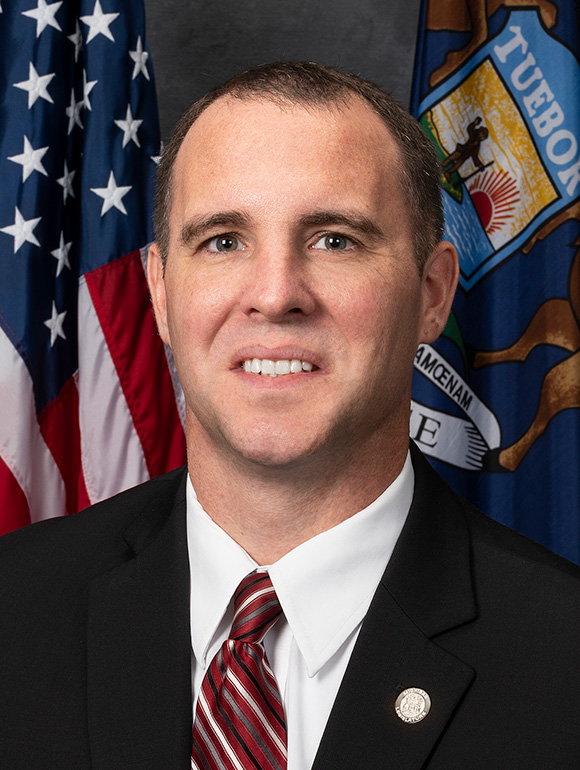
2025-2026 Regular Session Introduced by Thomas Albert

SB 921 would bar no-fault recovery for a passenger when the driver was intoxicated and impairment conditions and testing consent criteria are met.

REFERRED TO COMMITTEE ON CIVIL RIGHTS, JUDICIARY, AND PUBLIC SAFETY
0
WeVote Research Nonpartisan
Bill Summary · SB 921

Summary of Senate Bill 921 (2025-2026) – Michigan

Overview

  • Bill: SB 921
  • Session: 2025-2026
  • Jurisdiction: Michigan
  • Topic: Insurance code changes related to no-fault claims
  • Introduced: April 23, 2026 (Senator Thomas Albert)
  • Status: Introduced and referred to the Committee on Civil Rights, Judiciary, and Public Safety
  • Sponsor: Senator Thomas Albert (co-sponsor)

SB 921 would amend the Michigan Insurance Code (1956 PA 218) by adding new section 3009a to restrict no-fault recovery in certain automobile accident scenarios involving intoxication.

Main purpose and intent

  • To limit or bar an individual’s recovery under a no-fault automobile insurance policy when the injury or death arises from a crash in which the vehicle’s driver was impaired, and certain conditions apply to the passenger and others involved in the crash.

Key provisions

The bill adds Sec. 3009a and provides that an individual who sustains bodily injury or death from ownership or use of a motor vehicle is not entitled to recover any amount under a policy described in Sec. 3009 if all of the following conditions are met:

  1. The individual is a passenger in the motor vehicle at the time of the accident.
  2. The driver of the motor vehicle had an impaired ability to function due to the influence of intoxicating liquor or a controlled substance (as defined under section 2955a of the Revised Judicature Act of 1961).
  3. The accident was a result of that impaired ability.
  4. One or more of the following applies to the passenger:
    • The passenger also had an impaired ability to function due to intoxicating liquor or a controlled substance (as defined in section 2955a of the Revised Judicature Act).
    • The passenger refused to consent to testing requested by a peace officer for breath, blood, or urine, in the same manner as required for alcohol- or controlled-substance-related driving violations under the Michigan Vehicle Code.
  5. One or more other individuals (besides the passenger) sustained bodily injury or death, and the higher limit under Sec. 3009(1)(b) is applicable.

Enacting clause notes:
- The act applies to automobile insurance policies issued or renewed after the effective date of the amendatory act.

Who/what is affected

  • Affected parties: Individuals who are passengers in a motor vehicle involved in an accident where the driver was impaired and where the specified conditions apply.
  • Insurance policies: No-fault automobile insurance policies governed by Michigan’s no-fault framework (1956 PA 218) would be subject to the new Sec. 3009a.
  • Law enforcement testing: Provisions reference consent or refusal to submit to breath, blood, or urine tests as part of determining eligibility for recovery.

Procedural/timeline aspects

  • Effective date: The new Sec. 3009a would apply to policies issued or renewed after the effective date of the act (specific date to be determined by enactment).
  • Process: Referral to the Senate committee on Civil Rights, Judiciary, and Public Safety for consideration; potential amendments or reporting before moving to the full Senate and, if passed, to the House for concurrence.

Potential impact and considerations

  • No-fault implications: If a passenger meets all enumerated conditions, they could be barred from recovering under the no-fault policy for the accident.
  • Deterrence/behavioral impact: The provision ties recovery to impairment status and consent to testing, potentially influencing behavior of intoxicated drivers and passengers.
  • Legal complexity: Determination would require assessment of impairment for both driver and passenger, consent/refusal to testing, and comparison to higher liability limits under Sec. 3009(1)(b).

Note: This summary reflects the bill text as introduced and does not reflect any amendments, committee actions, or final legislative passage.

Compiled from official sources — confirm details with the bill’s official record.

Sign in to ask a question.