

WeVote

Bill

Bill

HF 1584

Informed consent provided for sensitive examinations of an anesthetized or unconscious patient, and penalty established.

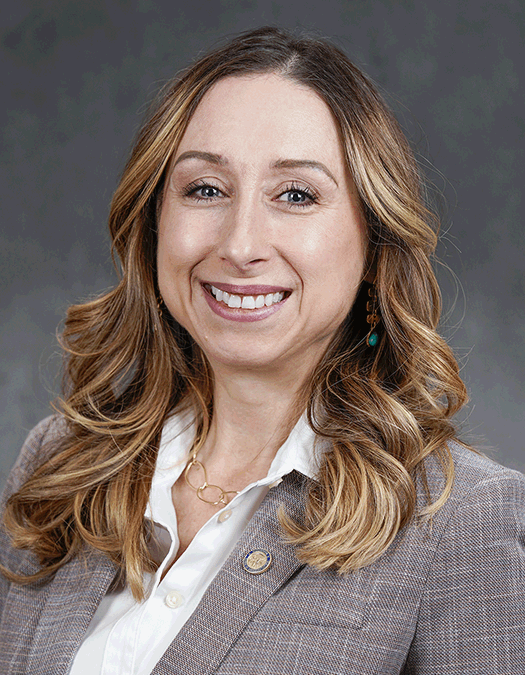
2025-2026 Regular Session Introduced by Kaela Berg and 9 co-sponsors

Requires informed, voluntary consent (from patient if possible or a representative) for sensitive exams performed while the patient is anesthetized or unconscious.

Author added Zeleznikar
0
WeVote Research Nonpartisan
Bill Summary · HF 1584

Summary: HF 1584 (Minnesota, 2025-2026)

Purpose and intent

HF 1584 establishes requirements for obtaining informed consent for sensitive examinations performed on patients who are anesthetized or unconscious. The bill aims to ensure that patients or their legally authorized representatives are informed about and authorize sensitive examinations before these procedures occur, even when the patient cannot consent due to anesthesia or unconsciousness. It also establishes penalties for noncompliance.

Key provisions

  • Scope of consent requirements

    • Applies to sensitive examinations conducted on patients who are anesthetized or otherwise unconscious.
    • Requires explicit informed consent before any sensitive examination is carried out in this context.
  • Definition of sensitive examinations

    • The bill defines what constitutes a “sensitive examination,” typically including examinations of a private or intimate area or procedures that patients would reasonably expect to be confidential or highly personal. (Note: The exact statutory definition would be specified in the bill text.)
  • Consent process

    • Requires obtaining informed consent from the patient (if possible) or from a legally authorized representative in the event the patient is unconscious or anesthetized.
    • Consent must be voluntary, informed, and specific to the sensitive examination.
    • May require documentation of consent in the medical record and detailing the nature of the examination, alternatives, and potential risks.
  • Penalties and enforcement

    • Establishes penalties for violations, which may include civil penalties, professional discipline, or other sanctions as determined by the statute.
    • Provisions may specify enforcement mechanisms and responsible agencies (e.g., health department, licensing boards).
  • Exclusions and exceptions

    • The bill may specify carve-outs (for example, life-saving emergencies where consent cannot be obtained, or procedures already governed by other consent statutes).
    • Possible alignment with existing consent requirements or medical ethics guidelines.

Who is affected

  • Patients

    • Patients undergoing anesthesia or who are unconscious and subjected to sensitive examinations must have informed consent obtained, when feasible, and documented.
  • Healthcare providers and facilities

    • Hospitals, surgical centers, clinics, and individual providers performing sensitive examinations on anesthetized or unconscious patients.
    • Requires changes to consent practices, documentation, and potential staff training.
  • Policymakers and regulators

    • State health departments, medical boards, and other oversight bodies responsible for enforcement and disciplinary actions.

Procedural and timeline aspects

  • Introduction and sponsorship

    • Introduced and referred to Health Finance and Policy committee in February 2025.
    • Several co-sponsors listed, indicating bipartisan or cross-aisle support.
  • Next steps (typical for a bill of this type)

    • Potential committee hearings to discuss definitions, consent process specifics, penalties, and exemptions.
    • Amendments may be proposed to refine scope, align with existing consent standards, or adjust penalties.
    • Movement through committee, potential floor debate, and votes before moving to the other chamber.

Notes

  • The available information does not include the full text of the bill, so exact definitions (e.g., of “sensitive examinations”) and the precise penalty amounts or enforcement details are not specified here.
  • If you need, I can create a side-by-side comparison with current Minnesota consent requirements or extract the exact language once the bill text is available.

Compiled from official sources — confirm details with the bill’s official record.

Sign in to ask a question.