

WeVote

Bill

Bill

SB 1194

Immigration Legal Fellowship Project.

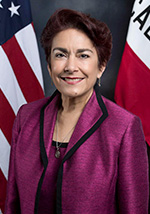
2025-2026 Regular Session Introduced by Anna Caballero and 5 co-sponsors

Establishes an Immigration Legal Fellowship Project to expand access to immigration legal services by placing trained fellows with organizations to provide representation and guida

Coauthors revised.
0
WeVote Research Nonpartisan
Bill Summary · SB 1194

Overview

SB 1194, introduced in the 2025-2026 California legislative session, is titled the Immigration Legal Fellowship Project. The bill appears to establish or expand a program related to providing immigration legal services through fellowships. The action history shows progression through committees and floors, with amendments and re-referrals, and multiple committee approvals, indicating legislative momentum toward passage. The bill has several co-sponsors: Celeste Rodriguez, Alex Lee, Sade Elhawary, María Elena Durazo, and Anna Caballero.

Note: The summary below is based on the bill’s title, public description, and the provided legislative history. For precise statutory language, specific program mechanics, funding levels, and eligibility criteria, please refer to the bill text and fiscal analyses.

Purpose and Intent

  • Create or expand an Immigration Legal Fellowship Project to increase access to immigration legal services.
  • Leverage fellowship positions (likely recent graduates or early-career attorneys) to provide high-quality, low-cost or pro bono legal representation to immigrants or individuals navigating immigration processes.
  • Improve capacity within California to assist individuals with immigration relief, asylum, naturalization, defense against removal, and related legal issues.

Key Provisions and Changes (as implied by the bill’s title and typical structure)

  • Establishment of a fellowship program focused on immigration law.
  • Eligibility criteria for fellows (e.g., graduates of law schools, pending bar admission, or licensed attorneys; requirements around training, supervision, and performance metrics).
  • Placement framework, including host organizations (e.g., legal aid groups, nonprofit organizations, law schools, or government partners) and placement geography within California.
  • Duties and scope of work for fellows, likely including client counseling, case preparation, intake, outreach, and possibly supervision of paralegals or volunteers.
  • Supervision and oversight mechanisms, including required supervision by licensed immigration attorneys and programmatic evaluation.
  • Training components, ethics guidelines, and professional development requirements for fellows.
  • Funding and staffing: delineation of funding sources (state funds, grants, or matching contributions) and how fellows are compensated.
  • Data collection and reporting requirements, including metrics on access to counsel, case outcomes, client demographics, and program impact.
  • Compliance with state bar and professional conduct rules, confidentiality, and client protections.
  • Sunset or renewal provisions if the program is time-bound, and any waivers or legislative authorities needed to administer the fellowship.

Who Would Be Affected

  • Immigrants and non-citizens seeking legal immigration assistance in California who would receive representation or guidance from program fellows.
  • Host organizations or nonprofits that participate in the fellowship, expanding their capacity to serve clients.
  • Law students, graduates, or early-career attorneys who would participate as fellows, impacting their training, supervision, and employment pathway.
  • State administrative agencies or departments responsible for administering the program, including reporting and oversight obligations.
  • Potentially, counties or municipalities receiving improved access to legal services for immigrants, depending on program structure.

Procedural and Timeline Aspects

  • Introduction and referral to committees (Referred to RLS, then HUMAN S., APPR, JUD, etc.), indicating a multi-committee review process typical of California Senate/Assembly consideration.
  • Series of “Do pass” actions and re-references, suggesting amendments and refinements across committees.
  • Floor actions include readings and votes (e.g., third reading passage with notable bipartisan support indicated by vote counts), and transmission between House chambers.
  • Final status as of the latest update: re-referred to the Committee on JUD (Judiciary) after initial committee approvals, with ongoing consideration likely toward final passage and enactment.
  • Deadlines or dates mentioned (e.g., hearing dates in April–May 2026, May 14 crossovers, June 16–17 committee action) reflect the bill’s progression through the legislative calendar.

Potential Impacts

  • Increased capacity to provide legal representation for immigration matters, potentially reducing backlogs and wait times for clients.
  • Improved access to qualified legal services for vulnerable immigrant populations through fellowship placements.
  • Creation of a structured training and professional development pathway for new immigration attorneys.
  • Enhanced data collection on immigration legal services and outcomes, informing future policy and program adjustments.
  • Fiscal impact on state budgets depending on funding sources and whether the program is ongoing or time-limited.

If you’d like, I can incorporate the exact text of the bill and enumerated provisions into this summary, or provide a side-by-side comparison with existing law to clarify statutory changes.

Compiled from official sources — confirm details with the bill’s official record.

Sign in to ask a question.