

WeVote

Bill

Bill

HB 4973

ILLINOIS PROMOTION-CONVENTIONS

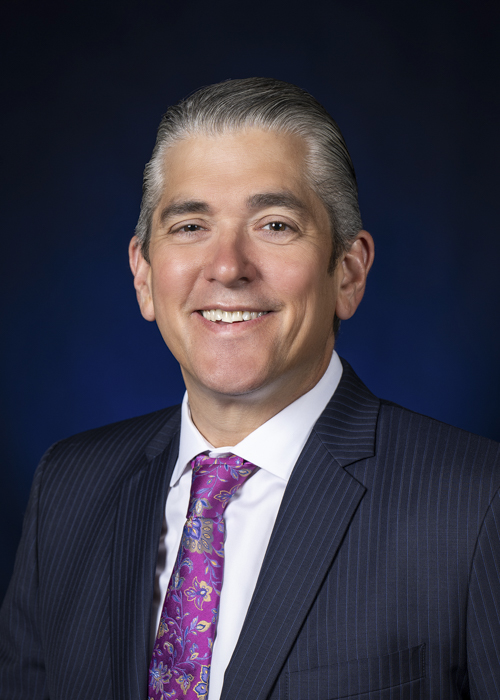
104th Regular Session Introduced by Dave Vella

HB 4973 creates a state Tourism Incentive Grant Program with multi-year grants and a $5 million annual fund to attract and host major events across Illinois.

0
WeVote Research Nonpartisan
Bill Summary · HB 4973

Summary of HB 4973 (104th Illinois General Assembly)

Purpose and intent

HB 4973 amends the Illinois Promotion Act and related statutes to create and fund an expanded state program designed to attract and retain conventions, meetings, sporting events, trade shows, and other tourism-driven activities in Illinois. The bill authorizes the Department of Commerce and Economic Opportunity (DCEO) to administer competitive grant programs with longer-term incentives and establishes a dedicated funding mechanism to support these incentives.

Key provisions

  • New and expanded grant programs under the Illinois Promotion Act (20 ILCS 665/8a):

    • (1) Existing tourism grants/loans: DCEO may grant loans and grants for tourism attractions to local governments, promotion groups, non-profits, or for‑profit entities. Each grant/loan capped at $1,000,000 and not to exceed 50% of total development or improvement costs.
    • (2) Tourism Attraction grants (from the State CURE fund): Grants not to exceed $1,000,000 and may exceed 50% of actual expenditures, including festivals, with funding aligned to ARPA-related purposes and federal guidance.
    • (3) Competitive grants for incentive programs: Initial terms up to 5 years to attract/retain conventions, meetings, sporting events, and trade shows, aimed at increasing travel.
    • (4) New long-term incentives: Beginning July 1, 2026, competitive grants with initial terms of up to 10 years to support incentive programs for attracting events. New grant awards would occur once every 3 years. Key eligibility and design details:
    • Geographic scope: Events may involve multiple Illinois destinations in competition.
    • Room-night thresholds: Outside Chicago—minimum 200 contracted, revenue-generating room nights; Inside Chicago—minimum 5,000.
    • Maximum grant outside Chicago: $1,000,000 per grant cycle.
    • Eligible applicants: certified convention and visitors bureaus (CCVBs), units of local government, local promotion groups, non-profits, for-profits, or convention center authorities.
    • Joint applications: Allowed with CCVBs; letters of support/intent required if joint efforts involve other entities.
    • Joint implementation: Applications may describe a jointly implemented program with a CCVB and other eligible partners.
  • New tourism incentive fund (Finance Act changes):

    • Creation of the Tourism Incentive Grant Program Fund as a dedicated special fund in the state treasury.
    • On July 1 of each year starting 2026, the State Comptroller shall transfer $5,000,000 from the General Revenue Fund to the Tourism Incentive Grant Program Fund (subject to appropriation).

Affected entities

  • State agencies: Department of Commerce and Economic Opportunity (DCEO) administers the program.
  • Local governments and organizations: Counties, municipalities, local promotion groups, CCVBs, not-for-profits, and for-profits involved in tourism and events.
  • Tourism and events industry: Convention centers, hotels, and venues that host conventions, meetings, sporting events, and trade shows.

Procedural and timeline considerations

  • Effective date: Immediate upon enactment.
  • Funding structure: Establishes a dedicated fund (Tourism Incentive Grant Program Fund) with annual transfers of $5 million starting July 1, 2026, and ongoing subject to appropriation.
  • Grant cycles: For the long-term incentive program (item 4), new awards occur once every 3 years, with specific performance thresholds (room-night credits) to qualify.
  • Compliance: Grants must follow allowable purposes consistent with federal guidance (e.g., ARPA-related restrictions).

Overall impact

HB 4973 aims to bolster Illinois’ appeal as a destination for large events by providing longer-term, competitively awarded grants and a stable funding stream to support incentives. The approach seeks to increase business and leisure travel, boost local tourism economies, and expand statewide event-hosting capacity while establishing clear eligibility, funding limits, and performance criteria.

Compiled from official sources — confirm details with the bill’s official record.

Sign in to ask a question.