

WeVote

Bill

Bill

HB 5812

Human services: food assistance; authorization for waiver of work requirements for SNAP benefits; require. Amends 1939 PA 280 (MCL 400.1 - 400.119b) by adding sec. 14o.

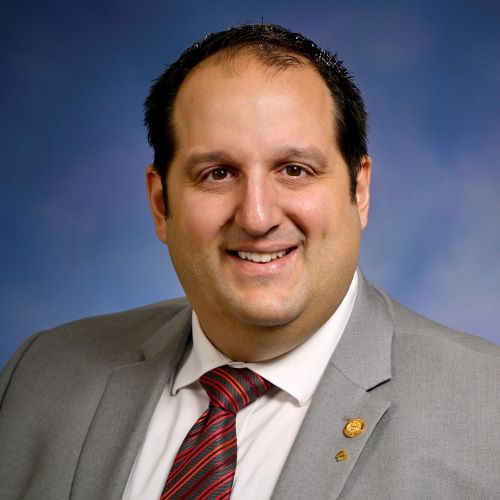
2025-2026 Regular Session Introduced by Joe Aragona and 5 co-sponsors

HB 5812 would require explicit Michigan Legislature approval before any SNAP work-requirement waivers or state exemptions, limiting swift changes to these rules.

REFERRED TO COMMITTEE ON HOUSING AND HUMAN SERVICES
0
WeVote Research Nonpartisan
Bill Summary · HB 5812

Summary of HB 5812 (Michigan, 2025-2026)

Title

Human services: food assistance; authorization for waiver of work requirements for SNAP benefits; require. Amends 1939 PA 280 (MCL 400.1 - 400.119b) by adding sec. 14o.

Purpose and Intent

HB 5812 seeks to constrain the Michigan Department of Health and Human Services (or the relevant department implementing the Social Welfare Act) from pursuing or approving waivers related to federal work requirements for SNAP benefits (the Supplemental Nutrition Assistance Program) without direct legislative authorization. It also would prevent the department from exercising Michigan’s option to provide exemptions from the standard federal work requirements, with a narrow exception preserving certain “good cause” exemptions for temporary absence from work.

In short, the bill places additional legislative controls on federal work-rule waivers tied to SNAP eligibility, limiting authorized waivers and exemptions unless specifically approved by the Michigan Legislature.

Key Provisions

  1. Restriction on waivers (Sec. 14o(1))

    • The department may not seek, apply for, accept, or renew any waiver of SNAP work requirements under 7 U.S.C. 2015(o)(4) without first obtaining explicit authorization from the Michigan Legislature.
    • Effect: Creates a legislative gatekeeping mechanism before Michigan can modify or suspend federal SNAP work requirements through waivers.
  2. Restriction on exemptions from work requirements (Sec. 14o(2))

    • The department may not exercise Michigan’s option to provide exemptions from the SNAP work requirements under 7 U.S.C. 2015(o)(6)(F).
    • Exception: This prohibition does not limit the application of good cause exemptions for temporary absence from employment as provided in 7 C.F.R. 273.24(b)(2).
    • Effect: Michigan would generally decline state-provided exemptions to the federal work requirements, except for the explicitly permitted “good cause” temporary-absence exemptions.

Affected Parties and Institutions

  • Department of Health and Human Services (or equivalent Michigan welfare agency): Would be barred from pursuing waivers or state exemptions unless specifically authorized by the Legislature.
  • Michigan Legislature: Becomes the gatekeeper for waivers and exemptions to SNAP work requirements.
  • SNAP recipients in Michigan: Indirectly affected, as eligibility criteria related to work requirements could become more constrained (depending on future legislative actions), with potential impacts on participation and work-related requirements.
  • SNAP program administrators and caseworkers: Would operate under stricter rules governing waivers and exemptions, requiring legislative authorization prior to any changes.

Procedural and Timeline Aspects

  • Amendment Type: Adds new Section 14o to 1939 PA 280 (The Social Welfare Act).
  • Action History: Introduced and referred in April 2026; bill electronically reproduced and assigned to the Committee on Government Operations.
  • Next Steps: If advanced, the committee would consider whether to approve legislative authorization for waivers or exemptions; passage would require approval by both chambers of the Michigan Legislature and the governor.

Practical Implications

  • The bill strengthens legislative oversight over changes to SNAP work requirements in Michigan.
  • It could limit the state’s ability to quickly respond to changing welfare policy needs via waivers, increasing reliance on legislative action.
  • The allowance for “good cause” exemptions for temporary absence remains intact, aligning with federal guidelines, but broader exemptions would be restricted.

If you’d like, I can compare this proposal to current Michigan practice and the federal framework to illustrate potential policy outcomes under HB 5812.

Compiled from official sources — confirm details with the bill’s official record.

Sign in to ask a question.