

WeVote

Bill

Bill

S 5146

Higher Education Access and Success for Homeless and Foster Youth Act of 2026

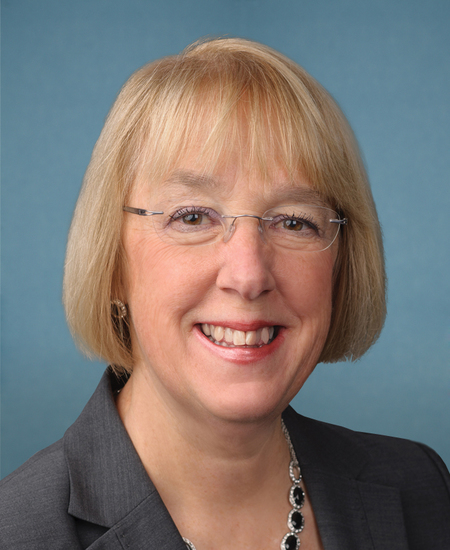
119th Congress Introduced by Patty Murray

The bill aims to expand financial aid access, housing, and targeted support for homeless, unaccompanied, and foster youth in higher education through liaisons, outreach, and strong

Introduced in Senate
0
WeVote Research Nonpartisan
Bill Summary · S 5146

Overview

  • Bill: S.5146, Higher Education Access and Success for Homeless and Foster Youth Act of 2026
  • Session: 119th Congress
  • Purpose: Amend the Higher Education Act of 1965 to improve access to financial aid, housing, and support services for homeless youth and foster care youth, and to strengthen programmatic outreach, data collection, and accountability across federal higher education programs.
  • Introduced by: Senator (D) Elizabeth Warren’s office? (In text, sponsor is Mrs. Murray; co-sponsor: Patty Murray)
  • Status: Introduced and referred to the Senate Committee on Health, Education, Labor, and Pensions (as of action history).

Main purpose and intent

  • To improve financial aid access, independence determinations, housing access, and targeted support for homeless youth, unaccompanied youth, at-risk youth, and former foster youth within federal higher education programs.
  • To ensure systematic outreach, tailored assistance, and accountability for programs serving these students.

Key provisions and changes

1) Definitions and terminology (Section 2)

  • Adds and defines new terms:
    • Foster care youth
    • Homeless youth (aligned with McKinney-Vento Act)
    • Unaccompanied/unaccompanied youth
  • Makes technical corrections to existing definitions and reorganizes certain paragraphs in the Higher Education Act.

2) Student loan ombudsmanship for homeless and foster youth (Section 3)

  • Expands the loan ombudsman authority to:
    • Receive, review, and resolve complaints regarding student independence determinations for homeless/unaccompanied youth in collaboration with child welfare and education agencies.

3) Housing access and liaisons (Section 4)

  • Institutions must:
    • Include housing facilities in access provisions and ensure availability of institutionally owned/operated housing for students temporarily unable to meet housing obligations due to disbursement delays.
  • Establish liaisons (staff) to assist homeless/unaccompanied/at-risk/foster youth with access to financial aid, housing, health care, meals, public benefits, and mentoring.
  • Institutions must post liaison contact info and processes for independence determinations; allow voluntary self-identification in admissions; permit limited sharing of such info with the liaison.

4) Liaisons duty and housing access at participating institutions (Sections 4, 5-9)

  • Requires each participating institution to designate a liaison and implement access plans for housing and support services.
  • Institutions must develop housing access plans for term breaks and identify community housing resources.
  • Admissions applications may include voluntary questions about status (homeless, unaccompanied, at risk, foster youth) with explanations and potential data sharing with the liaison, with applicant consent.

5) Federal TRIO and Talent Search program enhancements (Sections 5-9)

  • Strengthens requirements across TRIO programs to:
    • Ensure outreach to homeless and foster youth.
    • Broaden the scope of eligible participants to include homeless and foster youth in eligibility and service descriptions.
    • Add explicit requirements to reduce barriers and share best practices for serving these students.

6) Reporting and evaluation (Section 10 and Section 11)

  • Adds data collection and reporting requirements at project conclusion:
    • Number of homeless youth and foster youth served.
    • Effectiveness of strategies and program enhancements.
  • Requires ongoing evaluation and annual/periodic reporting on outcomes.

7) Postsecondary program priority and tuition (Sections 12-14)

  • Federal Work-Study: Prioritize employment for homeless and foster youth.
  • In-state tuition: Prohibits charging higher-than-resident rates for homeless or foster youth at public institutions; requires in-state tuition alignment and phased implementation (effective for first period following the act’s effective date for states receiving federal assistance).

8) Data transparency and determinations (Section 13)

  • Adds reporting on undetermined homeless determinations, providing insight into pending status for applicants seeking homeless considerations.

9) Secretarial support, guidance, and professional development (Section 15)

  • Secretary to issue revised guidance within 120 days.
  • Annual professional development for liaisons and relevant staff starting within one year.
  • Requires a Congress-report on effective strategies for outreach, streamlined financial aid processes, and recruitment/retention improvements, to be produced at least every five years.

10) Effective date

  • The Act, including amendments, would take effect on July 1, 2026.

Who would be affected

  • Institutions of higher education participating in federal programs under the Higher Education Act (including those running TRIO and Talent Search).
  • Homeless youth, unaccompanied youth, at-risk youth, self-supporting youth, and foster care youth seeking higher education.
  • Financial aid administrators, campus liaisons, student support staff, child welfare agencies, and educational liaisons designated under McKinney-Vento provisions.
  • State agencies administering foster care and adoption programs (due to cross-agency coordination).

Procedural and timeline aspects

  • Title provisions require designations of liaisons, posting of information, and admissions questions to be voluntary with defined data-sharing conditions.
  • Secretarial actions include:
    • Guidance issuance within 120 days of enactment.
    • Annual professional development starting within one year.
    • A comprehensive federal report on effectiveness at least annually for the first year, then every five years.
  • In-state tuition provisions begin a phased implementation, taking effect in states’ first award year following the act’s effective date for homeless/foster youth.

Potential impact

  • Likely expansion of access to financial aid and housing for homeless and foster youth.
  • Improved coordination among financial aid offices, housing services, and child welfare agencies.
  • Increased accountability through required reporting and evaluations.
  • Potentially faster and more consistent determination of independence for eligible students.
  • Enhanced data transparency related to candidacy and outcomes for these populations.

Compiled from official sources — confirm details with the bill’s official record.

Sign in to ask a question.