

WeVote

Bill

Bill

HF 2725

Healthy Aging subcabinet and citizens' engagement council established, plan required, and money appropriated.

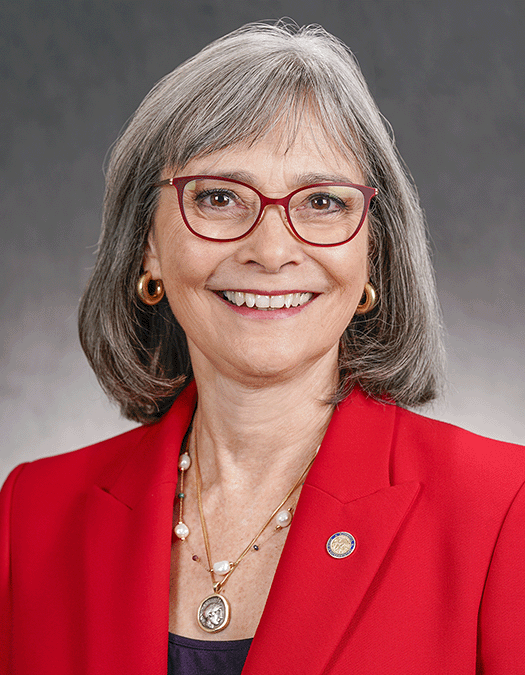
2025-2026 Regular Session Introduced by Ginny Klevorn and 3 co-sponsors

Creates a state structure and plan to coordinate aging policy, fund operations, and involve older Minnesotans through a Healthy Aging Subcabinet and a Citizens’ Engagement Council.

Author added Virnig
0
WeVote Research Nonpartisan
Bill Summary · HF 2725

Summary of HF 2725 (2025-2026 Minnesota Legislative Session)

Purpose

HF 2725 would establish a Healthy Aging subcabinet and a Healthy Aging Citizens’ Engagement Council, require the development of an aging-focused plan, and appropriate funds to support these efforts. The bill aims to coordinate state efforts to promote healthy aging and civic engagement among older Minnesotans.

Key Provisions

  • Establishment of an Executive Structure

    • Creates a Healthy Aging Subcabinet within the state government. This body would likely coordinate aging-related policy across agencies (though the bill text would specify membership and duties; the summary notes only the establishment as a central coordinating entity).
  • Citizen Engagement Body

    • Establishes a Healthy Aging Citizens’ Engagement Council. This council would presumably include older adults and stakeholders to provide input on policies, programs, and priorities related to healthy aging.
  • State Health-Aging Plan

    • Requires the development (and likely periodic updating) of a state plan for healthy aging. The plan would outline goals, strategies, and measurable outcomes to improve health, independence, and quality of life for aging Minnesotans.
  • Funding and Appropriations

    • Contains a money appropriation to support the subcabinet, council, and plan activities. The exact amount is not specified in the provided summary; the bill would specify appropriations and allowable uses (e.g., staffing, research, public engagement, program implementation).

Affected Parties

  • Minnesota State Government Agencies

    • Agencies involved in health, aging services, housing, social services, public health, and related areas would be coordinated under the Healthy Aging Subcabinet.
  • Older Adults and Caregivers

    • The Healthy Aging Citizens’ Engagement Council would directly involve senior Minnesotans and stakeholders, giving them a formal voice in policy development.
  • Policy and Program Implementers

    • State programs addressing elder care, preventive health, community supports, transportation, and aging-in-place initiatives would be aligned with the new plan and subcabinet.

Procedural and Timeline Aspects

  • Introduction and Referral

    • Introduced and referred to the State Government Finance and Policy committee (as of March 24, 2025).
  • Authorship and Sponsorship

    • Primary author addition: Virnig (as of April 24, 2025).
    • Co-sponsors: Natalie Zeleznikar, Ginny Klevorn, Mohamud Noor, Bianca Virnig.
  • Next Steps (typical for this type of bill)

    • Committee hearings and possible amendments to define:
    • Specific duties and membership of the subcabinet.
    • Composition, appointment process, and duties of the Citizens’ Engagement Council.
    • Details of the state aging plan (scope, timelines, performance metrics).
    • Exact dollar amounts, eligible uses, and reporting requirements for appropriations.
    • Potential passage through policy and finance committees, floor votes, and conference committee if differences arise between chamber versions.

Practical Impact

  • If enacted, would create a formal government framework focused on aging issues, improving coordination across agencies.
  • Institutionalizes public input from older adults through a dedicated council.
  • Establishes a strategic plan for aging—potentially guiding funding decisions, program design, and outcome measurement.
  • Requires ongoing funding to support the subcabinet, council operations, and plan implementation.

NOTE: This summary reflects the bill’s stated structure and presumed content based on the title and action history provided. The exact statutory language would specify membership, duties, timelines, reporting, and the precise appropriation amount and authorized uses.

Compiled from official sources — confirm details with the bill’s official record.

Sign in to ask a question.