

WeVote

Bill

Bill

HB 4428

Health: pharmaceuticals; choice of formulation, dosage, and route of administration for opioid antagonists by certain persons and governmental entities if department of health and human services distributes opioid antagonists free of charge; allow. Creates new act.

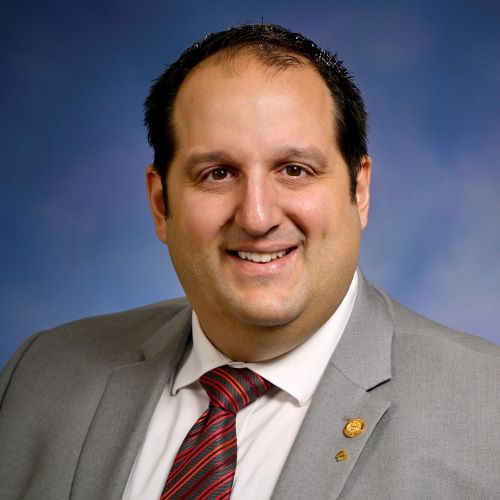
2025-2026 Regular Session Introduced by Joe Aragona and 7 co-sponsors

Michigan HB 4428 lets the DHHS provide free opioid antagonists with customizable formulation, delivery device, administration method, and dosage, unless federal funding is jeopardized

bill electronically reproduced 05/06/2025
0
WeVote Research Nonpartisan
Bill Summary · HB 4428

Summary of HB 4428 (Michigan): Health - Pharmaceuticals; Choice of Formulation, Dosage, and Route of Administration for Opioid Antagonists

Purpose and intent

  • Establishes a new act to govern the types of opioid antagonists distributed at no cost by the Department of Health and Human Services (DHHS) to individuals or governmental entities, with a focus on reducing opioid-related overdoses.
  • Allows recipients of free opioid antagonists to choose certain characteristics of the product (formulation, delivery device, administration method, and dosage), subject to federal funding considerations.

Key provisions

  • Definitions (Sec. 1):

    • “Department” = Department of Health and Human Services.
    • “Opioid antagonist” = FDA-approved drug indicated for emergency treatment of known or suspected opioid-related overdose.
    • “Opioid-related overdose” = conditions resulting from opioid use or related substances that require medical assistance (e.g., respiratory depression, unconsciousness).
  • Distributor choice provision (Sec. 3):

    • If the department distributes an opioid antagonist at no cost to a person or governmental entity to help reduce opioid overdoses, the department must allow the recipient to select:
    • Formulation
    • Type of delivery device
    • Method of administration
    • Dosage of the opioid antagonist provided.
    • Exception: this choice is not allowed if allowing customization would jeopardize the department’s receipt of federal funding.

How it would work in practice

  • Recipients (e.g., individuals, local governments, health entities, first responders) receiving free opioid antagonists from DHHS could tailor the product to their needs and capabilities, potentially improving accessibility and appropriate use.
  • The program remains contingent on federal funding considerations; certain customization options could be limited if they risk federal funds.

Who would be affected

  • State agencies and entities involved in the distribution of opioid antagonists (DHHS and any designated recipients).
  • Local governments, public health departments, hospitals, EMS providers, clinics, and other organizations that might receive free opioid antagonists from the state.
  • Individuals who receive the free opioid antagonists and the entities responsible for deploying them to reduce overdoses.

Procedural and timeline aspects

  • Introduced: May 6, 2025.
  • Legislative actions show: filed March 11, 2025, and referred to Committee on Regulatory Reform; subsequent entries indicate status as of May 2025 with committee referral and first-read actions.
  • This is a new act proposed for Michigan law, with effectiveness contingent on passage and potential alignment with federal funding requirements.

Notes

  • The bill emphasizes user choice in distribution logistics while balancing federal funding constraints.
  • No specific dollar amounts, timelines for implementation, or detailed reporting requirements are provided in the text available.

Compiled from official sources — confirm details with the bill’s official record.

Sign in to ask a question.