

WeVote

Bill

Bill

HB 4220

Health occupations: veterinarians; veterinarian-client-patient relationship; require. Amends 1978 PA 368 (MCL 333.1101 - 333.25211) by adding sec. 18818. TIE BAR WITH: HB 4221'25

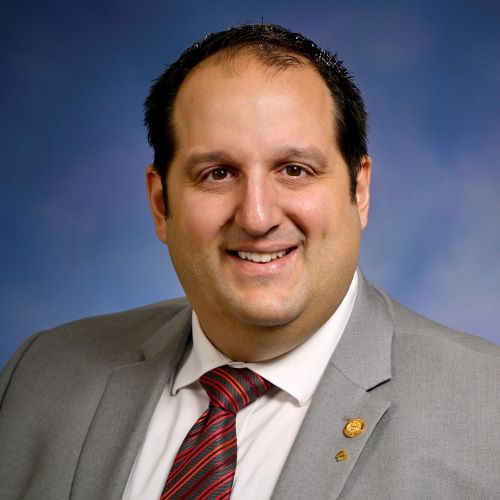
2025-2026 Regular Session Introduced by Joe Aragona and 19 co-sponsors

HB 4220 requires a defined VCPR to practice veterinary medicine; telehealth may form VCPR under rules, with limited telehealth prescriptions and required follow-ups.

REFERRED TO COMMITTEE ON REGULATORY AFFAIRS
0
WeVote Research Nonpartisan
Bill Summary · HB 4220

Summary — HB 4220 (Veterinarian‑Client‑Patient Relationship)

Status: Passed House (11/13/2025); transmitted to Senate. Introduced: 03/10/2025. Sponsor: Rep. Joseph A. Aragona. Tie bar: HB 4221 (enactment conditioned on HB 4221).

Purpose

HB 4220 adds section 18818 to the Michigan Public Health Code to require that the practice of veterinary medicine occur only within the context of a defined veterinarian‑client‑patient relationship (VCPR). The bill prescribes the elements that establish a VCPR and sets rules under which telehealth may be used to form that relationship and to prescribe drugs.

Key provisions

  • VCPR requirement: A veterinarian may not practice veterinary medicine unless a VCPR exists. To establish a VCPR (subject to federal law) the bill requires, at minimum:

    • The veterinarian assumes responsibility for clinical judgments about the animal and treatment.
    • The animal’s owner has agreed to follow the veterinarian’s instructions.
    • The veterinarian has “current knowledge” of the animal sufficient to make at least a general/preliminary diagnosis.
  • Ways to obtain “current knowledge”:

    • In‑person examination of the animal.
    • Telehealth examination using real‑time interactive audio and visual technology (subject to conditions below).
    • A medically appropriate and timely visit to the premises where the animal or the owner’s group of animals is kept.
  • Telehealth limitations and requirements:

    • Telehealth examinations may not be used for non‑companion animals unless the veterinarian already has current knowledge via an on‑site visit.
    • Telehealth may not be used to issue interstate veterinary inspection certificates or “pet health certificates.”
    • When using telehealth the veterinarian must use equipment that can transmit images and medical records electronically, be readily available (or arrange emergency coverage), and encourage or allow in‑person follow‑up when concerns cannot be resolved remotely.
    • If an in‑person follow‑up cannot be provided, the veterinarian must give the owner (or qualified individual) a list of geographically accessible veterinarians.
    • If concerns cannot be addressed via telehealth, the bill encourages scheduling an in‑person follow‑up within 90 days.
  • Prescribing after telehealth:

    • If the only exam is telehealth, the vet may prescribe up to a 14‑day supply with no refills. One additional 14‑day supply may be prescribed after a second telehealth exam; no further renewals without an in‑person exam.
    • Controlled substances may not be prescribed on the basis of telehealth alone — an in‑person exam or an on‑site visit is required.
    • Veterinarians must notify owners that some drugs may be available at pharmacies and, on request, send prescriptions to the pharmacy of the owner’s choice.
    • Prescribers must comply with federal law and state prescribing rules (including MCL 333.16285 et seq.).

Definitions (selected)

  • “Companion animal”: defined by Michigan Penal Code (MCL 750.50b).
  • “Pet health certificate”: as defined in MCL 287.331.
  • “Telehealth”: defined by MCL 333.16283.
  • “Qualified individual”: a person in possession of the animal who does not know the owner.

Who is affected

  • Primary: licensed veterinarians and animal owners (particularly owners of companion animals).
  • Secondary: pharmacies, Michigan Department of Agriculture (for certificates), LARA (licensing/enforcement), and potentially local corrections/probation systems if violations lead to criminal convictions.

Procedural/timeline notes & fiscal impact

  • The bill adds MCL 333.18818. Its enactment is conditioned on passage of HB 4221 (tie bar / conditional effective date is included in the bill text).
  • House actions: substitute (H‑3) adopted; passed House 11/13/2025 (immediate effect declared by House), then transmitted.
  • Fiscal impact: indeterminate. The Department of Licensing and Regulatory Affairs (LARA) may have additional enforcement duties and potential fine revenue; potential impacts on corrections/local government if new criminal violations or convictions result.

This summary highlights substantive changes to VCPR formation and telehealth practice rules for veterinary medicine under Michigan law.

Compiled from official sources — confirm details with the bill’s official record.

Sign in to ask a question.