

WeVote

Bill

Bill

HB 4104

Health occupations: occupational therapists; licensure process for occupational therapists; modify to incorporate occupational therapy licensure compact. Amends secs. 16345, 18301 & 18305 of 1978 PA 368 (MCL 333.16345 et seq.) & adds secs. 18303a & 18303b. TIE BAR WITH: HB 4103'25

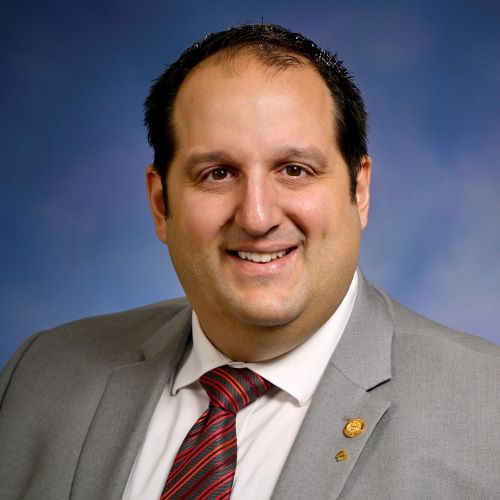
2025-2026 Regular Session Introduced by Joe Aragona and 42 co-sponsors

Michigan joins the Occupational Therapy Licensure Compact, allowing OT/OTA practice across state lines under a compact privilege instead of a separate Michigan license.

bill ordered enrolled
0
WeVote Research Nonpartisan
Bill Summary · HB 4104

Summary — HB 4104 (S-1): Occupational Therapy Licensure Compact (Michigan)

Status: Placed on Order of Third Reading with Substitute (S-1). House passed May 13, 2025 (immediate effect); effective date in substitute: 18 months after enactment. Tie-bar: becomes effective only if HB 4103 (which enacts the Compact text) is also enacted.

Main purpose

HB 4104 implements Michigan statutory changes to participate in the Occupational Therapy Licensure Compact (OTLC). The bill authorizes occupational therapists (OTs) and occupational therapy assistants (OTAs) who hold an OTLC “compact privilege” to practice in Michigan without obtaining a separate Michigan license, and aligns Michigan licensing law and board responsibilities with Compact membership.

Key provisions / changes

  • Adds sections 18303a and 18303b to the Public Health Code to expressly authorize:
    • Individuals holding a Compact privilege as an occupational therapist to practice in Michigan and to be treated, for purposes of statutory obligations, as licensed under the Code.
    • Individuals holding a Compact privilege as an occupational therapy assistant to practice in Michigan under supervision and to be treated as licensed under the Code.
  • Amends definitions in part 183 (occupational therapy) and clarifies scope of practice language.
  • Fee changes (Sec. 16345):
    • Application processing fee shown as $20.00.
    • Establishes a $75.00 per-year fee for an individual seeking to hold a Compact privilege.
  • Board and administrative adjustments (Sec. 18305):
    • Retains Michigan Board of Occupational Therapists composition (9 voting members: 5 licensed OTs and 4 public members, one public member must be a physician).
    • 4‑year terms for appointed members.
    • The board shall select the director to act as Michigan’s delegate for Compact purposes (substitute language).
  • Conditional enactment and timing:
    • The amendatory act takes effect 18 months after enactment and does not take effect unless HB 4103 (the Compact enactment) is enacted.

How the Compact (as reflected in related HB 4103 materials) operates — relevant impacts

  • Compact privilege: authorization equivalent to a license granted by a remote member state when the practitioner’s home-state license meets Compact requirements (valid, unencumbered, meets exam/education/CE standards).
  • Background checks: initial Compact privilege applicants must undergo FBI fingerprint-based criminal background checks per Commission rules.
  • Regulatory and enforcement framework:
    • Remote states may investigate and take action against practitioners exercising Compact privileges in their state; home state retains exclusive authority to take action against its license.
    • Member states must participate in the Occupational Therapy Compact Commission’s data system (coordinated database with licensure, adverse action, and investigative information).
    • States are expected to enforce Compact obligations across branches of government.
  • Mobility and telehealth: intended to facilitate interstate practice, telehealth, and support military spouse portability.

Who is affected

  • Occupational therapists and occupational therapy assistants seeking to practice in Michigan from other Compact states (or Michigan practitioners seeking Compact privileges elsewhere).
  • Michigan Board of Occupational Therapists and the Department/Director serving as the state Compact delegate.
  • Department of Licensing and Regulatory Affairs / Department of Health and Human Services (administration, participation in Commission data system).
  • Employers, patients/clients, and payers who receive or authorize occupational therapy services across state lines.

Fiscal and legal considerations

  • Fiscal impact to the State is indeterminate. LARA and DHHS would assume administrative responsibilities; existing staff/appropriations are expected to be sufficient but the Compact Commission may levy an unknown annual assessment on member states. The State could incur legal or enforcement costs if Compact terms are contested or if the State defaults.

Procedural/timeline notes

  • HB 4104 was introduced Feb 20, 2025 and passed the House May 13, 2025. The Senate substitute (S-1) sets an effective date 18 months after enactment and conditions enactment on HB 4103 being enacted. Current status: placed on order of third reading with substitute (S-1).

Compiled from official sources — confirm details with the bill’s official record.

Sign in to ask a question.