

WeVote

Bill

Bill

HB 6060

Health occupations: health professionals; reciprocity for individuals who hold an out-of-state license or registration; modify. Amends secs. 16186 & 16186a of 1978 PA 368 (MCL 333.16186 & 333.16186a).

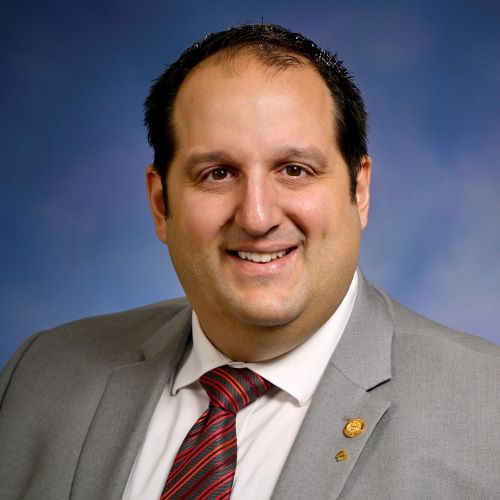
2025-2026 Regular Session Introduced by Joe Aragona and 1 co-sponsor

Allows health professionals licensed in other states or Canada to obtain Michigan licensure/registration via reciprocity if substantially equivalent, with a 90-day decision timelin

bill electronically reproduced 06/09/2026
0
WeVote Research Nonpartisan
Bill Summary · HB 6060

Summary of bill: HB 6060 (2025-2026) – Health occupations: reciprocity for individuals with out-of-state licenses

Purpose and intent

  • Create and modify licensing reciprocity rules for health professionals who are licensed or registered in another state or in Canada, aiming to streamline initial licensure or registration in Michigan based on credentials from other jurisdictions.
  • Expand faster entry pathways for military-connected individuals (active duty, veterans, and dependents) through an initial license or registration without examination if certain criteria are met.

Key provisions and changes

Section 16186 – General reciprocity for out-of-state or Canadian licenses

  1. Allow an applicant who is:
    • Licensed in another state or registered in another state, or
    • Holds a health profession specialty field license or specialty certification from another state to be granted an appropriate Michigan license/registration/specialty certification if they:
      • (a) Substantially meet Michigan licensure requirements.
      • (b) Are licensed/registered in another state or in a Canadian province with standards substantially equivalent to Michigan (subject to subsection 3).
      • (c) If licensed in a Canadian province, have completed the educational requirements for licensure in Canada or the U.S.
      • (d) Will perform the professional services for which they bill in Michigan and third-party reimbursement requests originate from their Michigan place of employment.
      • (e) Have held the out-of-state/Canadian license/registration for at least 1 year.
  2. The board or a designated task force may require an in-person interview to evaluate qualifications (within the application process).
  3. A provision to treat certain Canadian credentials as meeting Michigan requirements if a national or Canadian national exam is passed (with an exception where rules disallow this for certain applicants who do not meet training/education expectations of U.S.-educated applicants or equivalently credentialed Canadian programs). The department may promulgate disallowance rules through consultation with the licensing board.
  4. For respiratory therapists licensed in Canada, the department must consult the National Board for Respiratory Care and the Canadian Society of Respiratory Therapists’ 2004 international reciprocity agreement.
  5. The department must act on an application for license/registration/specialty certification within 90 days of a completed submission.
  6. This section does not restrict licensing under other provisions and does not automatically create eligibility to participate in interstate licensing compacts (even if a license is granted under this section).

Section 16186a – Initial license/registration without examination (military/veteran-focused reciprocity)

  1. An applicant must be granted an initial license or initial registration without an examination if all of the following are met:
    • (a) The applicant is one of:
      • A member of the armed forces or uniformed services,
      • A veteran, or
      • A dependent of a member of the armed forces, uniformed services, or a veteran.
    • (b) The applicant holds a current license/registration in good standing in another state or country for the health profession they seek in Michigan, and Michigan determines that the requirements in the other jurisdiction are substantially equivalent to or exceed Michigan’s requirements.
    • (c) The applicant demonstrates competence in the health profession through training/experience or other department-prescribed methods.
    • (d) The applicant satisfies criminal history checks as required by section 16174(3).
  2. The department must act on a completed application within 90 days.
  3. Temporary licenses or registrations for dependents may still be granted under section 16181, if applicable.
  4. Definitions: “Dependent” and “Veteran” are those used in section 16303 (military-related definitions in statute).

Who is affected

  • Health professionals currently licensed or registered in another U.S. state or a Canadian province seeking Michigan licensure/registration.
  • Applicants seeking health profession specialty field licenses or certifications from Michigan that originate from other jurisdictions.
  • Military personnel, veterans, and their dependents who are pursuing licensure/registration in Michigan, who may benefit from expedited, no-examination licensing.
  • Michigan licensing boards and the Department responsible for health professions licensure, who will administer reciprocity assessments, interviews, and processing timelines.

Procedural and timeline aspects

  • Processing timeline: 90 days to grant or deny a license/registration under both sections 16186 and 16186a after a completed application.
  • Interview option: The board/task force may require an in-person interview before granting licensure under section 16186.
  • Education/examination standards: Some pathways allow using national or Canadian examinations to satisfy out-of-state equivalence criteria, with potential rules to disallow this for certain Canadian-educated applicants.
  • Not a replacement for interstate compacts: This measure explicitly does not create eligibility or criteria to join interstate licensing compacts (even if license is granted via reciprocity).

Potential impact and considerations

  • Streamlined entry for qualified health professionals from other jurisdictions, potentially reducing licensure delays and facilitating workforce mobility.
  • Increased access for military-connected individuals to enter Michigan health professions without initial examinations when standards are substantially equivalent.
  • Need for ongoing coordination between Michigan boards and national/canadian credentialing bodies to determine substantial equivalence and to implement any new examination requirements or disallowances.
  • Applicants must still meet core integrity and competency checks, including criminal history screening.

Note: This summary reflects the bill as introduced and current text; if enacted, rules, timelines, and specific implementing guidance may be further refined by the department and licensing boards.

Compiled from official sources — confirm details with the bill’s official record.

Sign in to ask a question.