

WeVote

Bill

Bill

HF 3682

Grantee fraud risk rating system and corresponding grants management required, and money appropriated.

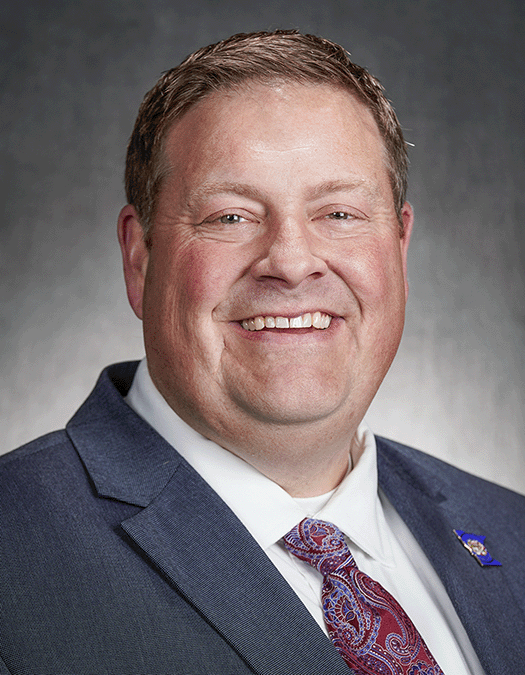
2025-2026 Regular Session Introduced by Keith Allen and 2 co-sponsors

Minnesota bill creates statewide fraud risk rating system for state grant recipients to enable risk-based oversight and compliance management across agencies.

Referred to State and Local Government
0
WeVote Research Nonpartisan
Bill Summary · HF 3682

Legislative bill overview

HF 3682 establishes a fraud risk rating system for state grant recipients and requires enhanced grants management protocols based on assessed fraud risk levels. The bill mandates that state agencies evaluate grantees using standardized criteria to categorize them into risk tiers, then apply corresponding oversight and compliance measures.

Why is this important

State grants represent significant public funding flows, and fraud or mismanagement can waste taxpayer money and undermine program effectiveness. A standardized risk rating system could improve accountability by directing intensive monitoring toward higher-risk recipients while streamlining processes for proven, low-risk grantees—potentially saving administrative resources while protecting public funds.

Potential points of contention

  • Administrative burden: Implementing a statewide fraud risk rating system requires developing and maintaining infrastructure, training, and standardized metrics across diverse state agencies, which could create costs that offset savings
  • Fairness and accuracy concerns: Risk rating systems may disadvantage smaller nonprofits or new grantees lacking financial history, potentially creating barriers to funding for emerging organizations serving vulnerable populations
  • Definition specificity: The bill's effectiveness depends heavily on how "fraud risk" is defined and measured; vague criteria could lead to inconsistent application across agencies or unintended consequences like excluding legitimate recipients

Compiled from official sources — confirm details with the bill’s official record.

Sign in to ask a question.