

WeVote

Bill

Bill

AB 1699

Good Fire Act: Prescribed Fire Liability Pilot Program: burn bosses: California Environmental Quality Act.

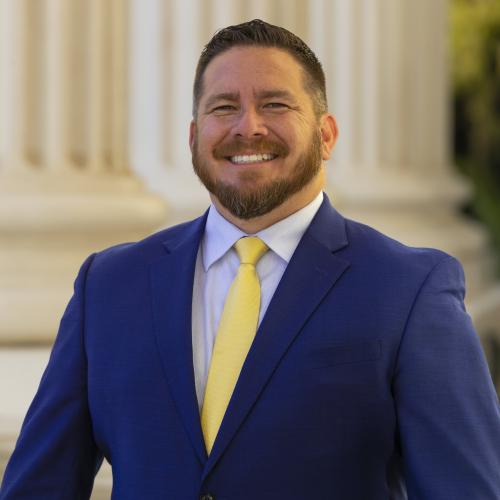
2025-2026 Regular Session Introduced by Juan Alanis and 10 co-sponsors

AB 1699 creates a Good Fire Act to advance prescribed burns via a liability pilot program, burn boss roles, and protections to reduce wildfire risk.

From committee: Do pass and re-refer to Com. on APPR. with recommendation: To Consent Calendar. (Ayes 8. Noes 0.) (June 30). Re-referred to Com. on APPR.
0
WeVote Research Nonpartisan
Bill Summary · AB 1699

Bill Summary — AB 1699 (California, 2025-2026)

Purpose and intent

  • AB 1699 establishes a Good Fire Act that creates a prescribed-fire liability pilot program and designates burn bosses to support prescribed burning efforts.
  • The overarching goal is to facilitate safer, more effective use of prescribed fire as a land-management and wildfire-risk-reduction tool while clarifying liability protections and processes for participants.

Key provisions and changes

  • Prescribed Fire Liability Pilot Program
    • Creates a formal pilot program to support prescribed burning activities. The program aims to streamline liability considerations to encourage implementation of prescribed fires as a wildfire mitigation measure.
    • Establishes criteria for participation, guidelines for operations, and procedures to evaluate outcomes and safety.
  • Burn Boss Roles and Authorization
    • Defines and authorizes burn bosses who oversee prescribed fire activities. Burn bosses would have defined qualifications, responsibilities, and authority to conduct prescribed burns within the pilot framework.
    • Likely includes standards for training, supervision, and coordination with land managers and firefighting agencies.
  • Liability Provisions
    • Implements liability protections or clarified liability expectations for participants in prescribed-fire activities under the pilot program.
    • Aims to reduce risk to landowners, managers, and prescribed-fire practitioners while maintaining accountability and adherence to safety protocols.
  • Interaction with Environmental Regulations
    • Aligns with California Environmental Quality Act (CEQA) considerations, ensuring that prescribed-fire activities under the pilot program comply with environmental review and mitigation requirements where applicable.
  • Program Oversight and Evaluation
    • Establishes oversight mechanisms and metrics to monitor program effectiveness, safety incidents, cost impacts, and ecological outcomes.
    • Provides for reporting requirements to track progress and inform potential expansion beyond the pilot.

Who is affected

  • Participants in prescribed-fire activities: landowners, land managers, public agencies, and private contractors proposing or conducting prescribed burns under the pilot.
  • Burn bosses: individuals who would be designated and qualified to lead prescribed-fire operations.
  • Regulatory bodies: state agencies involved in wildfire management, environmental review (CEQA), and public safety, which would oversee compliance and reporting.
  • Communities and ecosystems: potential reductions in wildfire risk and improved land management outcomes, with anticipated environmental trade-offs managed under CEQA requirements.

Procedural and timeline aspects

  • The bill’s action history shows a structured progression through committee hearings and approvals, with:
    • Initial referral to committees (Natural Resources, Environmental Management) and suspense.File considerations.
    • Passage out of several committees with recommendations for consent calendars.
    • Final readings and amendments in May 2026, with the bill advancing toward third reading.
  • Specific dates in the legislative process:
    • February–May 2026: Sequential committee referrals, amendments, and approvals.
    • May 14, 2026: Do pass and re-refer to Appropriations (APPR) with consent-calendar considerations.
    • May 18, 2026: Read second and third times; amended and ordered to third reading.

Potential impacts and considerations

  • Wildfire risk reduction: By enabling broader use of prescribed fire under a formalized program with liability clarity, the bill could increase the frequency and effectiveness of strategic burns.
  • Liability clarity: Targeted protections or clarified responsibilities may lower barriers for public and private entities to participate in prescribed-fire activities.
  • Environmental compliance: CEQA alignment ensures environmental impacts are considered, potentially facilitating smoother approvals when environmental concerns are addressed.
  • Implementation challenges: Success depends on robust burn-boss qualifications, interagency coordination, funding for training and oversight, and public safety considerations during burn operations.

If you would like, I can pull in the bill’s exact statutory language or provide a side-by-side comparison with current law to highlight the precise changes AB 1699 would make.

Compiled from official sources — confirm details with the bill’s official record.

Sign in to ask a question.