

WeVote

Bill

Bill

SB 1138

General Assembly; intergovernmental affairs.

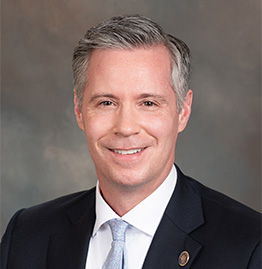
2025 Regular Session Introduced by Glen Sturtevant

Arizona’s bill adds school psychologists to funded safety program staff and requires stronger parent involvement in counseling/intervention plans.

Passed by indefinitely in Rules (10-Y 5-N)
0
WeVote Research Nonpartisan
Bill Summary · SB 1138

Summary — SB 1138 (Arizona, 57th Legislature, 1st Regular Session, 2025)

Short title / reference: school psychologists; school safety program
Primary sponsor(s): Senators Miranda, with Alston, Gabaldón, Gonzales; Representative Abeytia
Statute amended: A.R.S. § 15-154
Status (from provided record): Introduced February 6, 2025; Rule 3-9(a) / Re‑referred to Assignments

Note: The source document contained text from other unrelated SB 1138 bills from other states. This summary addresses the Arizona measure that amends A.R.S. § 15-154 (the school safety program).

Purpose / intent

To update Arizona’s school safety program statute to explicitly include school psychologists among the mental health professionals eligible for program funding, to allow flexible combinations of counselors/psychologists/social workers, to shift an application deadline earlier in the year, and to strengthen parental involvement requirements for school guidance, counseling and intervention plans.

Key provisions and changes

  • Adds "school psychologists" to the list of personnel whose placement costs may be supported by the school safety program (alongside school resource officers, juvenile probation officers, school counselors, and school social workers).
  • Clarifies that funding proposals may request support for any combination of school counselors, school psychologists, or school social workers.
  • Changes the program proposal submission deadline from April to on or before February 15.
  • For proposals supporting counselors/psychologists/social workers, requires program proposals to include:
    • A description of school safety needs.
    • A school guidance, counseling, and intervention program plan including:
    • Description of relationships with community resources.
    • Plan for use of the specified staff services.
    • Methods for evaluating effectiveness.
    • Confidentiality policies.
    • Policies on notifying parents/family members of identified issues.
    • Referral procedures to community/state agencies.
    • New explicit requirement: the policies must require school counselors, school psychologists and school social workers to partner with and communicate with parents or students "in every feasible and appropriate circumstance" before implementing the guidance, counseling and intervention plan.
  • Maintains and clarifies administrative duties of the Department of Education (ADE):
    • ADE to review proposals, use school-level academic/social/emotional data and crime statistics, visit sites to verify proposals, and administer program components in cooperation with relevant stakeholders (law enforcement for SROs; school administrators/mental health professionals for counseling services).
    • ADE will provide guidelines, curricula and support resources for law‑related education when SROs/juvenile probation officers are funded.
  • Prioritization and funding:
    • ADE may prioritize SRO/juvenile probation officer grants to districts/charters that share costs with law enforcement or courts.
    • ADE, with State Board approval, distributes monies to compliant districts/charters with approved proposals.
  • Reporting, evaluation and oversight:
    • ADE must evaluate approved proposals and report annually (by November 1) to the Governor and legislative leaders, with a copy to the Secretary of State; reports must include survey results and data on program impact. ADE will establish data-reporting guidelines for participants.
    • Program must include a guidance manual requiring a dispute resolution process in service agreements between schools and law enforcement for SRO grants.
  • Fiscal provision:
    • Appropriations for approved program proposals are exempt from the standard lapsing rules under A.R.S. § 35-190.

Who is affected

  • School districts and charter schools that choose to apply for school safety program funds.
  • School-based personnel: school counselors, school psychologists, school social workers, school resource officers and juvenile probation officers.
  • Local law enforcement agencies and juvenile courts (for SRO/juvenile probation officer placements).
  • Arizona Department of Education and State Board of Education (administration, review, approval, oversight).
  • Parents and students (enhanced parental communication/partnership requirement).

Timeline / procedural notes

  • Proposal submission deadline changed to on or before February 15 for participation (applications may request up to three fiscal years of participation; three-year awardees may submit annual modified spending plans).
  • ADE must deliver annual program evaluation/report by November 1 each year.
  • Program funding distributions require State Board review/approval.

Potential impacts

  • Expands access to funding for school-based mental health professionals by naming school psychologists explicitly and allowing flexible staffing combinations.
  • Earlier application deadline may require districts/charters to plan sooner in the fiscal cycle.
  • Stronger parental‑involvement requirement could increase family engagement and oversight of interventions but may also require additional administrative procedures and documentation by school staff.
  • Continued prioritization of cost‑sharing arrangements for SROs may incentivize local partnerships with law enforcement.

If you want, I can produce a redline-style list showing the exact statutory text edits (insertions/deletions) reflected in the bill.

Compiled from official sources — confirm details with the bill’s official record.

Sign in to ask a question.