

WeVote

Bill

Bill

HB 5832

Gaming: other; authority to obtain criminal history records and fingerprints; provide for. Amends sec. 21 of 1996 IL 1 (MCL 432.221).

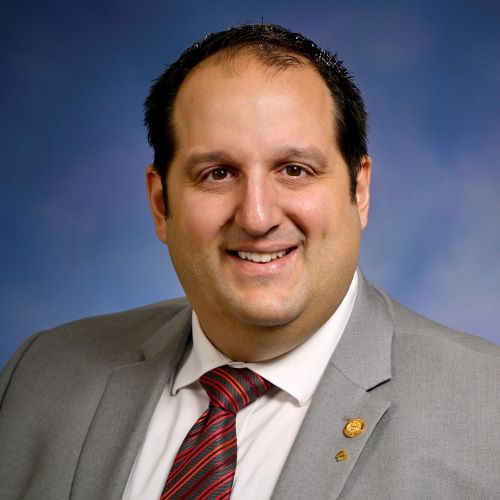
2025-2026 Regular Session Introduced by Joe Aragona and 2 co-sponsors

The bill requires the Michigan Gaming Control Board to conduct state and federal fingerprint-based criminal history checks for casino-related licenses and employees, with ongoing a

bill electronically reproduced 04/21/2026
0
WeVote Research Nonpartisan
Bill Summary · HB 5832

Summary of Bill: HB 5832 (Michigan, 2025-2026 Session)

Note: The bill is titled “Gaming: other; authority to obtain criminal history records and fingerprints; provide for. Amends sec. 21 of 1996 IL 1 (MCL 432.221).” The text provided traces Michigan Gaming Control and Revenue Act amendments and expands the board’s authority to require fingerprint-based criminal history checks for casino-related licensing and employment. The summary below focuses on the substantive provisions and practical impact.

1) Purpose and Intent

  • To authorize and require the Michigan Gaming Control Board (referred to as “the board”) to conduct state and national fingerprint-based criminal history checks for individuals applying for casino licenses, supplier licenses, and occupational licenses, as well as for current employees and prospective board employees, where legally permissible.
  • To formalize procedures for sharing and updating criminal history information with the board and relevant authorities, and to ensure ongoing monitoring through automated notification systems.

2) Key Provisions and Changes

A. Mandatory fingerprint-based criminal history checks

  • The board must require fingerprints from:
    • Applicants for casino licenses, supplier licenses, or occupational licenses (subsections (3) or (4) of the act), and
    • Onboarded employees and prospective board employees.
  • Fingerprints are to be submitted for review by:
    • Michigan Department of State Police (DSP) and
    • Federal Bureau of Investigation (FBI).
  • Purpose: To obtain current or subsequently arising criminal history information.

B. State Police and FBI involvement; potential costs

  • The Michigan Department of State Police will provide all requested criminal history checks for:
    • License applicants (casino, supplier, occupational) and current or prospective board employees/agents/contractors.
  • The DSP may charge the board a fee for these checks.
  • The board is prohibited from sharing criminal history checks with private entities.

C. Scope of fingerprints/individuals covered (occupational licenses)

  • For occupational licenses, the statute specifies three levels of licenses (level 1, 2, and 3) with detailed job classifications and duties. Examples include:
    • Level 1: Supervisory roles in compliance, HR, gaming floor operations, security, surveillance, etc.
    • Level 2: Roles with work in restricted casino areas or involving maintenance/operation of gaming devices; includes departments like pit, count room, auditing, marketing, security, cage/credit, surveillance.
    • Level 3: Roles in casino gaming area not requiring Level 1 or 2 licenses, including food/beverage service, cleaning, and various service/support functions; includes a broad list of facilities-related trades (electrical, HVAC, plumbing, carpentry, signage, decor, etc.) and models in tournaments.
  • The DSP will provide criminal history checks for occupational license applicants/current licensees seeking renewal in relation to these levels.

D. Checks for high-level management and qualifying businesses

  • Fingerprint checks required for:
    • Directors of casino or supplier applicants/licensees who are not occupationally licensed.
    • Managerial employees in casino or supplier entities who are not occupationally licensed and hold roles like principal executive officer, principal operations officer, or principal accounting officer.
  • For “qualifying business” participants (as defined in the bill, involving control, ownership, or material provision of goods/services), fingerprints are required for related directors or managerial employees in both casino and supplier contexts.

E. Fingerprint retention and automatic notification

  • The DSP shall:
    • Store and retain all submitted fingerprints in an automated fingerprint identification system (AFIS).
    • Provide automatic notification if new arrest information matches previously submitted fingerprints.
    • Notify the board immediately when a match occurs.
  • Future cross-checking: Fingerprints may be searched against future submissions, and relevant results must be shared with the board.
  • Possibility of coordination with FBI’s automatic notification system:
    • If the DSP participates in the FBI’s system, fingerprints may be stored in FBI’s system as well.
    • FBI notifications of updated information must be relayed to the board by the DSP.

3) Who Would Be Affected

  • Casino licensees and supplier licensees (and their employees and contractors).
  • Prospective and current board employees, along with agents or contractors acting on behalf of the board.
  • Occupational license applicants and current licensees across levels 1, 2, and 3.
  • Directors and managerial employees of casino and supplier applicants/licensees (including those not occupationally licensed).
  • Individuals categorized as “qualifying businesses” connected to licensees (and their principals/officers as defined in the bill).

4) Procedural and Timeline Considerations

  • Implementation hinges on authorization by the board and cooperation with the DSP and, potentially, the FBI’s notification systems.
  • Fees: The DSP may charge the board for criminal history checks.
  • Data handling: The board may not share fingerprint-based criminal history with private entities; sharing is limited to appropriate official channels (DSP/FBI) and the board.
  • Notifications: Automatic notifications will trigger immediate board awareness of new or updated criminal history information, enabling timely actions regarding licensing or employment decisions.

If you’d like, I can provide a side-by-side comparison with current law (MCL 432.221 as amended through 2019 PA 158) or a plain-language impact analysis for specific stakeholder groups (license applicants, casino employees, or licensing staff).

Compiled from official sources — confirm details with the bill’s official record.

Sign in to ask a question.