

WeVote

Bill

Bill

HR 8752

Full-Service Community School Expansion Act of 2026

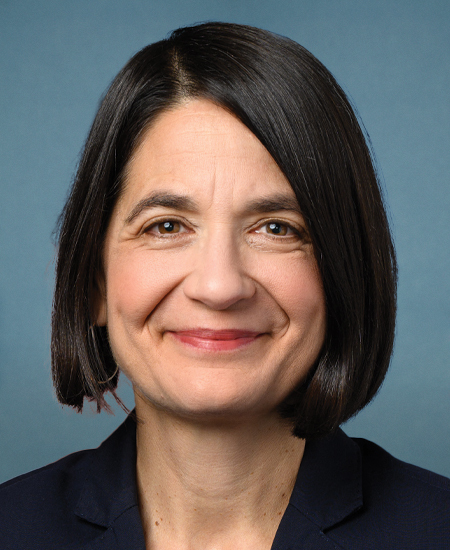
119th Congress Introduced by Becca Balint and 3 co-sponsors

The bill expands and funds Full-Service Community Schools to provide integrated supports, extended learning, and family/community engagement through defined roles, data-driven resu

Introduced in House
0
WeVote Research Nonpartisan
Bill Summary · HR 8752

Overview

HR 8752, the Full-Service Community School Expansion Act of 2026, would expand and accelerate a federal program to support full-service community schools. The bill adds new authorization levels, defines key roles and structures, and lays out planning, implementation, expansion, and state-level support mechanisms. It aims to deepen integrated student supports, extended learning time, family and community engagement, and collaborative leadership to improve student outcomes, equity, and school climate.

Main purpose and intent

  • Promote whole-child approaches in public elementary and secondary schools through a comprehensive framework of supports.
  • Fund planning, implementation, expansion, and renewal of full-service community schools (FSCS) that coordinate education with health, social, housing, transportation, and family services.
  • Build sustainable local capacity by establishing leadership structures, coordinators, and multi-stakeholder partnerships.

Key provisions and changes

  • Authorization of appropriations for FSCS (section 4625):
    • Planning grants: at least $100,000 per participating school, up to the grant limit.
    • Implementation grants: at least $250,000 per year per eligible school for 5 years.
    • Expansion grants: at least $300,000 per year per school for 3–5 years, with extra funds for additional schools (subject to annual caps through 2027–2029).
    • Additional set-asides: up to 15% for state-level grants; up to 5% for technical assistance; 5% reserved for program administration and capacity building.
  • Definitions and program structure:
    • Introduces and defines roles: community school coordinator, community school initiative director, and community-wide leadership team.
    • Establishes pillars of FSCS, including integrated student supports, expanded learning time, active family and community engagement, collaborative leadership, rigorous community-connected instruction, and a culture of belonging, safety, and care.
    • Expands the “pillars” framework to include data-driven results and a formal results framework with annual goals.
    • Requires school-based leadership teams and community-wide leadership teams that include a broad mix of stakeholders, including families, students (where appropriate), educators, community partners, and government or tribal representatives.
  • Full-Service community school program (4625 amendments):
    • Grants process segmented into planning, implementation, and expansion with eligibility criteria focused on high-need districts, rural or tribal contexts, and tribal organizations.
    • Requires data-sharing arrangements, public meeting requirements, nondiscrimination assurances, and public record accessibility.
    • Outlines reporting requirements at grant end, including student outcomes, school climate, staff qualifications, and cost savings/coordination with partners.
  • Expansion of eligible activities:
    • Enables FSCS to scale within a local educational agency (LEA) or consortium, with intermediary entities and shared leadership structures.
    • Permits joint utilization of facilities and cross-site coordination to maximize impact and streamline funding.
  • State role and governance:
    • States receive planning, implementation, and expansion grants to subgrant to LEAs, with a state-level steering committee, technical assistance centers, and ongoing evaluation requirements.
    • Specifies match-like and administrative limits (e.g., up to 10% admin; 90% direct services).
  • Bureau of Indian Education and Tribally-Controlled FSCS:
    • Allocates a parallel FSCS program plan for Bureau-funded and tribal schools, with potential waivers where needed to ensure effective delivery.
  • Evaluation and reporting to Congress:
    • Requires a congressionally accessible five-year impact report with disaggregated data, program outcomes, and recommendations.

Who would be affected

  • Public elementary and secondary schools serving high-need populations.
  • Local educational agencies (LEAs), school districts, and state education agencies.
  • Students and families, particularly those facing poverty, homelessness, or other barriers.
  • Community organizations, health and social service providers, higher education institutions, and tribal entities partnering with schools.
  • Bureau-funded elementary and secondary schools and Tribally-controlled schools (via separate provisions).

Timeline and procedural aspects

  • Authorized funding starts in fiscal year 2027, with escalating appropriations through 2031.
  • Planning grants precede implementation grants; expansion grants follow existing FSCS activity.
  • States participate through grants and establish steering committees; periodic evaluations required at grant completion and, optionally, renewal.
  • Renewal provisions allow up to five additional years under certain conditions.

Note on context

The bill builds on the FSCS framework by enlarging funding, refining governance roles, codifying pillars and a results framework, strengthening data-sharing and transparency requirements, and expanding applicability to tribal and Bureau-funded schools.

Compiled from official sources — confirm details with the bill’s official record.

Sign in to ask a question.