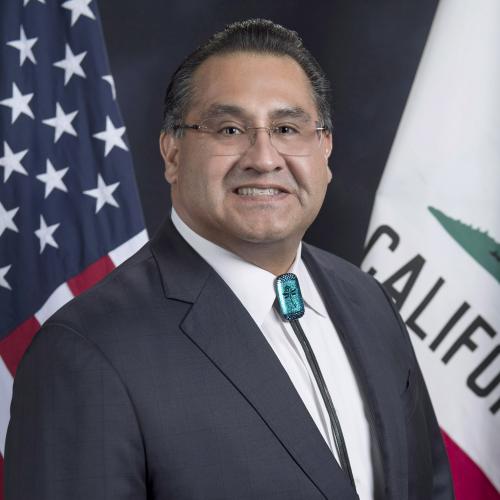
AB 1006 (Ramos) — Firearms: concealed carry — Summary
Status and timeline
- Introduced: February 20, 2025
- Most recent action: In committee — Held under submission (May 23, 2025)
- Passed Assembly Public Safety (amended) and referred to Appropriations; fiscal committee review required. Digest indicates "Local Program: YES" and "Appropriation: NO."
Purpose
- To modify California’s concealed carry licensing statutes to (1) treat a license applicant who is the spouse of the recorded firearm owner as a recorded owner for licensing purposes, and (2) expand and clarify conduct that disqualifies an applicant from receiving or renewing a concealed-carry license.
Key provisions and statutory changes
- Amends Penal Code sections governing concealed-carry licenses (notably §26150 and §26155; additional sections such as §26162 are amended but text is truncated in available documents).
- Ownership/eligibility
- Adds that the spouse of the recorded owner (per Department of Justice records) is also considered a recorded owner for purposes of issuing or renewing a concealed-carry license.
- Applicant qualifications retained
- Applicant must be ≥21, show identity/age (§16400), meet residency/employment presence criteria, complete training required by §26165, and not be a disqualified person (per §26202).
- Expanded disqualifying conduct
- Adds specified acts that will deem an applicant a disqualified person, including:
- Providing information in a license application that the applicant knew or should have known was inaccurate or incomplete.
- New or clarified disqualifications tied to charges or convictions within the 10 years prior to application or renewal — including convictions for knowingly and willingly threatening the life of an elected public official and other specified offenses (detailed offense list not fully shown in available excerpts).
- Criminal consequences and state/local impact
- The bill expands the application of existing criminal provisions (including widening the scope of perjury in relation to license applications). The legislative digest states this creates a state-mandated local program.
- The bill contains a severability clause.
- The digest also states that no state reimbursement to local agencies is required for the measure (per specified constitutional/statutory language in the bill).
Who is affected
- Prospective and current concealed-carry license applicants in California (including spouses of recorded owners).
- Local licensing authorities (sheriffs and chiefs of municipal police departments) who process and issue concealed-carry licenses — possible additional administrative workload from expanded vetting and enforcement of new application-related offenses.
- Applicants with recent charges or convictions, or applicants who submit inaccurate or incomplete application information — who may face license denial, renewal denial, or criminal exposure.
Potential implications
- May broaden grounds for denial or revocation of concealed-carry licenses (more offenses and application misstatements treated as disqualifying).
- Recognizes spouses of recorded owners as eligible owners for licensing (affecting family access in multi-owner households).
- Could increase local enforcement/processing responsibilities and legal exposure for applicants who make inaccurate statements on applications.
Additional notes
- License formats remain — concealed-carry generally, and in counties under 200,000 population an option for a license to carry loaded and exposed within that county.
- Full text of all amended sections (and the complete list of newly disqualifying offenses) was not available in the provided excerpts; readers should consult the bill text in the legislative record for exact statutory language and offense lists.