

WeVote

Bill

Bill

HB 5782

Financial institutions: credit unions; insurance from a qualified private insurance organization; allow for domestic credit unions. Amends sec. 387 of 2003 PA 215 (MCL 490.387). TIE BAR WITH: HB 5779'26, HB 5780'26, HB 5781'26, HB 5783'26

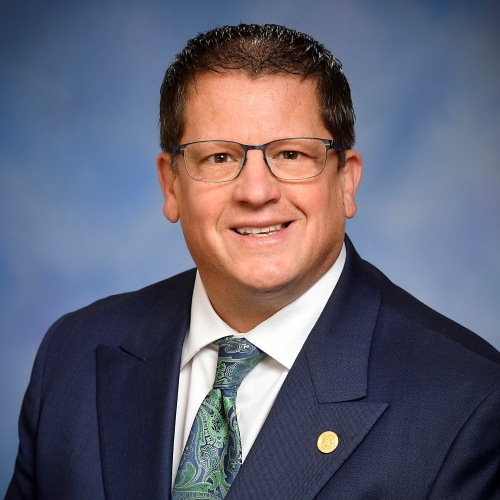
2025-2026 Regular Session Introduced by Brian BeGole and 6 co-sponsors

Domestic non-corporate Michigan credit unions must obtain primary share/deposit insurance from a federal agency or a licensed private insurer.

REFERRED TO COMMITTEE ON FINANCE, INSURANCE, AND CONSUMER PROTECTION
0
WeVote Research Nonpartisan
Bill Summary · HB 5782

Summary of HB 5782 (Michigan, 2025-2026)

Purpose and Intent

  • HB 5782 amends Section 387 of the Michigan Credit Union Act (2003 PA 215) to regulate how domestic credit unions, other than corporate credit unions, obtain and maintain insurance for member shares and deposits.
  • The bill introduces the option for domestic credit unions to obtain “primary share or deposit insurance” from either:
    • a federal agency that insures share/deposit accounts, or
    • a qualified private insurance organization licensed and authorized to provide such insurance in Michigan.
  • The measure ties its effective date to the concurrent passage of four related bills (a tie bar), indicating it is part of a broader package affecting credit union insurance framework.

What the Bill Would Change (Key Provisions)

  1. Mandatory Insurance Source (Sec. 387(1))

    • Domestic non-corporate credit unions must apply for and maintain insurance for member share accounts and deposits from either:
      • a federal agency that insures these accounts, or
      • a qualified private insurance organization.
  2. Inability to Obtain Insurance (Sec. 387(2))

    • If a credit union is denied an insurance commitment or is notified that its insurer intends to terminate coverage, the credit union must either:
      • dissolve, or
      • merge with another federally insured credit union, or
      • apply in writing to the director (within 30 days) for additional time to obtain an insurance commitment.
  3. Extension for Insurance Pursuit (Sec. 387(3))

    • The director may grant one or more additional time periods if the credit union shows substantial effort toward obtaining or reinstating an insurance commitment.
  4. Private Insurance Option for Excess Balances (Sec. 387(4))

    • Credit unions may contract with an insurance carrier licensed in Michigan to insure account balances that exceed the limit provided by the primary insurer (federal or private).
  5. Authorization Process for Private Insurers (Sec. 387(5)-(6))

    • A licensed insurance carrier in Michigan may apply to the Department for authorization to provide primary insurance under this section.
    • The Department will set the form, standards, and process for authorization.
    • The Director can deny or revoke authorization if the insurer lacks the resources, governance, or management to adequately protect credit union accounts.
  6. Definitions (Sec. 387(7))

    • “Primary share or deposit insurance” = the insurance coverage up to the same amount as the federally insurable limit.
    • “Qualified private insurance organization” = a private insurer licensed in Michigan and authorized by the Director to provide primary insurance under this section.
  7. Enacting Section / Tie Bar (Enacting Sec. 1)

    • This act’s effectiveness depends on enactment of four related bills (HB 5779, HB 5780, HB 5781, HB 5783 from the same legislative session and corresponding Senate versions).

Who Would Be Affected

  • Domestic Michigan credit unions that are not corporate credit unions.
  • Private insurance carriers licensed in Michigan seeking authorization to provide primary credit union insurance.
  • The Michigan Department of Insurance and Financial Services (or the responsible department) implementing the application standards and authorization process.
  • Credit union members, indirectly, through the availability of potentially new insurance providers and product options.

Procedural and Timeline Considerations

  • Initial step: Establishment of insurance requirements and private insurer authorization framework via the bill’s text.
  • Tie-bar dependency: The act’s effective date is contingent upon the passage of four companion bills (HB 5779, HB 5780, HB 5781, HB 5783) from the 103rd Legislature. If any of these companion bills fail, the effective date may be affected or the act may not take effect.
  • Denial or termination scenarios (Sec. 387(2)) include a 30-day window for the credit union to request additional time.
  • The director has discretionary authority to extend timelines (Sec. 387(3)) and to grant or revoke authorization for private insurers (Sec. 387(6)) based on governance and financial integrity criteria.

Practical Impact and Considerations

  • Increased insurance options: Credit unions could choose between federal government-backed insurance or a qualified private insurer, potentially expanding competition and product offerings.
  • Oversight and consumer protection: The Director’s criteria emphasize the importance of insurer strength in resources, governance, and management to protect member funds.
  • For members: Potentially broader insurance arrangements and possibly variations in premium structures, depending on private insurer terms and competition with federal insurance limits.

If you’d like, I can compare this bill to current federal insurance limits and outline potential scenarios for credit unions under different insurance configurations.

Compiled from official sources — confirm details with the bill’s official record.

Sign in to ask a question.