Summary of Bill: Federal Jobs Guarantee Development Act of 2026 (S. 3864, 118th Congress – 119th Session)
Purpose and intent
- Establish a federal framework to test a job guarantee through pilot programs.
- Create a new grant-based mechanism under the Department of Labor to fund local or tribal entities that run job guarantee programs.
- Evaluate the broader impact of guaranteed jobs on employment, wages, poverty, public assistance, health, incarceration, and environmental outcomes.
Key provisions and changes
- Definitions (Section 2(a)):
- Eligible entity: A political subdivision, tribal entity, or combination thereof, with unemployment at least 150% of the national rate (tribal entities may use their own data if federal data are unavailable), and that submits an application.
- Job guarantee program: A program that meets criteria in subsection (c).
- Rural/Urban definitions: Rural area = outside urban areas; Urban area defined by Census Bureau (urbanized areas and clusters); Urban area includes regions with 50,000+ residents or 2,500–50,000 residents respectively.
- WIOA-related terms and “Secretary” definitions tied to the Department of Labor and Workforce Innovation and Opportunity Act language.
Establishment of the pilot program (Section 2(b)):
- The Secretary of Labor shall award competitive grants to eligible entities to establish job guarantee programs ensuring employment for any individual in the area who applies.
- Grants terminate at the earliest of: end of a 3-year grant period or revocation of the grantee’s eligible-entity status.
Job guarantee program requirements (Section 2(c)):
- Eligibility to participate: All adults 18+ residing in the program area at the time of eligibility.
- Labor standards: Jobs must be part of an established bargaining unit if applicable and available for the duration of the pilot.
- Wages: Pay at least the greater of:
- The applicable wage under the Fair Labor Standards Act (as if a referenced bill (S. 2823) from the 119th Congress were enacted on the date of enactment).
- State/local minimum wage.
- Prevailing wage for similar work in the area.
- Wage under an applicable collective bargaining agreement.
- Benefits: Health insurance comparable to Federal Employees Health Benefits Program.
- Paid leave: Minimum paid family leave and paid sick time aligned with related bills in the 118th/119th Congress and state law.
- Discipline: Reasonable disciplinary procedures with review rights.
- Other basic requirements: Coverage under appropriate benefits and protections.
Use of funds (Section 2(d)):
- Funds may cover supportive services (e.g., transportation, child care, housing, needs-based payments), workplace-learning advisor access, adult education, reentry supports for justice-involved individuals, and financial literacy.
Applications and implementation (Sections 2(e)-(2(g)):
- Applications: Eligible entities must provide a detailed service area profile, job descriptions, supports for disabilities and criminal-record barriers, funding plans, job postings, data-sharing capabilities, and climate-related safeguards.
- Grant amount and fund management: Establishment of the Job Guarantee Program Trust Fund; annual grant amounts determined by the Secretary; quarterly or periodic payments contingent on spending thresholds.
- Selection: Up to 15 eligible entities awarded grants, with emphasis on geographic and demographic diversity, including tribal representation.
Operational and governance provisions (Sections 2(h)-(2(m)):
- Restrictions: Grants cannot be used to displace existing workers or violate contracts, and cannot fund prohibited activities.
- Federal pilot management: The Secretary will guide federal agencies on job guarantee postings and ensure jobs are listed publicly; agencies may reimburse the full cost of employing participants if funded.
- Training: Up to 8 weeks of paid training before beginning a job, with priority for individuals with barriers to employment.
- Priorities and audits: Secretary to publish national job priorities (e.g., child care, elder care, disabilities, clean energy, infrastructure) and to conduct annual audits via the Inspector General; allocation agreements required; misreporting can render entities ineligible.
- Reporting: Grantees must report annually, including spending, purposes, and performance data disaggregated by race, ethnicity, sex, age, and other protected groups.
Evaluation (Section 2(m)):
- The Chief Evaluation Officer shall oversee a rigorous evaluation of program implementation and impact across multiple domains: employment, wages, poverty, public spending, child health/education, health and well-being, incarceration, environment, and other economic-development indicators.
Tax credit expansion (Section 2(n)):
- Expands the Earned Income Tax Credit (EITC) to include qualified participants in job guarantee programs, with definitions and effective date tailored to ensure eligibility for those beginning work after December 31, 2026.
Appropriations (Section 2(o)):
- Authorization of funding as necessary to carry out the act.
Who is affected
- Eligible entities (state or tribal subdivisions) that apply for grants and operate job guarantee programs.
- Participants in the job guarantee programs (adults 18+ in eligible areas).
- Federal agencies participating in the pilot (potential employment of participants and reimbursement of costs).
- Workers in related sectors targeted by national priorities (child care, elder care, clean energy, infrastructure).
- Employers and labor unions linked to program-funded employment, subject to wage and bargaining requirements.
Procedural and timeline aspects
- Pilot duration: Grants last up to 3 years, contingent on continued eligibility.
- First grant: Guidance to Federal agencies within 30 days after award of the first grant; agencies must report back on job types and numbers within 30 days of guidance.
- Evaluation: Ongoing assessment by the Department of Labor’s Chief Evaluation Officer.
- EITC expansion: Applies to individuals who begin work after December 31, 2026.
- Oversight: Annual audits; annual reporting by grantees; potential ineligibility for misreporting; allocation agreements requiring Secretary recoupment if misuse is found.
Notes
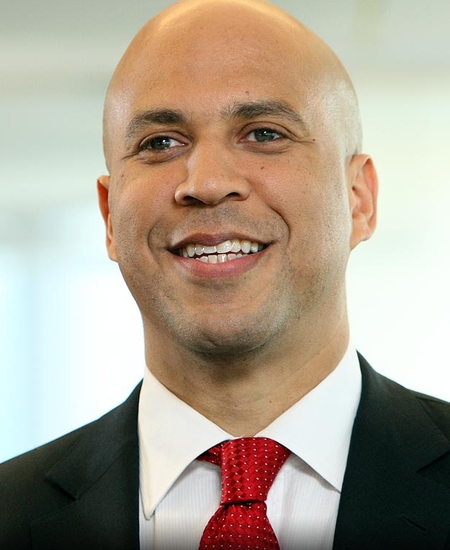
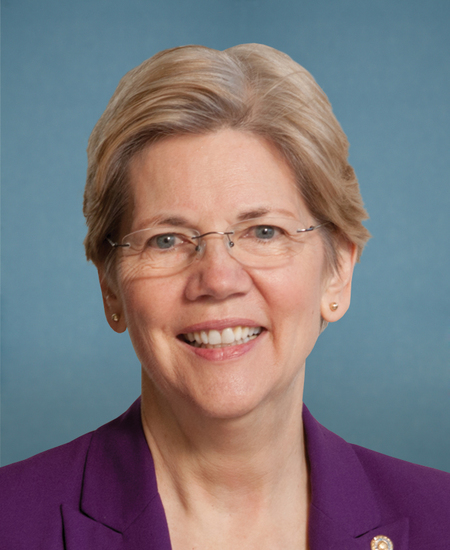
- The bill is a Senate proposal introduced by Senators Booker, Merkley, and Warren, with Warren, Merkley, and Booker serving as co-sponsors.
- It establishes a federal-initiated, grant-funded framework for a nationwide, time-limited pilot of job guarantee programs with comprehensive support services and evaluation, aimed at producing measurable employment and social outcomes.







Start the Conversation
Be the first to share your thoughts on this petition. Your voice matters!