

WeVote

Bill

Bill

HR 9686

FARM AI Act of 2026

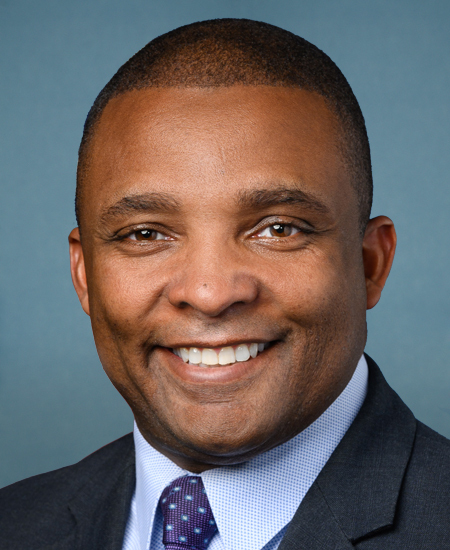
119th Congress Introduced by Don Davis and 2 co-sponsors

Creates a USDA AI Agriculture Advisor to promote AI adoption, coordinate standards with NIST, and integrate AI across research, extension, and workforce programs for farms.

Introduced in House
0
WeVote Research Nonpartisan
Bill Summary · HR 9686

Overview

  • Bill: H.R. 9686, FARM AI Act of 2026
  • Session: 119th Congress
  • Purpose: To increase access to artificial intelligence through Department of Agriculture programs and related activities, with emphasis on research, extension, workforce development, and advisory coordination in the agricultural sector.

Primary purpose and intent

  • Promote adoption and use of artificial intelligence (AI) in agriculture to:
    • Improve farm productivity and security
    • Enhance decision-making in crop and animal systems
    • Support precision agriculture and resource management
    • Expand economic opportunities for small, medium, and family farms
    • Help U.S. farmers compete internationally
  • Strengthen coordination between the Department of Agriculture (USDA) and the National Institute of Standards and Technology (NIST) to develop and promote AI standards for agriculture.
  • Establish an AI Agriculture Advisor within USDA to lead outreach, training, and standard-setting activities.

Key provisions and changes

Section 2 – Findings and Sense of Congress

  • Affirms AI’s potential benefits for agriculture and rural communities.
  • Calls for increased access to AI via USDA programs and collaboration with NIST.

Section 3 – Inclusion of AI in USDA Research and Extension Programs

  • Amends the Agricultural Research, Education, and Extension (AFRE) framework to add AI-focused work:
    • In AFRI grant criteria, adds AI-related activities for:
    • Precision agriculture
    • Farm management
    • Resource management
    • Cybersecurity
    • Weather monitoring
    • Adds a new subfocus on Workforce Development and Technical Training for:
    • Implementing computing systems and AI
    • Precision agriculture adoption and use
    • Machine maintenance
  • Updates AgARDA (Agricultural Research, Education, and Teaching Policy Act) to:
    • Include AI deployment and detection tools in research tools and AI systems in relevant subparagraphs
    • Add a new focus on AI solutions for farmers or ranchers within programmatic outcomes
  • Expands Cooperative Extension language to explicitly include AI systems and data-driven management tools, plus outreach to producers and rural communities.

Section 4 – Artificial Intelligence Agriculture Advisor

  • Establishes an AI Agriculture Advisor as a senior official from USDA’s National Institute of Food and Agriculture (NIFA) to:
    • Promote AI adoption and digital agriculture technologies across states
    • Provide technical assistance, workforce training, and education
    • Support precision agriculture, data-driven farm management, animal system management, and small farm AI adoption
    • Develop national AI standards for agriculture in collaboration with NIST
  • Advisor duties include:
    • Coordinating with USDA agencies
    • Advising on AI-related issues
    • Updating programs to reflect AI adoption best practices
    • Conducting stakeholder outreach and coordinating external partnerships
    • Facilitating interagency coordination and networks of AI-using producers
    • Collaborating with NIST and other federal agencies as needed
  • Amends Department of Agriculture Reorganization Act to formally recognize the Secretary’s authority to carry out Section 237 (the AI Advisor provision).

Who/what would be affected

  • USDA programs and agencies involved in research, extension, and education (e.g., AFRI, AgARDA, Cooperative Extension, NIFA, extension services)
  • Researchers, educators, and students in agricultural sciences
  • Farmers and ranchers, particularly small to medium and family-operated farms
  • Rural communities and agribusinesses engaged in agriculture
  • Partners and stakeholders in AI, data systems, and precision agriculture
  • National standards coordination with NIST for AI in agriculture

Procedural and timeline notes

  • Status: Introduced July 14, 2026; referred to the House Committee on Agriculture.
  • The bill would become law only if enacted by Congress and signed by the President, including any eventual Senate action and potential conference negotiations.
  • Provisions involve amendments to multiple existing statutes (AFRI, AgARDA, Cooperative Extension Act, and the Agricultural Reorganization Act of 1994), indicating a broad reorientation of multiple USDA program elements toward AI adoption and workforce development.
  • No explicit funding levels or appropriation language is included in the text provided; implementation would depend on future appropriations and agency rulemakings.

Summary of potential impacts

  • Increased emphasis on AI R&D and deployment in agriculture, with a formal mechanism (AI Advisor) to coordinate efforts.
  • Expanded workforce development focused on AI, precision agriculture, and machine maintenance for rural regions.
  • Greater integration of AI considerations into research grants, extension services, and education programs.
  • Development of national AI standards for agriculture through collaboration with NIST, aiding interoperability and best practices.
  • Potential for improved farm productivity, resource efficiency, and economic opportunities, while supporting cybersecurity and weather monitoring applications.

Compiled from official sources — confirm details with the bill’s official record.

Sign in to ask a question.