

WeVote

Bill

Bill

HRES 106

Expressing the sense of the House of Representatives that the United Nations Security Council should immediately impose an arms embargo against the military of Burma.

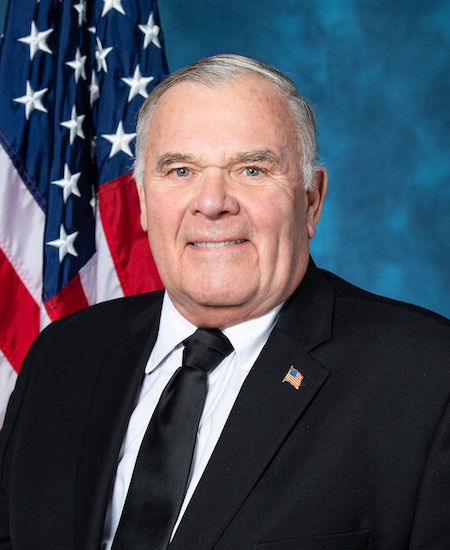
119th Congress Introduced by Jim Baird and 16 co-sponsors

Urges the UN Security Council to immediately impose an arms embargo on Burma’s Tatmadaw, with lifting tied to democratic transition and restored humanitarian access.

Referred to the House Committee on Foreign Affairs.
0
WeVote Research Nonpartisan
Bill Summary · HRES 106

Summary of HRES 106 (February 2025)

Overview

HRES 106 is a House of Representatives resolution expressing the sense of the Chamber that the United Nations Security Council should immediately impose an arms embargo on Burma’s military (the Tatmadaw). The resolution is non-binding and serves as a statement of U.S. congressional position urging international action, rather than a law or requires action by the United States itself.

Purpose

  • To push the UNSC to impose an immediate arms embargo on Burma’s military to curb arms acquisition and weapon proliferation within the country.
  • To hold the Tatmadaw accountable for alleged human rights abuses, obstruction of humanitarian access, lethal force against pro-democracy demonstrators, and repression of government officials, activists, journalists, students, and civil servants.
  • To establish conditions under which any future lifting of such an embargo should occur, tying it to a transition toward civilian, democratically led governance and the restoration of rights and services.

Key Provisions

1) Immediate UNSC Arms Embargo
- Calls on the United Nations Security Council to impose an arms embargo on the Burmese military (Tatmadaw) to prevent continued arms acquisition and weapons proliferation.
- Cites ongoing human rights violations, violent suppression of peaceful protests, abuses against Rohingya and other ethnic minorities, and suppression of civil society as justification for the embargo.

2) Conditions for Lifting the Embargo
- Lifting would be contingent on the Tatmadaw meeting several criteria, including:
- (A) Implementing a permanent cease-fire.
- (B) Releasing democratically elected government leaders from imprisonment.
- (C) Bearing primary responsibility for gross human rights abuses and displacement of ethnic minorities (Rohingya, Karen, Rakhine, Kachin, etc.).
- (D) Allowing consistent, unimpeded humanitarian access to civilians.
- (E) Fully restoring internet and telecommunications access in Burma.
- (F) Establishing a clear, verifiable process to transition power back to a democratically elected civilian government.

3) International Community Support
- Encourages the international community to continue supporting civilians, particularly ethnic minorities affected by the coup, and to promote peace and reconciliation dialogues within local civil society.

Procedural Status

  • Introduced February 4, 2025.
  • Referred to the House Committee on Foreign Affairs (as of introduction).

Sponsors

  • Primary sponsor: Claudia Tenney.
  • Notable cosponsors include Jahana Hayes, Blake Moore, Brad Sherman, Eleanor Holmes Norton, James R. Baird, Seth Moulton, Tim Kennedy, Joe Wilson, Mike Quigley, Bill Huizenga, Joaquin Castro, James P. McGovern, Jerrold Nadler, Ilhan Omar, Steve Cohen, Lloyd Doggett, among others.

Impact and Scope

  • Primarily a foreign affairs policy statement directing attention to the UN Security Council and international diplomacy regarding Burma.
  • Affects U.S. framing of Burma-related policy and reinforces international pressure for an arms embargo, conditional upon democratic and humanitarian benchmarks. Not a binding federal law by itself, but a clear congressional position intended to influence international action and future U.S. diplomatic considerations.

Compiled from official sources — confirm details with the bill’s official record.

Sign in to ask a question.