

WeVote

Bill

Bill

S 5074

Enhancing Electric Grid Resilience Act

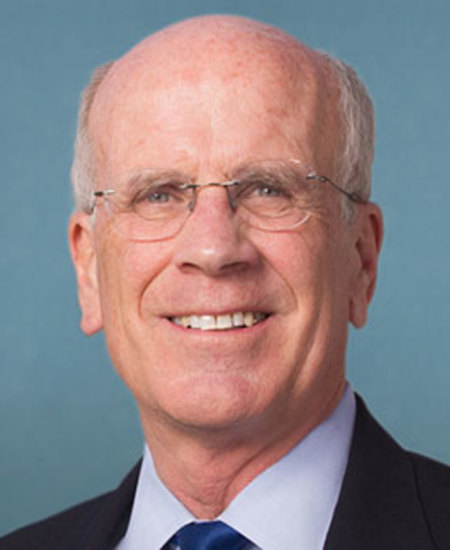
119th Congress Introduced by Peter Welch

Authorizes FERC-backed tariffs to allocate costs for nationally significant interstate or offshore transmission lines based on broad anticipated benefits.

Introduced in Senate
0
WeVote Research Nonpartisan
Bill Summary · S 5074

Overview

  • Bill: S.5074 (119th Congress) — Enhancing Electric Grid Resilience Act
  • Sponsor: Sen. Peter Welch (co-sponsor)
  • Date introduced: July 22, 2026
  • Committee: Senate Committee on Energy and Natural Resources
  • Purpose: Amend the Federal Power Act to authorize the allocation of the costs of certain interstate electric power transmission lines and offshore transmission lines, focusing on facilities deemed to be of national significance.

Main purpose and intent

  • Create a framework for cost allocation of transmission facilities that are considered of national significance.
  • Allow a regulated tariff process under the Federal Power Act to allocate costs to customers within the applicable transmission planning regions.
  • Tie cost allocation to a broad set of anticipated benefits, including reliability, economics, public policy, resilience, environmental, and other benefits.

Key provisions and changes

  • New Section 224 added to the Federal Power Act (Part II):
    • Allocation of Costs for Transmission Facilities:
    • (a) General rule: Entities proposing to own/control/operate a transmission facility of national significance can file a tariff under section 205 to allocate costs for such facilities.
    • (a)(2) Cost causation principle: Tariffs must allocate costs to customers within the relevant transmission planning regions in a manner roughly commensurate with estimated anticipated benefits.
    • (a)(3) Cost allocation principle: Costs must be allocated based on a broad range of anticipated benefits (reliability, economic, public policy, resilience, environmental, and other reasonably anticipated benefits).
    • (b) Transmission Facility of National Significance:
    • Defines a facility as nationally significant if:
      • (1) It is an interstate electric power transmission line (or offshore equivalent) with at least 1,000 MW capacity and construction completed on/after enactment, or
      • (2) It is an expansion or upgrade that increases capacity by at least 500 MW and is completed on/after enactment.
    • (c) Savings Provision: The new section does not alter the Commission’s authority to approve cost allocations for transmission facilities that are not designated as transmission facilities of national significance.

Who and what is affected

  • Affected entities:
    • Transmission owners, operators, or entities proposing to develop transmission facilities deemed of national significance.
  • Affected customers:
    • Consumers within the applicable transmission planning regions who would bear allocated costs through tariffs.
  • Regulatory framework:
    • Tariffs for these facilities would be filed under section 205 and regulated by the Federal Energy Regulatory Commission (FERC) under its established tariff approval processes.

Procedural and timeline aspects

  • Legislative action:
    • Introduced and referred to the Senate Committee on Energy and Natural Resources on July 22, 2026.
  • Effective date:
    • The criteria for “national significance” facilities reference completion on or after the date of enactment, implying the provision would apply to projects completed after enactment.
  • Oversight:
    • Requires FERC to implement cost-allocation standards consistent with the bill’s cost-causation and benefits-based principles.

Potential impact and considerations

  • Transmission planning and cost allocation could become more predictable for large interstate or offshore projects meeting the national significance criteria.
  • Emphasis on a broad benefits approach may influence which projects are pursued and how costs are shared among regions.
  • The offshore transmission element aligns with growing uses of offshore grids and offshore wind/renewables, potentially broadening eligible projects.
  • As a new statutory framework, practical implementation would depend on FERC's rulemaking and any subsequent amendments or related legislation.

Compiled from official sources — confirm details with the bill’s official record.

Sign in to ask a question.