

WeVote

Bill

Bill

HR 8898

End Government Pensions for Sexual Abusers Act of 2026

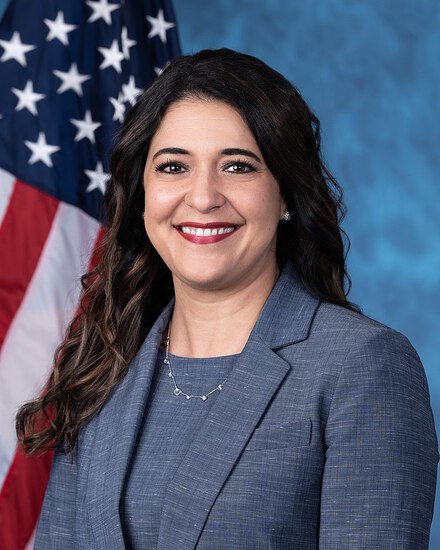
119th Congress Introduced by Stephanie Bice and 7 co-sponsors

The bill would deny federal retirement benefits to current/former Members of Congress and survivors convicted of specified sexual offenses.

Introduced in House
0
WeVote Research Nonpartisan
Bill Summary · HR 8898

Summary of HR 8898 — End Government Pensions for Sexual Abusers Act of 2026

Purpose and intent

  • The bill would amend title 5 of the United States Code to deny federal retirement benefits (annuity or retired pay) to Members of Congress or former Members of Congress, or their survivors/beneficiaries, who are convicted of certain sexual offenses.
  • It targets conduct described in specific criminal statutes and extends the prohibition to offenses committed on or after the enactment date of the bill.

Key provisions and changes

  • Inserted new §8312a into Subchapter II, Chapter 83 of title 5, creating a prohibition on federal retirement benefits for those convicted of qualifying offenses.
  • Offenses triggering the prohibition include:
    • Crimes within the purview of: Title 18 sections 1470, 1591, 2241–2245, 2251–2252, 2260; 18 U.S.C. § 2244(a)(3) or (5); and Chapter 71 or 77 of Title 18.
    • The conduct constituting the offense must have occurred on or after the act’s enactment.
  • Prohibition scope:
    • Applies to annuity or retired pay creditable to the individual’s service for federal retirement purposes, with certain exceptions (existing 8311(2) and 8311(3)).
  • Notice and enforcement:
    • The Attorney General must notify the head of the relevant agency when an entitled individual is convicted.
  • Foreign offenses:
    • The bill provides a framework for recognizing foreign convictions if certified by the Attorney General as equivalent and occurring after enactment, subject to due-process-like requirements and potential review by the U.S. Court of Federal Claims.
    • The court can require restoration of benefits if it finds conditions are not satisfied.
  • Absence from the United States to avoid prosecution:
    • If a Member is indicted and stays outside the U.S. for more than one year with knowledge of the indictment, annuity/retired pay may be blocked for the period of avoidance, until specific outcomes occur (nolle prosequi, dismissal, or not guilty verdict after trial).
  • Payments to victims:
    • Amounts that would have been used for annuity/payments can be directed to victims via restitution or other garnishment mechanisms, up to the forfeiture amount.
    • Prohibits refunds of contributions/deposits to the extent they are paid to victims under these provisions.
  • Related adjustments:
    • Nonaccrual of interest on refunds is amended to reflect the new §8312a, including a provision for post-conviction periods.
  • Administrative note:
    • Includes a clerical amendment to insert the new section into the table of sections for chapter 83.

Who would be affected

  • Current and former Members of Congress, and their survivors/beneficiaries, who are convicted of qualifying sexual offenses listed in the bill.
  • Federal retirement systems and the agencies that administer annuities/retired pay for these individuals.
  • Victims of offenses, who may receive restitution or garnished payments derived from the affected retirement benefits.
  • Potentially individuals convicted abroad if certifications of foreign convictions meet the criteria.

Procedural and timeline aspects

  • Introduced May 19, 2026, and referred to the House Administration and Oversight and Government Reform committees.
  • Provisions would take effect upon enactment of the bill (date not specified in the text provided).
  • The act provides for potential judicial review in the United States Court of Federal Claims for foreign-conviction certifications.

This summary reflects the bill’s aim to eliminate or reduce federal retirement benefits for legislators convicted of certain sexual offenses, while outlining associated mechanisms for enforcement, victim restitution, and cross-border considerations.

Compiled from official sources — confirm details with the bill’s official record.

Sign in to ask a question.