

WeVote

Bill

Bill

HR 8818

End Fentanyl Trafficking with Local Task Forces Act of 2026

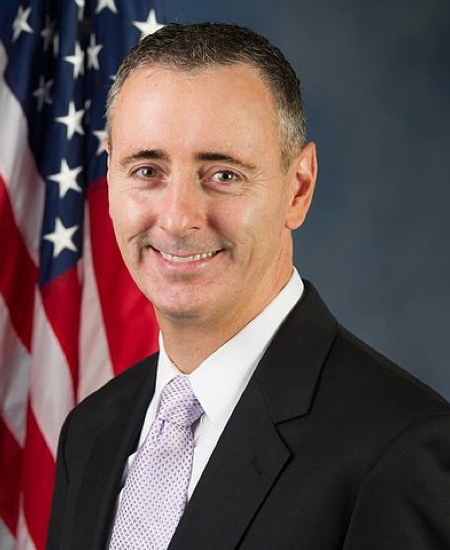
119th Congress Introduced by Brian Fitzpatrick and 3 co-sponsors

The bill creates a federal grant program to fund and strengthen multi‑jurisdictional task forces and regional consortia to disrupt opioid trafficking, including fentanyl.

Introduced in House
0
WeVote Research Nonpartisan
Bill Summary · HR 8818

Purpose and overall intent

  • HR 8818, titled the End Fentanyl Trafficking with Local Task Forces Act of 2026, aims to reduce illicit opioid distribution (including fentanyl) by establishing federal grants to support locating, investigating, and interdicting opioid trafficking.
  • The grant program would be administered under a new Part PP added to the Omnibus Crime Control and Safe Streets Act of 1968, with a focus on building and strengthening multi-jurisdictional task forces and regional consortia.

Key provisions and changes

  • Grant program creation

    • Authorizes the COPS Director (within the Department of Justice) to award grants to eligible entities for combating opioid trafficking.
    • Eligible entities include states, state and local law enforcement, units of local government, Indian Tribes, multi-jurisdictional task forces, and regional consortia.
  • Uses of grant funds

    • Funds may be used to hire and train officers and staff.
    • Support the creation or expansion of multi-jurisdictional task forces and regional consortia.
    • Procure equipment, technology, or supporting systems, pay overtime.
    • Other activities or items the Attorney General deems appropriate to support opioid distribution interdiction.
  • Application requirements and guidelines

    • Applicants must submit detailed grant applications including intended fund uses and how activities meet the program purpose.
    • Applications must include data/records reporting assurances.
    • Certifications: accuracy of information, compliance with the part and applicable laws.
    • Within 90 days of enactment, the COPS Director must issue guidelines for implementing the program.
    • The grant process should be streamlined to minimize administrative burden and avoid duplicative information.
  • Grant duration and distribution

    • Individual grants must last between 1 and 3 years.
    • A minimum of 20 percent of funds must be set aside for direct grants to Indian Tribes or Tribal law enforcement agencies, and for direct grants to multi-jurisdictional task forces.
    • If a Tribal officer or Tribal partner sits on a multi-jurisdictional task force receiving a direct grant, it does not affect the Tribal entity’s eligibility or the set-aside allocations.
  • Contracts and subawards

    • Grantees may contract with or subaward to other law enforcement entities, tribal organizations, multi-jurisdictional task forces, or regional consortia.
    • Receiving such subawards does not diminish the set-aside allocations for Tribes or tribes’ jurisdictions.
  • Administrative and support provisions

    • The COPS Director may reserve up to 2 percent of appropriated funds for administrative costs.
    • Technical assistance is to be provided, including potential training centers and facilities to support program goals.
  • Priority for grants

    • Preference to applicants that establish or strengthen multi-jurisdictional task forces or regional consortia.
  • Reporting and oversight

    • Beginning not later than 2 years after enactment and annually thereafter, the COPS Director must report to Congress on the program’s effectiveness and provide recommendations for improvement.
  • Definitions

    • Clarifies terms: COPS Director, Indian Tribe, multi-jurisdictional task force, and regional consortium.
  • Authorization of appropriations

    • Authorizes $70 million annually for fiscal years 2027–2031 to carry out the new grant program.

Who and what is affected

  • Beneficiaries: States, state and local law enforcement, units of local government, Indian Tribes, multi-jurisdictional task forces, and regional law enforcement consortia.
  • Subrecipient potential: Tribes and tribal law enforcement agencies, as well as multi-jurisdictional task forces can receive direct grants; tribes’ allocations are protected when involved in joint task forces.
  • Law enforcement operations: Funding supports hiring, training, overtime, equipment, and interagency collaboration to disrupt opioid trafficking networks.

Procedural and timing aspects

  • Introduction date: May 14, 2026; referred to the House Judiciary Committee.
  • Guidelines: The COPS Director must publish program guidelines within 90 days of enactment.
  • Implementation horizon: If enacted, grants would begin after appropriation and program rules are in place; first annual progress reports due within two years of enactment and annually thereafter.
  • Fiscal timeline: Ongoing authorization of $70 million per year from FY2027 through FY2031.

Potential impact

  • Strengthens funding and coordination for opioid trafficking interdiction, particularly via multi-jurisdictional and regional approaches.
  • Encourages tribal involvement and ensures dedicated funding for tribal entities.
  • Creates formal reporting to Congress to assess effectiveness and guide improvements.
  • Emphasizes streamlined application processes to reduce administrative burdens on applicants.

Compiled from official sources — confirm details with the bill’s official record.

Sign in to ask a question.