

WeVote

Bill

Bill

A 9595

Enacts the employer-assisted housing matching grant act

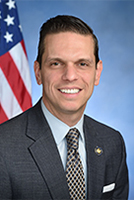
2025 Regular Session Introduced by Angelo Santabarbara

Creates a state-m subsidized employer-assisted housing matching grant program for care workers, matching up to 50% of employer housing support (max $3,000/employee/year).

PRINT NUMBER 9595A
0
WeVote Research Nonpartisan
Bill Summary · A 9595

Overview

  • Bill: A 9595-A (2025-2026 Session, New York)
  • Title: Enacts the employer-assisted housing matching grant act
  • Introduced by: Assemblymember Santabarbara (co-sponsor: Angelo Santabarbara)
  • Committee: Housing (discharged and amended)
  • Effective date: 180 days after becoming law, with immediate regulatory action allowed to prepare for implementation

Purpose and Intent

  • Addresses housing cost barriers for New York’s human services workforce, particularly staff supporting vulnerable populations (disabilities, mental health, substance use, etc.).
  • Aims to improve staff stability and retention by enabling employer-assisted housing support, complemented by state matching grants.
  • Seeks to ensure care providers can recruit and keep qualified employees by helping them live closer to work.

Key Provisions

  1. Establishment of the Program

    • Creates an Employer-Assisted Matching Grant Program within the Division of Housing and Community Renewal (DHCR).
    • Program administered in consultation with state offices overseeing developmental disabilities, mental health, and addiction services.
  2. Definitions

    • Eligible Employee:
      • Works in qualifying care workforce roles (e.g., direct support professionals, CNAs, LPNs, RNs, behavioral health staff, and certain therapists),
      • Averages at least 20 hours per week,
      • Household income ≤ 150% of area median income (or lower limit set by employer),
      • Primary residence in New York State.
    • Eligible Employer: A nonprofit agency funded/approved/licensed/contracted by the relevant state offices.
    • Employer Contribution: Cash housing assistance provided by the employer or reimbursement to the employee for documented housing costs (excludes in-kind benefits).
    • Program: The employer-assisted housing matching grant program.
  3. How It Works (Program Design)

    • Eligible employers (individually or jointly through a collaborative/umbrella) participate.
    • Eligible uses of grant funds (matched amounts) include:
      • Residential security deposits
      • First month’s rent
      • Emergency rental arrears
      • Down payment and closing costs for a primary residence (with a requirement that the employee maintain residence for at least one year)
  4. State Match and Caps

    • State match equals 50% of the employer’s contribution for each eligible employee.
    • Maximum state match: $3,000 per eligible employee in any rolling 12-month period.
    • Funds are disbursed to the employer upon documentation of payment to landlord/manager/settlement agent.
    • Eligible employees may receive assistance in multiple years, subject to the rolling cap.
  5. Administration and Oversight

    • DHCR will issue regulations and guidance covering applications, documentation, allowable uses, and reporting.
    • DHCR may advance funds to participating employers or reimburse after payment; funds can be reallocated if unused.
    • Annual reporting by employers: number of employees assisted, types of assistance, total funds disbursed, and retention outcomes where practicable.
    • DHCR may audit records and recover funds if misused.
  6. Coordination with Other Programs

    • Participation in this program does not exclude employees from receiving other housing assistance.
  7. Outreach and Accessibility

    • DHCR must provide informational materials to employers and employees.
    • Applications must be accessible, with language considerations and evening/weekend assistance.
  8. Appeals

    • Administrative process for reviewing eligibility determinations for both employers and employees.

Who Would Be Affected

  • Eligible Employers: Nonprofit provider agencies funded/approved/licensed/contracted by the state offices of developmental disabilities, mental health, or addiction services.
  • Eligible Employees: Care workers in qualifying positions meeting hours, income, and residency criteria.
  • Communities: Frontline health and social service providers and the clients they serve, through improved workforce stability and continuity of care.

Timeline and Procedural Notes

  • Effective date: 180 days after enactment.
  • The bill allows immediate regulatory action to prepare for implementation.
  • Annual reporting and ongoing administration would commence once programs are active.
  • Amended and reprinted as A 9595-A, indicating refinements during the legislative process.

Potential Impact

  • Financial: Introduces a state match (up to 50% of employer contributions, max $3,000 per employee per year) to incentivize employer-provided housing support.
  • Workforce Stability: Aims to reduce turnover and attendance gaps by helping employees secure stable housing near work.
  • Access and Equity: Requires accessible application processes and targeted support for lower- to moderate-income workers within the care sectors.
  • Administrative: Creates new regulatory and auditing requirements for DHCR and participating employers to ensure proper use of funds.

This summary captures the bill’s core aims, mechanisms, affected parties, and key implementation elements. If you’d like, I can add a quick comparison to existing housing assistance programs or outline potential implementation challenges.

Compiled from official sources — confirm details with the bill’s official record.

Sign in to ask a question.