

WeVote

Bill

Bill

A 3558

Enacts the "child survivor privacy act"

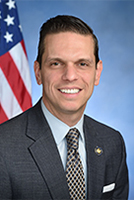
2025 Regular Session Introduced by Angelo Santabarbara and 1 co-sponsor

Defines antisemitism per IHRA and requires state actors to consider it when evaluating bias incidents, plus a $100,000 AG public-awareness campaign to boost reporting.

REFERRED TO CODES
0
WeVote Research Nonpartisan
Bill Summary · A 3558

Summary — A3558 (Assembly Committee Substitute, 7/24/2025)

Short title: "Child survivor privacy act" — bill text and committee statement, however, indicate the bill actually establishes a State definition of antisemitism and creates a bias-crime public‑awareness campaign (see details below).

Purpose and intent

A3558 adopts a State definition of antisemitism (based on the International Holocaust Remembrance Alliance working definition of May 26, 2016) and requires State actors to take that definition into consideration when reviewing, investigating, or deciding whether an act was motivated by antisemitic intent. The bill also directs the Office of the Attorney General (OAG) to run a public awareness campaign to promote reporting of bias crimes and appropriates $100,000 for that campaign. The measure is framed as an educational and investigatory tool to help identify and combat antisemitic incidents while preserving constitutional protections.

Key provisions

  • Defines “antisemitism” in statute as “a certain perception of Jews” (consistent with the IHRA working definition) and incorporates IHRA’s “contemporary examples of antisemitism.” Examples included in the substitute address:
    • Calls for or justification of violence against Jews;
    • Dehumanizing, demonizing, or conspiratorial tropes about Jews (e.g., “world Jewish conspiracy”);
    • Collective blaming of Jews for acts of individuals or others;
    • Holocaust denial or distortion and claims that Jews/Israel invented or exaggerated the Holocaust;
    • Accusations of dual loyalty of Jewish citizens;
    • Denial of the Jewish people’s right to self-determination (e.g., denying Israel’s legitimacy);
    • Applying double standards to Israel and use of classic antisemitic symbols/tropes or Nazi comparisons in ways that trivialize the Holocaust. (The substitute text provides explanatory subparagraphs clarifying application and limits for each example.)
  • Requires State agencies, investigators, and decision‑makers to consider this defined framework when evaluating whether discriminatory acts or bias incidents are motivated by antisemitism.
  • States expressly that nothing in the bill shall be construed to diminish First Amendment rights or conflict with other anti‑discrimination laws.
  • Directs the OAG to establish a bias‑crime public awareness campaign (community outreach, training on identifying/reporting bias crimes, and promotion of the NJ Bias Crimes Reporting Unit and hotline).
  • Appropriates $100,000 from the General Fund to the OAG for the campaign.
  • Effective 30 days after enactment.

Who would be affected

  • State and local law enforcement and prosecutors (use the definition as a tool when determining motive in bias incidents).
  • State agencies, educational institutions, and public officials (training, guidance, incident response).
  • Communities and institutions targeted by antisemitism (Jewish individuals, community institutions, religious facilities).
  • General public (through the awareness campaign encouraging reporting).

Procedural status and timeline

  • Introduced: February 5, 2024 (A.3558).
  • Referred to committees (Public Safety and Preparedness; later to Codes).
  • 7/24/2025: Transferred to Assembly State and Local Government Committee and reported from committee as a substitute (ACS).
  • Current bill status: Referred to Codes (per legislative actions).
  • Fiscal: $100,000 appropriation; effective 30 days post‑enactment.

Potential impact and legal considerations

  • The bill does not create new criminal offenses; it makes the IHRA definition an official guidance tool to identify antisemitic intent and to inform investigations, training, and public awareness.
  • Could influence bias‑incident determinations, administrative discipline, training, and campus or workplace responses.
  • The bill includes explicit language asserting it must be applied consistently with constitutional protections (First Amendment) and existing anti‑discrimination laws—intended to limit application to conduct or speech that falls within the statutory definition (and not to lawful, protected criticism of Israel or other speech absent antisemitic elements).

Sponsors and related measures

  • Sponsors: Angelo Santabarbara (primary) and Tommy Schiavoni (cosponsor).
  • Related/companion bills: S1292, S22; prior-session A10559.

Compiled from official sources — confirm details with the bill’s official record.

Sign in to ask a question.