

WeVote

Bill

Bill

HF 51

Education finance; roof projects authorized as part of the long-term facilities maintenance program, and money appropriated.

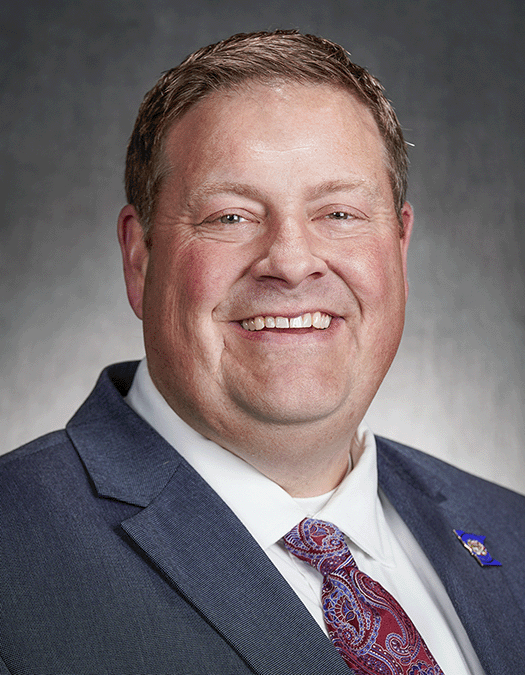
2025-2026 Regular Session Introduced by Keith Allen and 13 co-sponsors

HF 51 adds roof projects to Minnesota’s Long-Term Facilities Maintenance program, with appropriations to fund roofing work for K-12 facilities.

Author added Myers
0
WeVote Research Nonpartisan
Bill Summary · HF 51

Summary of HF 51 (2025-2026) – Education Finance; Roof Projects Authorized as Part of the Long-Term Facilities Maintenance Program, and Money Appropriated

1) Purpose and intent

HF 51 adds authorization for roof-related projects to be funded under Minnesota’s Long-Term Facilities Maintenance (LTFM) program for K-12 education facilities. The bill also specifies appropriations related to these roof projects. The overarching intent is to expand the scope of LTFM-funded capital maintenance to include roofing work, improving school facility reliability, energy efficiency, and safety, while providing a dedicated funding mechanism to support these projects.

2) Key provisions and changes

  • Expansion of LTFM eligibility: Roof projects for school facilities can be funded through the LTFM program. This makes roofing maintenance and replacement eligible for long-term, state-supported maintenance funding rather than requiring separate project-specific funding.
  • Authorized project types: The bill enumerates or authorizes roof-related activities to be undertaken under LTFM, potentially including repair, replacement, upgrading insulation/ventilation, and related structural components necessary for roof integrity and facility operations.
  • Funding and appropriations: HF 51 includes specific money appropriations to support the roof projects within the LTFM framework. The exact dollar amounts and allocations would be specified in the bill’s appropriation sections and any accompanying fiscal note.
  • Implementation and administration: The bill would align roof projects with existing LTFM administration rules, eligibility criteria, project prioritization, and reporting requirements used for other LTFM-maintained facilities.
  • Standards and compliance: Projects would need to meet applicable state and local standards for construction, energy efficiency, safety, and accessibility, consistent with other LTFM-funded work.

3) Who/what would be affected

  • School districts and charter schools: Eligible to propose and receive funding for roof projects through the LTFM program. They would need to follow LTFM project processes, reporting, and auditing requirements.
  • State agencies/education finance oversight: Responsible for administering the LTFM program, approving roof project appropriations, and ensuring compliance with program rules.
  • Students and school facilities: Long-term benefits include more reliable roofing, reduced facility disruptions due to weather or water intrusion, potential energy efficiency improvements, and improved indoor environmental quality.
  • Contractors and vendors: Roofing contractors and related service providers could be engaged for eligible roof projects funded under LTFM.

4) Procedural and timeline aspects

  • Introduction and sponsorship: Introduced and assigned multiple authors and co-sponsors, signaling broad legislative support and collaboration.
  • Referred to committee: Originally referred to Education Finance (typical for education funding and facilities matters). Subsequent actions would involve committee hearings, amendments, and votes.
  • Implementation timeline: If enacted, the roof projects would be implemented through the existing LTFM funding cycles. Specific schedule (bidding, project start dates, and completion targets) would be determined by approved appropriations and district project plans, in alignment with LTFM timelines.

5) Potential considerations and questions

  • How the new roof allocations interact with existing LTFM funding caps or annual appropriation levels.
  • The selection criteria for roof projects and prioritization across districts.
  • Any sunset or renewal provisions for the expanded eligibility.
  • Accountability measures, including reporting, audits, and outcome metrics (e.g., project duration, cost efficiency, energy savings).

If you’d like, I can tailor this summary to include the bill’s exact dollar figures, dates, or cross-reference related statutes and LTFM rules.

Compiled from official sources — confirm details with the bill’s official record.

Sign in to ask a question.