Summary — HB 4158 (2025) — Education: state assessments / M‑STEP replacement for pilot participants
Status & sponsor
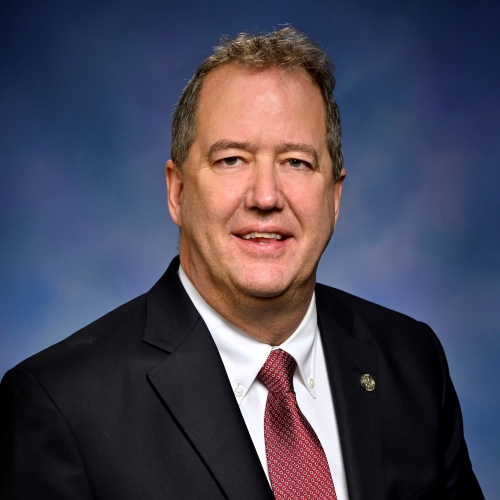
- Introduced March 10, 2025 by Rep. Jamie Thompson; tie‑bar with HB 4157 (sponsored by Rep. Jaime Greene). Initially referred to the House Education and Workforce Committee. HB 4157/4158 are tied so neither takes effect unless both are enacted.
Purpose / intent
- Authorize and accommodate a Michigan Department of Education (MDE)‑run pilot program of alternative, state‑administered assessment systems that can serve in place of the Michigan Student Test of Educational Progress (M‑STEP) for participating public school academies (PSAs) and districts. The bills aim to test assessment models that measure student growth across the year (interim assessments) and also produce a summative result, with the intent of reducing reliance on a single end‑of‑year test.
Key provisions
- Pilot program (HB 4157 — tied to HB 4158)
- MDE must contract with one or more vendors to provide two different state‑administered assessment systems:
- System A: three interim assessments with a cumulative, summative score (used to track growth/progress).
- System B: two growth‑focused interim assessments plus one summative assessment.
- Assessment requirements:
- Comply with federal law (including ESSA) and align to state standards.
- Maintain a public sample pool of questions covering tested subject areas and concepts.
- Provide reports for students, parents, and teachers showing individual proficiency, growth, domain‑level performance (with representative questions), and whether state standards were met.
- Produce aggregate reports (by teacher, grade, school, district) and data usable for educator evaluation.
- Deliver individual student data reports to districts within 14 days after assessment completion.
- Time limits: each interim assessment ≤ 1 hour on average; summative assessment (where used) ≤ 3 hours on average.
- Participation:
- Districts (including PSAs) may apply; MDE may select up to 90 districts.
- Selected cohort must be geographically balanced: one‑third rural, one‑third suburban, one‑third urban (as determined by MDE).
- Revised School Code changes (HB 4158)
- Amend application/accountability language for new/operating PSAs, urban high school academies, and schools of excellence so that a PSA enrolled in the MDE pilot may use a piloted state‑administered assessment system in place of M‑STEP for measuring student progress (math/reading portions typically used for accountability).
Who is affected
- MDE (responsible for contracting and oversight), participating school districts and public school academies, students, parents, teachers, school administrators, authorizers (when reviewing PSA applications and accountability), and assessment vendors. Non‑participating districts continue to use existing assessments (e.g., M‑STEP).
Fiscal and procedural notes
- The bills include a $100 GF/GP placeholder for MDE implementation; MDE has indicated substantial additional costs would likely be required but provided no estimate.
- MDE would likely need U.S. Department of Education approval before replacing an ESSA‑approved assessment (M‑STEP) statewide or for federally required accountability purposes.
- Positions recorded: support from Great Lakes Education Project Education Fund; opposition noted from MDE, Michigan League for Public Policy, and EdTrust Midwest.
Tie‑bar
- Neither HB 4157 nor HB 4158 can take effect unless both are enacted.