

WeVote

Bill

Bill

HB 5820

Education: curriculum; science of reading requirements; modify. Amends sec. 1531e of 1976 PA 451 (MCL 380.1531e).

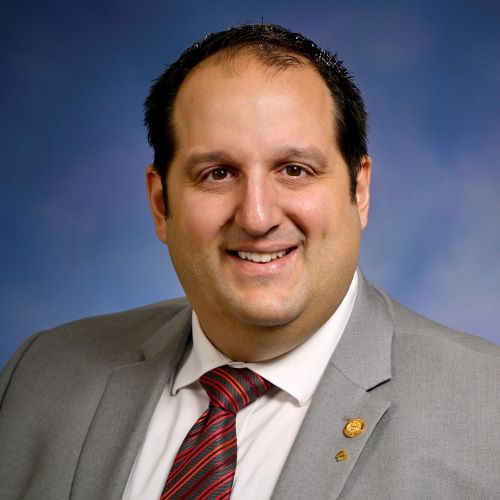
2025-2026 Regular Session Introduced by Joe Aragona and 5 co-sponsors

HB 5820 requires all teacher prep programs to teach dyslexia, MTSS, and science-of-reading-based methods, with deadlines to phase in and revoke noncompliant programs.

REFERRED TO COMMITTEE ON EDUCATION
0
WeVote Research Nonpartisan
Bill Summary · HB 5820

Summary of HB 5820 (Michigan, 2025-2026)

Purpose and intent

HB 5820 would strengthen and codify requirements related to the science of reading in Michigan teacher preparation programs and alternative teaching programs. Building on earlier action (2024 PA 147), the bill sets explicit mandatory instruction on reading-related topics and dyslexia, with phased compliance deadlines. The goal appears to be ensuring that teachers, school staff, and related professionals are prepared with evidence-based approaches to literacy, particularly for students at risk for dyslexia or reading difficulties, and to support MTSS-based supports in schools.

Key provisions

  • Effective dates for program approvals and revocations

    • Beginning September 30, 2027, the Department of Education shall not approve any teacher preparation program or alternative teaching program that does not include required content, and shall revoke approvals for programs lacking such content.
  • Mandatory content for all teacher preparation and alternative teaching programs (Sec. 1531e(1))
    Programs must include instruction on:

    • (a) The characteristics of dyslexia and underlying factors that place students at risk for decoding difficulties.
    • (b) Secondary consequences of dyslexia (e.g., impacts on reading comprehension, vocabulary growth, background knowledge, social-emotional and behavioral effects).
    • (c) Instructional adjustments for students with dyslexia and for addressing underlying factors contributing to decoding difficulties.
    • (d) Methods for developing schoolwide and classroom infrastructure that meet diverse student needs using a Multi-Tiered System of Supports (MTSS).
  • Expanded content for certain programs (Sec. 1531e(1) and (2))
    Beginning July 1, 2026, programs that prepare individuals for certification or endorsements in reading instruction, language arts, or special education (or for school psychologist licensure) must additionally cover:

    • (a)(i) Evidence-based instructional methods and features of evidence-based interventions grounded in the science of reading and structured literacy, designed for students with dyslexia and at risk for decoding difficulties.
    • (b)(ii) Evidence-based instructional methods and features of evidence-based interventions grounded in the science of reading and structured literacy, designed to meet the needs of most students.
  • Waivers (Sec. 1531e(3))
    If a program does not prepare individuals for the specified certifications/endorsements or licensure, the Department may issue a waiver for one or more of the required elements (a–d). Waivers must be reviewed at least every two years to ensure continued alignment with departmental goals.

  • Definitions (Sec. 1531e(4))
    Terms used in this section—such as "dyslexia," "evidence-based," "MTSS," "science of reading," and "structured literacy"—are defined as in section 1280f.

Affected parties

  • Teacher preparation and alternative teaching programs: Hospitals, universities, and other entities that offer pre-service teacher programs would be subject to the new content requirements and the risk of losing approval if they do not comply by the specified deadlines.
  • Future educators seeking certification or endorsements in reading instruction, language arts, special education, or school psychology licensure: Their training would be shaped by the newly required content.
  • K-12 schools and districts: Indirectly affected through the credentialed educators entering the workforce with science-of-reading-based preparation and MTSS-based capacities.
  • Department of Education: Responsible for program approvals, renewals, and waivers, and for ensuring alignment with these standards.

Procedural and timeline aspects

  • Compliance deadlines

    • July 1, 2026: Expanded requirements for certain programs (reading instruction, language arts, special education, school psychology licensure) to include science-of-reading content and structured literacy methods.
    • September 30, 2027: Department shall not approve any program lacking the required content and shall revoke existing approvals for non-compliant programs.
  • Waiver process

    • The Department may grant waivers for non-endorsement programs, subject to biennial review to ensure ongoing alignment with goals.

Practical impact

  • The bill aims to ensure that all teacher-preparation pathways include explicit, evidence-based instruction on dyslexia, its impacts, and appropriate instructional strategies, with a strong emphasis on the science of reading and structured literacy.
  • It reinforces MTSS as a framework for addressing literacy needs across a classroom or school.
  • It may necessitate curriculum updates, faculty development, and potential program redesigns to meet the new content requirements by the 2026–2027 timeframe.

Note: This summary reflects the text and stated intent of HB 5820 as introduced and amended in the 2025-2026 session.

Compiled from official sources — confirm details with the bill’s official record.

Sign in to ask a question.