

WeVote

Bill

Bill

HB 5979

Education: athletics; children who are homeschooled or attending nonpublic school; require the board of a school district or intermediate school district to allow to participate in certain extracurricular activities. Amends 1976 PA 451 (MCL 380.1 - 380.1852) by adding sec. 1290.

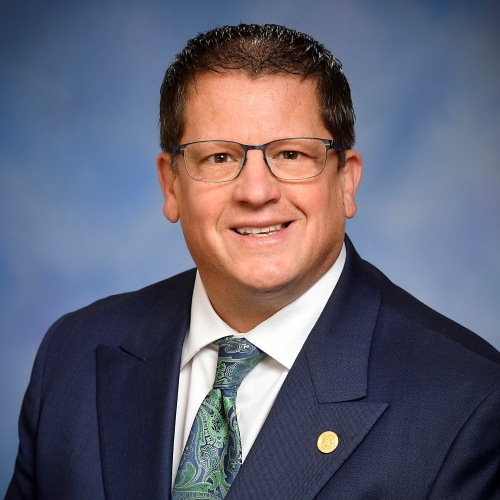
2025-2026 Regular Session Introduced by Brian BeGole and 11 co-sponsors

Nonpublic and homeschooled students in Michigan districts may participate in district/ISD extracurriculars under equal eligibility rules and protections.

bill electronically reproduced 05/14/2026
0
WeVote Research Nonpartisan
Bill Summary · HB 5979

Summary of HB 5979 (Michigan, 2025-2026)

Purpose and intent

  • The bill adds a new section (Sec. 1290) to the Michigan Revised School Code (PA 451 of 1976) to ensure that nonpublic school students and homeschooled children within a district or intermediate school district (ISD) may participate in extracurricular activities offered by the district or ISD, under specified conditions.
  • It seeks to prevent discrimination against nonpublic pupils in participation in school-sponsored activities and to standardize eligibility and participation processes.

Key provisions and changes

  • Right to participate (subsections 1–2):

    • Boards of districts/ISDs must not prohibit a nonpublic pupil from participating in extracurricular activities offered by the district/ISD.
    • Athletic associations or other governing bodies for activities may not prohibit nonpublic pupils if they meet the requirements of Sec. 1290.
  • Eligibility requirements before participation (subsection 3):

    • Districts/ISDs may require nonpublic pupils to demonstrate academic eligibility through one of:
    • A portfolio of work
    • A nationally norm-referenced standardized test
    • A signed affidavit from the pupil’s parent/guardian attesting good academic standing
    • Nonpublic pupils must meet the same conduct, attendance, and disciplinary standards as enrolled pupils in the same activity.
    • Nonpublic pupils must participate intryouts, auditions, or competitive selection on the same basis as enrolled pupils.
  • Enrollment status (subsection 4):

    • Districts/ISDs may not require nonpublic pupils to enroll in courses or become part-time/full-time students as a condition of participation.
  • Participation fee (subsection 5):

    • Districts/ISDs may charge a participation fee to nonpublic pupils, capped at the amount charged to enrolled pupils for the same activity.
  • Transportation (subsection 6):

    • Transportation is not required to be provided to nonpublic pupils for participation.
  • Capacity limitations (subsections 7–8):

    • Capacity limits cannot be used to exclude nonpublic pupils if:
    • A documented capacity limitation exists before tryouts/selection,
    • The limitation is applied equally to enrolled and nonpublic pupils,
    • Selection is based on objective, uniformly applied criteria including performance in the selection process.
    • Districts/ISDs may not set or modify capacity limits to exclude nonpublic pupils.
  • Annual reporting (subsections 9–10):

    • By July 1 each year, districts/ISDs must report to the Department and each house of the Legislature:
    • Number of nonpublic pupils who applied
    • Number approved
    • Number denied
    • Reasons for denial (academic, disciplinary, capacity, or other with written explanation)
    • The Department must publish these reports in a publicly accessible, searchable format on its website.
  • Enforcement and remedies (subsections 11–12):

    • Nonpublic pupils or their guardians may bring civil action for injunctive relief, actual damages, reasonable attorney fees, and costs.
    • Courts may impose civil fines up to $15,000 per violation, with fines deposited into the state general fund.
  • Definitions (subsection 13):

    • Enrolled pupil: a pupil enrolled in a public school.
    • Extracurricular activity: interscholastic athletics, clubs, performing arts, and other school-sponsored activities not part of required instruction.
    • Nonpublic pupil: a school-age child enrolled in a nonpublic school or home school.

Who/what is affected

  • Affected parties:

    • Nonpublic pupils (including homeschooled students) residing in Michigan school districts or ISDs.
    • Parents or legal guardians of nonpublic pupils.
    • School boards of districts and ISDs.
    • Athletic associations, conferences, and other organizations overseeing extracurricular activities.
    • Department of Education (for reporting and transparency).
  • Potential costs and logistical considerations:

    • Possible administrative effort for annual reporting and eligibility determinations.
    • Potential impact on participation practices, eligibility testing, portfolios, and tryouts.
    • Possible fees for nonpublic participants, aligned with those charged to enrolled students.

Procedural and timeline aspects

  • Effective timing: The bill does not specify an immediate effective date beyond its enactment pending passage; annual reporting is due by July 1 each year.
  • Reporting cycle: Yearly cycle requiring data for the preceding school year.
  • Enforcement window: Civil actions and fines can be pursued for violations, with potential up to $15,000 per violation.

Potential implications and considerations

  • Aims to broaden access to extracurricular activities for homeschooled and nonpublic students while maintaining consistent eligibility standards.
  • Creates accountability through annual public reporting and potential civil remedies and penalties for noncompliance.
  • Places districts/ISDs under an affirmative obligation to evaluate nonpublic pupils using specified methods and to treat nonpublic pupils comparably to enrolled pupils in capacity decisions, selection, and opportunities.
  • Could raise administrative needs for districts in managing portfolios, testing, and documentation of eligibility and denial reasons.

Compiled from official sources — confirm details with the bill’s official record.

Sign in to ask a question.