

WeVote

Bill

Bill

SB 1375

EDUC-GROW ILLINOIS GRANT PRGM

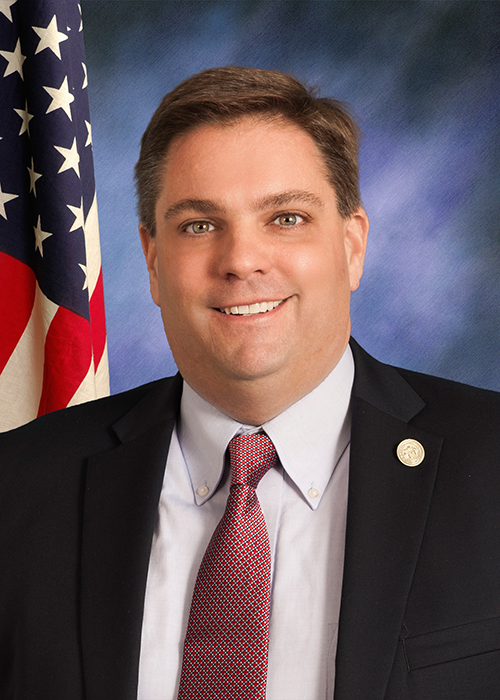
104th Regular Session Introduced by Chapin Rose

Illinois starts a pilot grant program (GROW Illinois) in 2026-27 to aid residents enrolling in high-demand skilled programs at public community colleges, funded by ISAC with colleg

0
WeVote Research Nonpartisan
Bill Summary · SB 1375

Note: the provided document includes statutes and draft language from multiple states (Arizona, Hawaii, Illinois). The summary below focuses on the Illinois bill titled SB 1375 (2025) — the GROW Illinois Grant Pilot Program — which is the education measure described under the Higher Education Student Assistance Act in the text.

SB 1375 — “GROW Illinois Grant Pilot Program” (Summary)

Purpose

Establish a pilot grant program (GROW — Growing Regional Opportunities for Work) administered by the Illinois Student Assistance Commission (ISAC) to provide targeted grant aid to residents who enroll or plan to enroll in certificate, license, or degree programs at participating public community colleges for work in identified high‑demand industries. The program begins in the 2026–2027 academic year and is subject to appropriation.

Key provisions

  • Creates Sec. 65.135 in the Higher Education Student Assistance Act to authorize the GROW Illinois Grant Pilot Program.
  • ISAC will receive and review applications annually and award grants to eligible applicants.
  • Participating community colleges must post program criteria, eligibility rules, and the range of possible award amounts on their websites; this information is also reported to ISAC and the Illinois Community College Board.
  • ISAC allocates funds to community colleges proportionally based on the number of in‑state students enrolled at the college in the previous academic year.
  • Participating community colleges must match Commission funds with financial assistance for qualifying students (though they are not required to claim their entire allocation).
  • Unclaimed funds are to be reallocated among participating colleges according to the established proportional formula (excluding colleges that did not claim full allocations).
  • Awarding: colleges may determine per‑student or collective award amounts. Renewal awards generally may not be less than a student’s prior award except when the student’s cost of attendance decreases (e.g., fewer credit hours, change of study, lower tuition).
  • All money allocated under this section is restricted to student financial assistance; unawarded funds in a given academic year may be retained by the college for future use on program‑eligible students.
  • Reporting: participating colleges must annually report enrollment counts to ISAC on a Commission‑determined date.
  • Rulemaking authority: ISAC will set application forms, required information and related procedures.
  • Repeal: program provisions are scheduled to be repealed on October 1, 2031.
  • Effective immediately (program operations begin subject to appropriation starting 2026–27).

Eligibility (high‑level)

  • Resident of Illinois and U.S. citizen or eligible noncitizen.
  • Has not yet received a credential (certificate/license/degree) to work in a high‑demand industry.
  • Not incarcerated and not in default on any student loan.
  • Currently enrolled or planning to enroll at a participating public community college in an eligible program.
  • Community colleges may set additional reasonable criteria.

Administration & funding

  • ISAC administers the pilot and provides application forms to participating colleges.
  • Program depends on a separate legislative appropriation; colleges must provide matching funds.
  • Colleges control award distribution and must comply with reporting and posting requirements.

Who is affected

  • Community college students (or prospective students) seeking credentials in locally defined high‑demand industries.
  • Public community colleges (administration, budget and reporting duties).
  • ISAC (administration, allocation, reporting, rulemaking).

Potential impacts

  • Provides targeted financial support to encourage enrollment and completion in workforce‑aligned programs.
  • Incentivizes community colleges to prioritize funding for students in high‑demand fields.
  • Program scale dependent on appropriations and participating colleges’ matching funds.
  • Pilot status (through 2031) allows evaluation before permanent adoption.

Legislative status (selected)

  • Introduced Jan 29, 2025 by Sen. Chapin Rose.
  • Referred to Assignments and appropriate committees; administrative deadlines and committee actions recorded in 2025.
  • Companion bills: HB 3305 and HB 1056.
  • Program operation contingent on separate appropriation and ISAC rulemaking.

If you want, I can:
- Extract the specific application fields ISAC is to require or propose sample application language;
- Draft a short one‑page memo for community colleges explaining administrative steps and reporting duties.

Compiled from official sources — confirm details with the bill’s official record.

Sign in to ask a question.