Summary — SB 1840: Civilian Enforced No‑Fly Zone Act
Status and procedural history
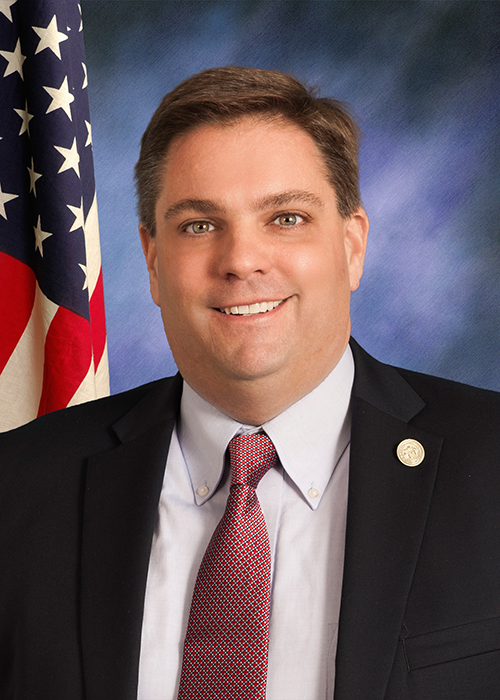
- Introduced by Sen. Chapin Rose (filed 02/06/2025; introduced 02/05/2025 / 03/03/2025).
- Read and referred to multiple committees (Assignments; State Affairs; Banking and Insurance; Appropriations Committee on Agriculture, Environment, and General Government).
- Subsequent actions include: introduced/read in March 2025; referred to committees; on 2025-05-03 the bill was indefinitely postponed and withdrawn from consideration; later entry (2025-06-16) lists “Died in Banking and Insurance.” (The bill did not become law.)
Purpose and intent
- Creates the "Civilian Enforced No‑Fly Zone Act," authorizing property owners and lawful occupants to disable or destroy unmanned aerial vehicles (UAVs, i.e., drones) that operate over their private property without permission, when the UAV is flying at an altitude of less than 400 feet.
Key provisions
- Short title: Civilian Enforced No‑Fly Zone Act (Section 1).
- Definitions (Section 5):
- “Unmanned aerial vehicle” = any aircraft operated without direct human intervention from within or on the aircraft.
- “Private property” = land or structures owned by individuals, expressly including residential, agricultural, and commercial properties.
- Authority (Section 10):
- A property owner or lawful occupant is authorized to disable or destroy a UAV operating over their property at an altitude below 400 feet if the UAV lacks the owner’s permission.
- Legal protections (Section 15):
- Individuals who disable or destroy UAVs in accordance with the Act are not subject to civil or criminal liability under the Act.
- Exception: No immunity if the individual intentionally causes harm to persons or property while disabling or destroying the UAV.
Who would be affected
- Property owners and lawful occupants (residential, agricultural, commercial).
- Drone operators (recreational, commercial, news, research, public safety, and government operators).
- Law enforcement and emergency responders (potential operational impacts).
- Insurers, landlords, and businesses with outdoor operations.
Practical implications and open questions
- Safety: The bill permits physical disabling/destruction without specifying permitted methods, safety protocols, or training—creating potential risks to bystanders and responders.
- Legal scope: The immunity is broad but excludes intentional harm; the bill does not specify standards for “intentional” or negligent conduct.
- Federal conflict: The FAA regulates national airspace; allowing civilians to destroy aircraft could raise federal preemption and enforcement issues (not addressed in the bill).
- Operational carve‑outs: The text does not explicitly exempt government, law‑enforcement, or emergency UAV operations.
- Enforcement and evidentiary questions: No requirement to notify authorities, preserve wreckage, or document the incident.
Current status
- SB 1840 did not advance to enactment. It was indefinitely postponed/withdrawn (05/03/2025) and later listed as having died in committee (06/16/2025).