

WeVote

Bill

Bill

HR 9239

Drain the Slush Fund Act

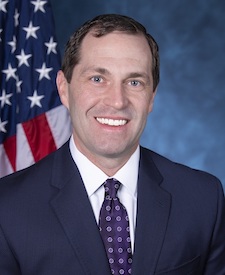
119th Congress Introduced by Jason Crow and 3 co-sponsors

The bill blocks any payments from judgments, settlements, or costs under 31 U.S.C. § 1304 for lawsuits filed by the President or Vice President.

Introduced in House
0
WeVote Research Nonpartisan
Bill Summary · HR 9239

Overview

  • Bill: HR 9239
  • Session: 119th Congress
  • Title: Drain the Slush Fund Act
  • Introduced: June 10, 2026
  • Primary sponsors: Reps. Jason Crow (lead), Chrissy Houlahan, Chris Deluzio, Maggie Goodlander
  • Status: Referred to the House Committee on the Judiciary
  • Purpose: To limit payments arising from lawsuits or claims filed by the President or Vice President by adding new restrictions to judgments, awards, compromises, settlements, interest, and costs under 31 U.S.C. § 1304.

Main purpose and intent

The bill seeks to curtail or prohibit certain payments that would otherwise be authorized under existing law in connection with lawsuits or claims filed by the President or Vice President. Its stated aim is to restrict a "slush fund" style mechanism by which plaintiff judgments, settlements, or related costs could be paid.

Key provisions and changes

  • New provision added to 31 U.S.C. § 1304 (added at the end of the section):
    • Subsection (e) states: No judgment, award, compromise settlement, interest, or costs shall be authorized for payments that arise out of a lawsuit or claim filed by the President or Vice President.
  • Applicability:
    • The amendment applies to pending cases and to causes of action arising on or after January 20, 2025.
  • Scope:
    • Covers judgments, awards, compromises, settlements, interest, and costs.
    • Specifically tied to lawsuits or claims initiated by the President or Vice President.

Who/what would be affected

  • Government payments under 31 U.S.C. § 1304 (generally dealing with appropriations for judgments, awards, compromises, settlements, and related costs for certain claims) would be restricted when the underlying claim is filed by the President or Vice President.
  • Potentially affects federal litigation where the executive branch initiates or is a party to a suit, or where claims are brought by the President or Vice President.
  • Could impact how settlements or judgments against the United States are processed if the claim originates from the President or Vice President.

Procedural and timeline aspects

  • Effective date: The bill’s provision applies to cases arising on or after January 20, 2025, and to any pending cases as of enactment.
  • Legislative status: Referred to the House Judiciary Committee; introduced June 10, 2026.
  • There is no indication in the summary of any accompanying funding, enforcement mechanisms, or penalties beyond the stated prohibition.

Potential implications and considerations

  • Financial governance: The bill attempts to close what the sponsors view as an available funding stream tied to executive-initiated litigation.
  • Legal ambiguity: The prohibition could raise questions about how it interacts with other statutes governing government payments and settlements, as well as what constitutes a “claim filed by” the President or Vice President.
  • Precedent and scope: The clause could limit extraordinary or unilateral actions by the executive branch in litigation or settlement contexts, potentially shifting dynamics in inter-branch legal disputes.

If you’d like, I can add a brief comparison to current law under 31 U.S.C. § 1304 or provide a one-page plain-language Q&A for readers.

Compiled from official sources — confirm details with the bill’s official record.

Sign in to ask a question.