

WeVote

Bill

Bill

SB 1595

DNR FLOOD EVENT CONSTRUCTION

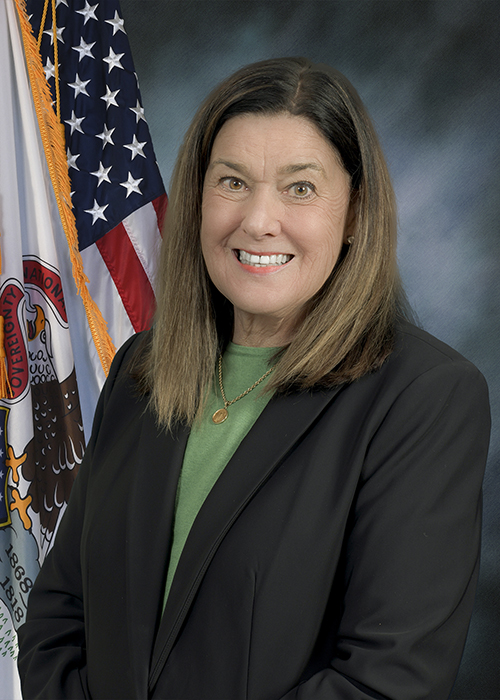
104th Regular Session Introduced by Jil Tracy

Illinois DNR allows specific water-surface increases from levee work in worst-case floods: 0.5 ft rural, 0.1 ft urban, with a 90-day review to speed permit decisions.

Rule 3-9(a) / Re-referred to Assignments
0
WeVote Research Nonpartisan
Bill Summary · SB 1595

Bill Summary — SB 1595 (DNR Flood Event Construction) — Illinois (2025)

Note: The packet provided contains multiple unrelated bills that share the SB 1595 identifier in different states (Arizona and Hawaii). This summary focuses on the Illinois measure titled “DNR Flood Event Construction,” which amends the Rivers, Lakes, and Streams Act (adds Section 40).

Purpose

To establish specific Department of Natural Resources (DNR) requirements and numeric tolerances for certain construction activities affecting navigable waterways and levees when reviewed under a “worst‑case” flood analysis (defined in the bill as up to the 1% annual chance / 100‑year event). The bill aims to accelerate DNR responses on levee-related submissions and to set clear, limited allowances for increases in water surface profiles from construction in rural and urban areas.

Key provisions

  • Definitions:

    • “Base condition” — current pre‑permit levee profile/top elevation and cross‑sections.
    • “Proposed condition” — requested change from base condition.
    • “Induced head” — changes to the water surface profile or elevation upstream or downstream caused by the proposed levee change.
    • “Worst‑case levee” — levee condition evaluated up to and including the 1% annual chance flood.
  • DNR obligations for construction related to worst‑case flood events:

    1. Levee improvements: Within 90 days of submission, the DNR must provide the submitter notice of the submission status plus a detailed timeline, explicit requirements, and any internal review procedures.
    2. Rural construction along navigable waterways: The DNR shall permit a water surface profile increase up to 0.5 feet (0.5').
    3. Urban construction: The DNR shall permit a water surface profile increase up to 0.1 feet (0.1').
    4. Mitigation analysis: A mitigation analysis is required only if the water surface profile increase exceeds thresholds identified by an induced‑head study (i.e., where induced head is shown to exceed allowable levels).
  • Effective date: Immediately upon becoming law.

Who is affected

  • DNR (administrative and review processes)
  • Applicants for state permits involving levees, flood-control construction, or construction within/along navigable waterways (public agencies, private developers, levee districts)
  • Municipalities, counties, and landowners in floodplains
  • Downstream and upstream communities and ecosystems potentially affected by altered flood stages
  • Federal partners (e.g., US Army Corps of Engineers, FEMA) where overlapping regulatory authority exists

Procedural / timeline highlights

  • DNR has a statutory 90‑day action/response requirement for levee improvement submissions.
  • The bill sets immediate, numeric allowances for allowable increases in the modeled water surface profile (0.5' rural; 0.1' urban) that guide when mitigation or further analysis is required.

Potential impacts and considerations

  • Pros: Faster permit clarity and predictable numeric thresholds may speed necessary levee and flood‑risk projects and reduce administrative uncertainty for applicants.
  • Cons / Risks: Even small allowable increases in water surface elevations can change flood risk upstream/downstream, affecting property, flood insurance, habitat, and river hydraulics. The bill’s allowances could conflict with federal standards or FEMA floodplain modeling in some cases; coordination with federal permitting and mapping regimes remains necessary.
  • Implementation will depend on how “urban” vs. “rural” are defined in rule or guidance and how induced‑head studies are interpreted and applied.

Related / companion legislation

  • Companion bills noted: HB 4408 and HB 600 (contextual — check chamber records for state and text alignment).
  • Sponsor (Illinois): Sen. Jil Tracy (introduced 2/4/2025).

If you would like, I can:
- Extract the exact statutory text changes proposed,
- Draft a one‑page memo on likely legal or FEMA coordination issues, or
- Create a stakeholder impact checklist (municipalities, levee districts, environmental groups).

Compiled from official sources — confirm details with the bill’s official record.

Sign in to ask a question.