

WeVote

Bill

Bill

HRES 1456

Directing the initiation of litigation for actions by the President or other executive branch officials inconsistent with their duties under the Constitution of the United States.

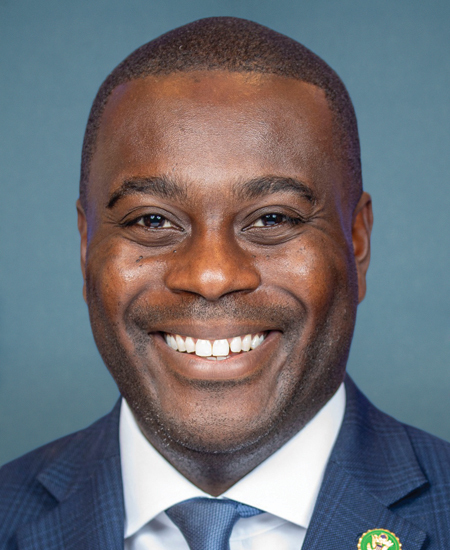
119th Congress Introduced by Gabe Amo and 6 co-sponsors

The Speaker would initiate or intervene in federal civil litigation to challenge executive actions or inactions related to War Powers and military hostilities.

Submitted in House
0
WeVote Research Nonpartisan
Bill Summary · HRES 1456

Overview

  • Bill: H.Res.1456
  • Session: 119th Congress
  • Title: Directing the initiation of litigation for actions by the President or other executive branch officials inconsistent with their duties under the Constitution of the United States
  • Purpose: Directs the Speaker of the House to initiate or intervene in civil litigation in federal court to address actions by the President, cabinet heads, or other executive branch officials that the House asserts are inconsistent with their constitutional and legal duties.

Main purpose and intent

  • The resolution authorizes the House Speaker to initiate or intervene in one or more civil actions in a federal court.
  • The actions sought would challenge or seek relief regarding alleged failures by the President or other executive branch officials to act in a manner consistent with their constitutional duties and U.S. law.
  • Specifically targets actions related to: 1) Ongoing hostilities reported by the President on March 2, 2026 under the War Powers Resolution (WPR) §4(a)(1) (50 U.S.C. 1544(b)). 2) Implementation of WPR §5(b), which concerns terminating hostilities persisting 60 days without congressional authorization. 3) Implementation of the concurrent resolution H. Con. Res. 86, directing removal of U.S. armed forces from hostilities with Iran under WPR §5(c).

Key provisions and changes

  • Section 1: The Speaker must initiate or intervene in civil actions in a federal court to obtain appropriate relief related to the President’s or executive officials’ actions or inactions on:
    • Ongoing hostilities reported under the War Powers Resolution (WPR) as of March 2, 2026.
    • Termination of hostilities under WPR §5(b) if they persist for 60 days without congressional authorization.
    • Removal of U.S. armed forces from hostilities with Iran, as directed by H. Con. Res. 86 under WPR §5(c).
  • Section 2: The Speaker must notify the House when it has complied with Section 1 and has initiated or intervened in the civil action.
  • Section 3: The House Office of General Counsel, under the Speaker’s direction, will represent the House in any civil action initiated or in which the House intervenes. The House may employ outside counsel and experts as needed.

Who or what would be affected

  • The House of Representatives would be the plaintiff or intervener in federal civil litigation, on behalf of the House’s institutional interest.
  • The President, the head of any department or agency, or other executive branch officers/employees allegedly not acting in accordance with constitutional duties and federal law could be the subject of such litigation.
  • The actions under scrutiny are specific to:
    • War Powers-related hostilities reported on March 2, 2026.
    • Termination timelines for hostilities under the War Powers Resolution.
    • Policy or actions related to U.S. military involvement with Iran as directed by concurrent resolution.

Procedural and timeline aspects

  • Referral: The measure was referred to the House Rules Committee and the House Administration Committee (with jurisdictional nuances to be determined by the Speaker).
  • Notification: If enacted, the Speaker must notify the House upon initiating or intervening in litigation.
  • Representation: The House’s Office of General Counsel would handle litigation, potentially with outside counsel and experts.
  • No immediate substantive policy change outside of authorizing litigation; this is a procedural/constitutional check mechanism enabling the House to seek court relief to compel or address executive actions or inactions.

Potential implications and considerations

  • Symbolic and strategic tool: The resolution signals congressional assertion over executive actions related to war powers and military engagements.
  • Legal risk and uncertainty: Initiating litigation over constitutional duties and war powers could lead to complex court challenges, potential delays in policy actions, and heightened interbranch conflict.
  • Scope depends on future decisions: The Speaker would determine whether to pursue one or more civil actions and which specific issues to bring before the court, within the framework of the War Powers Resolution and related resolutions.

Compiled from official sources — confirm details with the bill’s official record.

Sign in to ask a question.