

WeVote

Bill

Bill

SB 312

DEP rule relating to ambient air quality standards

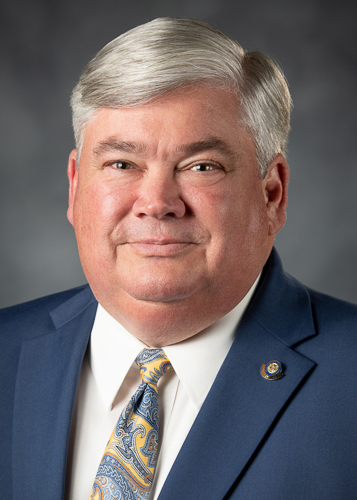
2025 Regular Session Introduced by Jack Woodrum

SB 312 requires daily recitation of the Pledge of Allegiance and display of flags in K-12 classrooms, with age-appropriate flag/Pledge instruction, starting in 2025–2026, while pro

To Judiciary
0
WeVote Research Nonpartisan
Bill Summary · SB 312

Summary — SB 312: "The Stars and Stripes Commitment Act"

Status: Passed 1st Reading
Introduced: February 10, 2025
Primary subjects: Education; School boards; Flags; Pledge of Allegiance; State Board meetings

Purpose

SB 312 requires public schools and certain education governing bodies to schedule and begin meetings or the school day with the Pledge of Allegiance and to display the U.S. and state flags in classrooms when available. It also requires age‑appropriate instruction about the flag and the Pledge.

Key provisions

  • Schools and school systems

    • Local boards of education, charter schools, regional schools, lab schools, and other covered institutions must adopt policies that:
    • Require display of the United States and state flags in each classroom when available.
    • Require recitation of the Pledge of Allegiance on a daily basis, scheduled within one hour after the beginning of the instructional day.
    • Provide age‑appropriate instruction on the meaning and historical origins of the flag and the Pledge.
    • Policies must explicitly not compel any person to stand, salute, or recite the Pledge.
  • State Board and governing bodies

    • Every regular and special meeting of the State Board of Education must begin with recitation of the Pledge of Allegiance (in the manner set out in federal law, 4 U.S.C. § 4).
    • Every meeting of a governing body of a public school unit must begin with recitation of the Pledge.
  • Statutory changes

    • The bill amends multiple statutory sections governing K‑12, charter, regional, laboratory, and other public educational institutions to add the scheduling/location directives and instruction requirements (see recodified sections in the bill: e.g., G.S. 115C‑47(29a), 115C‑150.12C(23), 115C‑218.80, 115C‑11, and related provisions).
  • Non‑coercion safeguard

    • Multiple provisions reiterate that no individual may be compelled to stand, salute, or recite the Pledge.

Who this affects

  • Local school boards, superintendents, principals, and school staff (policy adoption and implementation)
  • Students in public, charter, regional, and laboratory K–12 schools (daily scheduling and brief classroom activity)
  • State Board of Education and local school governing bodies (meeting procedures)
  • Schools without flags may need to procure donated or purchased flags for classrooms

Implementation timeline and procedural notes

  • The bill specifies the requirement applies beginning with the 2025–2026 school year (effective when the act becomes law).
  • Local boards must adopt conforming policies; schools must schedule the Pledge daily within the first hour of instruction.

Potential impact and considerations

  • Administrative: Minimal procedural burden — adopting policies and scheduling a short daily recitation; possible small cost to obtain classroom flags if not donated.
  • Instructional: Adds a brief daily civic component and requires age‑appropriate curriculum content about the flag and Pledge.
  • Legal/public reaction: The bill expressly preserves individuals’ right not to participate, addressing compelled‑speech concerns; nonetheless, it may prompt public debate over civic exercises in schools.
  • Fiscal: No major fiscal provisions in the text; likely low cost for most districts (flags, minimal staff time).

If you want, I can:
- Draft a one‑page policy template that local boards could adopt to comply with SB 312.
- Identify exact statutory lines amended (by citation) and map implementation steps for a school district.

Compiled from official sources — confirm details with the bill’s official record.

Sign in to ask a question.